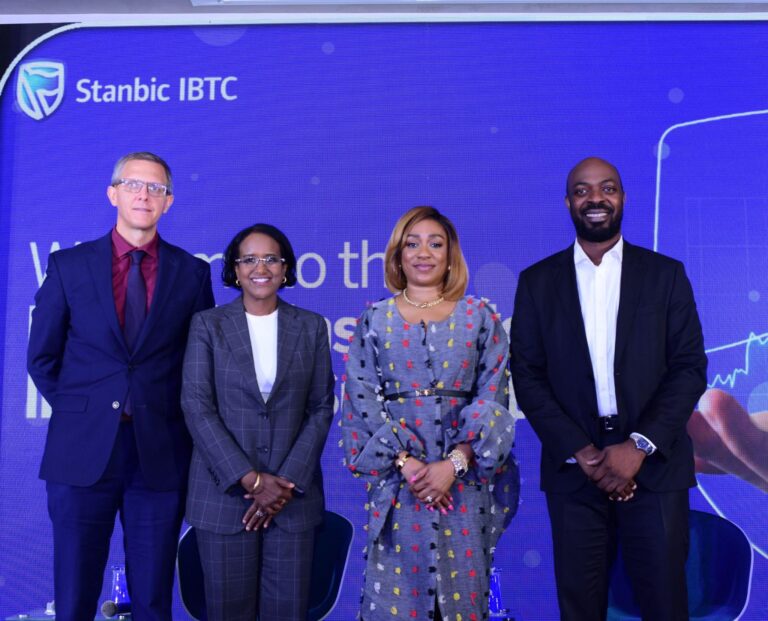
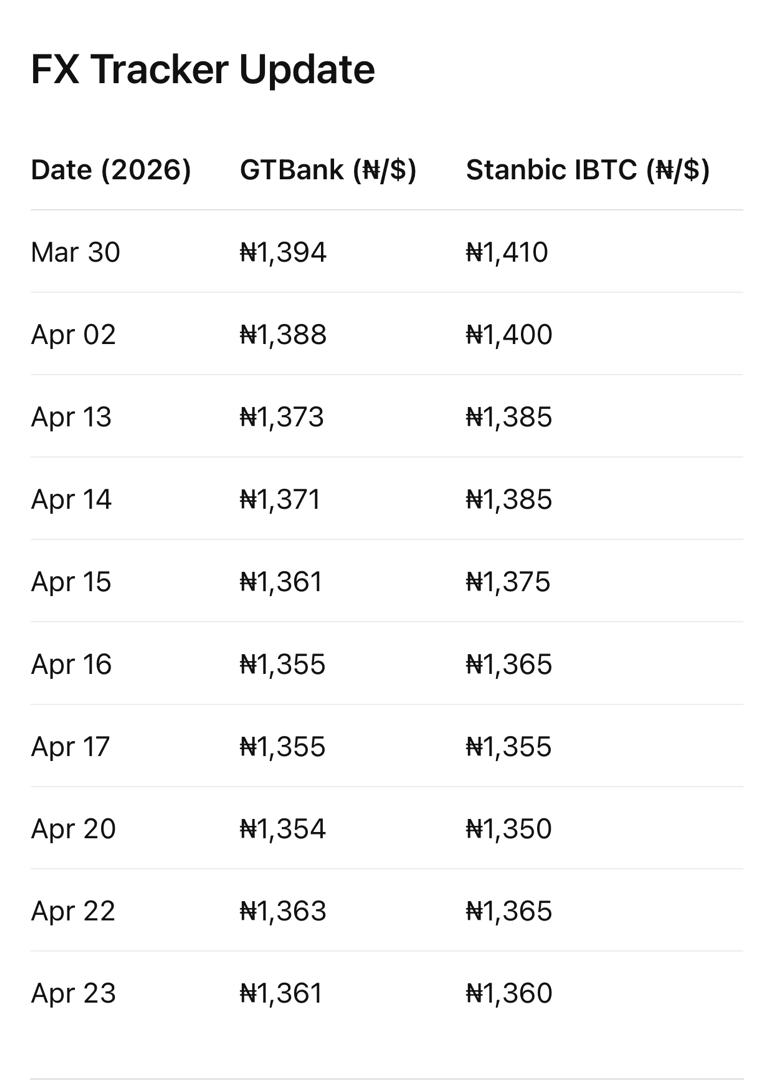
Nigeria’s banks are showing the first signs of upward pressure after a period of stability, with Guaranty Trust Bank (GTBank) quoting ₦1,361 per dollar for international card transactions on April 23, while Stanbic IBTC Bank held slightly lower at ₦1,360 per dollar.
The rates apply to international payments on naira debit cards, including subscriptions, travel bookings, and cross-border services.
Stability Band Faces Mild Upward Pressure
After several days of convergence around ₦1,350–₦1,355, the market is now showing minor upward drift:
* GTBank: ₦1,354 → ₦1,363 → ₦1,361
* Stanbic IBTC: ₦1,350 → ₦1,365 → ₦1,360
These movements, while modest, indicate that the previously observed stability band is being tested from above.
From Sharp Decline to Plateau — and Now a Rebound Signal
The broader trajectory remains clear:
* Late March: ₦1,401–₦1,410 (peak stress levels)
* Early April: rapid correction
* Mid-April: stabilisation around ₦1,350
* Late April: early signs of upward pressure
The latest pricing suggests the market may be entering a new phase of equilibrium adjustment, rather than a continued decline.
Parallel Market Remains Key Anchor
Developments in the parallel (black) market continue to provide context for bank pricing.
* Late March: ₦1,410–₦1,430/$
* Early April: ~₦1,400/$
* Mid-April: ₦1,350–₦1,370/$ range
With bank rates now moving between ₦1,360 and ₦1,365, the system remains closely aligned with informal market pricing, though the slight upward movement suggests:
* Renewed demand pressure
* Possible tightening in FX supply
* Short-term rebalancing dynamics
Convergence Still Intact, But Direction Uncertain
Despite the upward movement, the spread between banks remains extremely tight (₦1 or less), reinforcing:
* Strong pricing alignment
* Consistent access to FX across banks
* Reduced arbitrage opportunities
However, the direction of movement now appears less decisively downward than earlier in the month.
What Is Driving the Shift?
The subtle upward movement may reflect:
* Slight increase in dollar demand for international payments
* Temporary tightening in FX liquidity conditions
* Market response to external or seasonal demand factors
At this stage, the adjustment is incremental rather than structural, but it signals that the earlier easing phase may have reached its limit.
System Remains Fluid and Market-Responsive
The FX pricing environment continues to operate as:
* Fully market-driven
* Bank-specific but convergent
* Sensitive to daily liquidity shifts
Spending limits remain unchanged:
* GTBank: $6,000 per quarter
* Stanbic IBTC: $4,000 per quarter
Implications for Consumers
For users of international payment services:
* FX rates remain relatively stable compared to March volatility
* However, downward momentum has slowed

* Emerging upward movement suggests timing may again matter
The market has shifted from a clear easing trend to a more balanced, two-way movement phase.