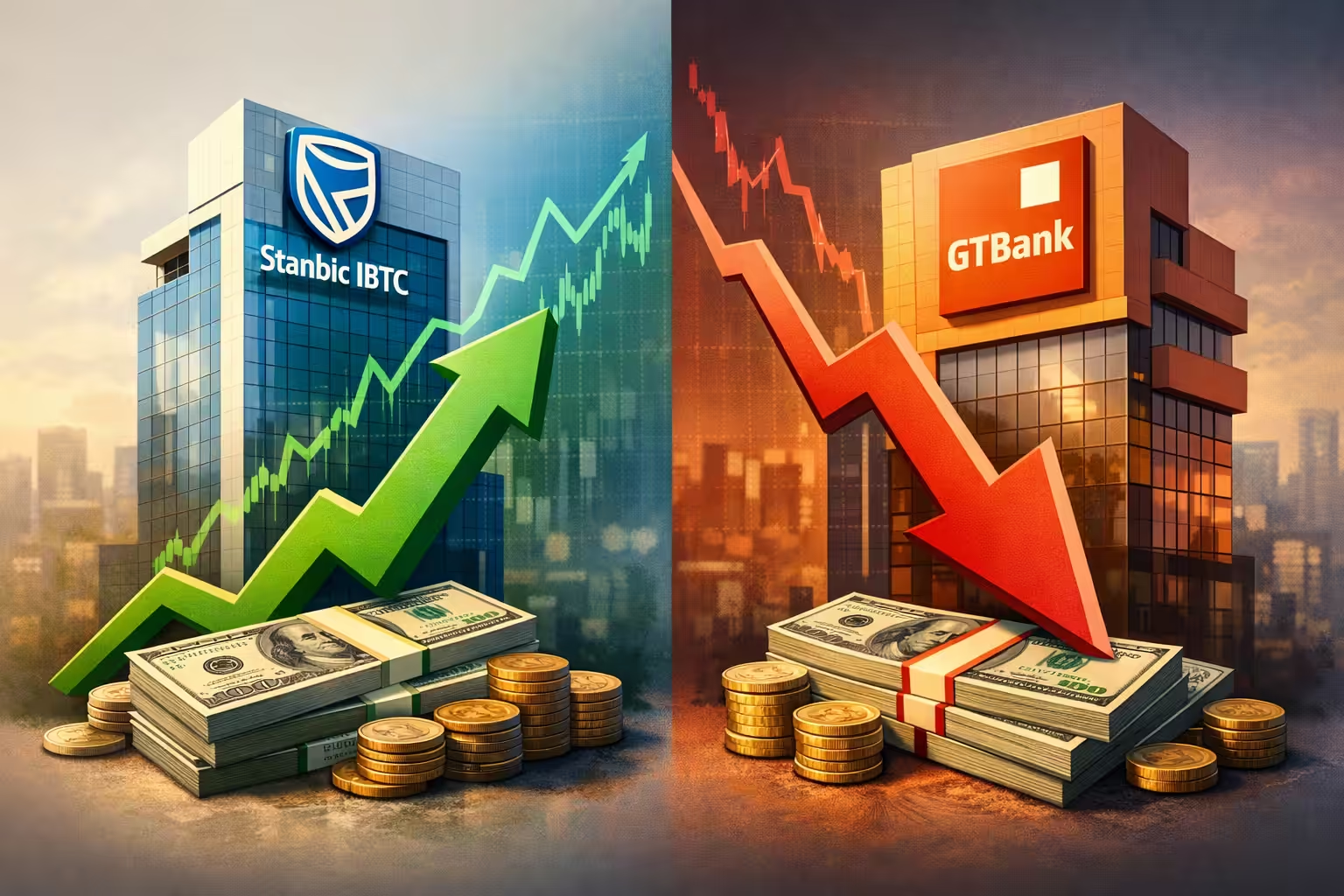
Nigeria’s banks are continuing to lower foreign exchange rates for international card payments, with GTBank and Stanbic IBTC reaching their lowest levels since March’s volatility spike.
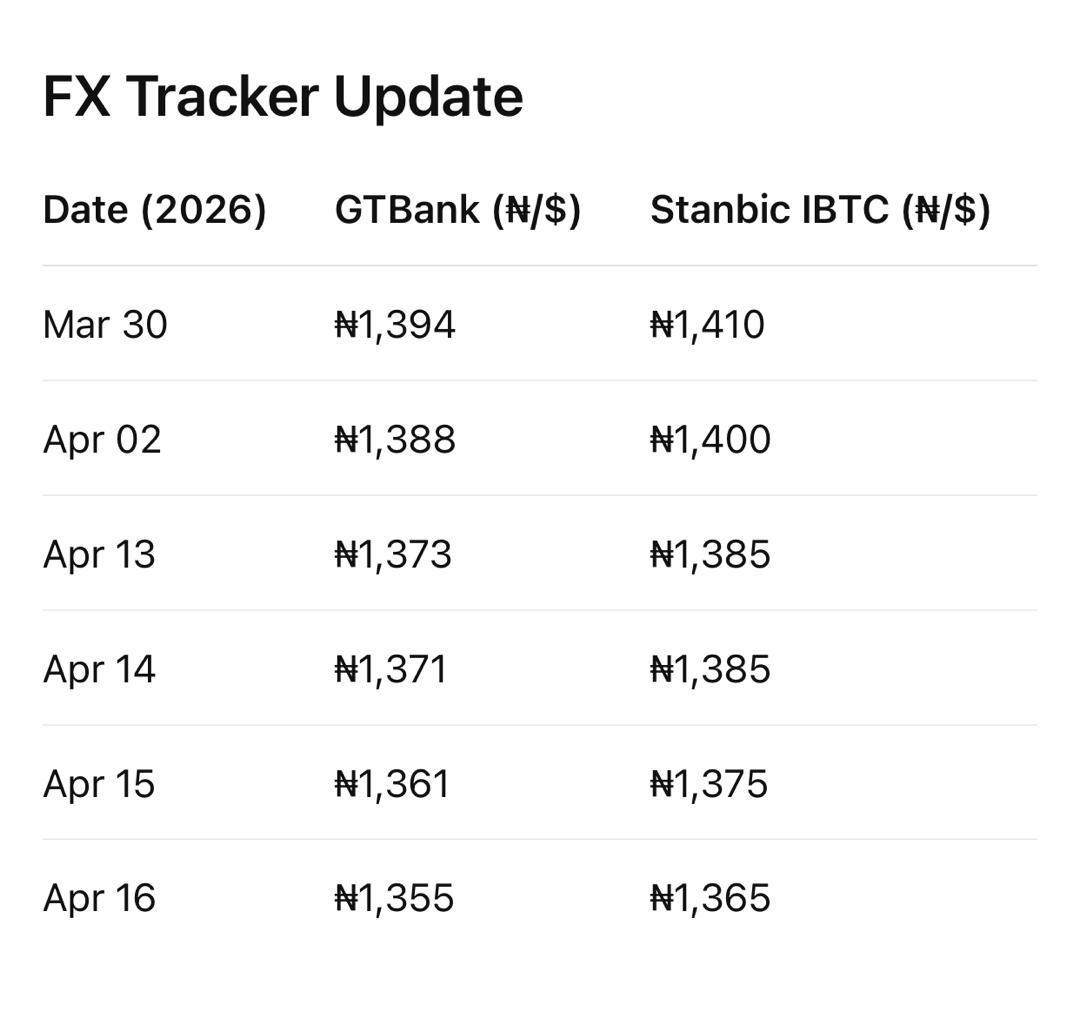
Nigeria’s banks have extended the downward repricing of foreign exchange rates for international card payments, with Guaranty Trust Bank (GTBank) quoting ₦1,355 per dollar on April 16, while Stanbic IBTC Bank set its rate at ₦1,365 per dollar.
The updated rates apply to international transactions on naira debit cards, including payments for subscriptions, digital services, and cross-border purchases.
Downtrend Deepens Into Mid-April
The latest adjustments continue a steady easing pattern:
* GTBank: ₦1,361 → ₦1,355 (−₦6)
* Stanbic IBTC: ₦1,375 → ₦1,365 (−₦10)
Across the broader trend:
* GTBank has declined from ₦1,401 (late March) to ₦1,355 (−₦46)
* Stanbic IBTC has fallen from ₦1,410 to ₦1,365 (−₦45)
This represents the sharpest sustained correction in card FX pricing since the March spike.
Convergence Continues as Spread Holds Narrow
The spread between both banks now stands at ₦10, one of the tightest levels observed in recent weeks.
This indicates:
* Stronger pricing convergence across banks
* Improved confidence in FX liquidity conditions
* A more stable and predictable pricing environment
Parallel Market Trend Supports Easing Narrative
The movement in bank card rates is broadly aligned with Nigeria’s parallel (black) market, where FX pressures have moderated in April.
* Late March saw rates spike to around ₦1,410–₦1,430/$ in major trading hubs
* Early April remained elevated near ₦1,400/$ levels
* By mid-April, rates have eased into the ₦1,360–₦1,380/$ range across informal markets
The convergence between:
* Bank rates (₦1,355–₦1,365)
* Parallel market (~₦1,360–₦1,380)
suggests a significant reduction in arbitrage gaps and improved alignment across FX channels.
What Is Driving the Decline?
The sustained easing reflects:
* Improved FX inflows and liquidity
* Reduced speculative demand following March volatility
* Continued impact of market-oriented FX reforms
Banks are increasingly pricing FX with lower risk premiums, indicating greater confidence in access to dollar supply.
Still a Flexible, Market-Driven System
Despite the easing, the FX system remains:
* Dynamic, with daily adjustments
* Bank-specific, with slight pricing variations
* Market-driven, rather than centrally fixed
Spending limits remain unchanged:
* GTBank: $6,000 per quarter
* Stanbic IBTC: $4,000 per quarter
Implications for Consumers
For individuals and businesses making international payments:
* FX costs are now at their lowest levels in several weeks
* But remain subject to daily fluctuations

* Bank selection still influences transaction costs
The system continues to evolve toward greater access with flexible pricing, rather than rigid controls.