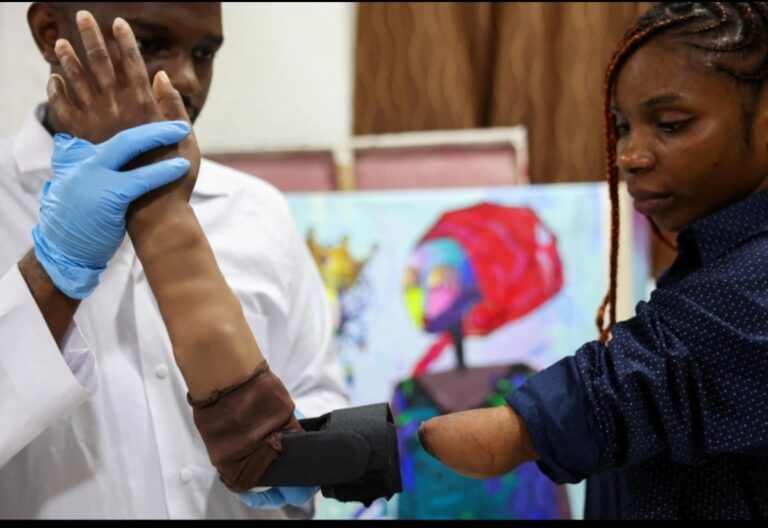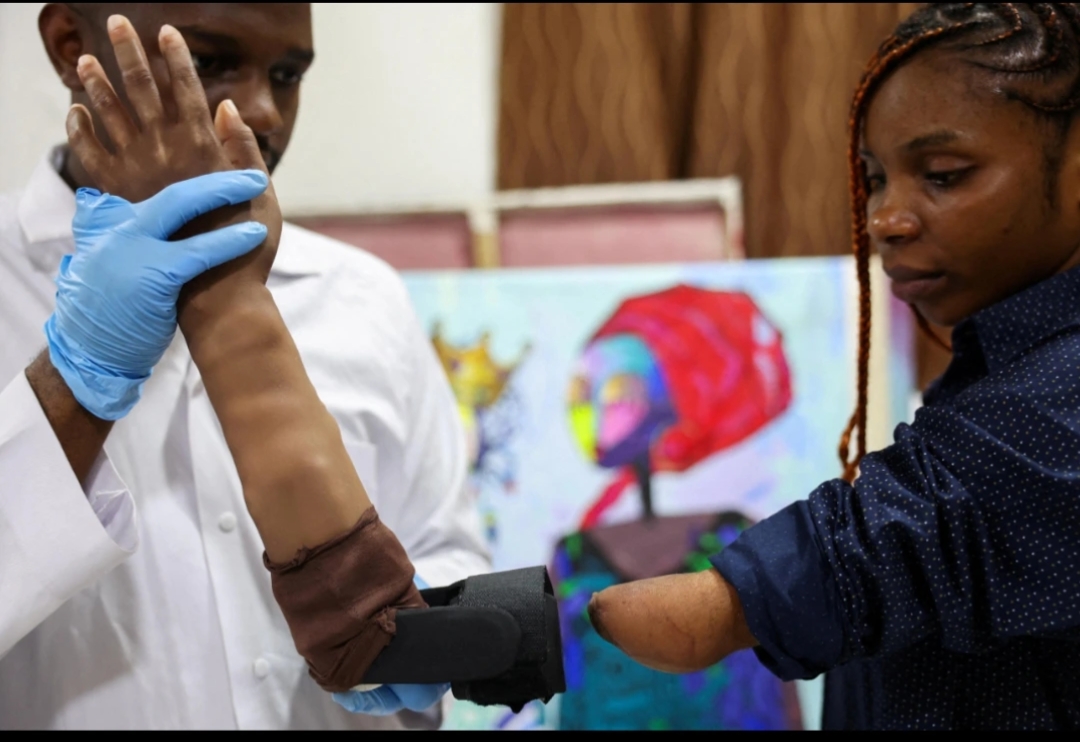
A Nigerian-developed bionic prosthetic arm has earned international recognition after being named among TIME magazine’s Best Inventions of 2026, placing the work of two brothers from Akwa Ibom State on a prestigious global list of innovations addressing accessibility and disability.The Ubokobong Bionic Arm, developed by Uyo-based prosthetics company Immortal Cosmetic Art, was included in the accessibility category of TIME’s annual inventions list published on October 15, 2026.
Developed by brothers Ubokobong Amanam and John Amanam, the device combines muscle-controlled movement with a highly realistic appearance, addressing two challenges often overlooked in prosthetic design: functionality and the ability of artificial limbs to resemble the people wearing them.
TIME’s recognition is particularly significant because the invention emerged from a personal experience with limb loss and the difficulty of finding prosthetics designed to match darker skin tones.
The magazine reported that the device is now being used by clients in 56 countries, reflecting the international reach of an innovation developed by a Nigerian company.
Borne From a Personal Tragedy to international recognition
The invention traces its origins to a fireworks accident on New Year’s Day in 2019, when Ubokobong Amanam lost his fingers.
Following the accident, he struggled to find artificial fingers that matched his dark skin tone. Available prosthetics were either poorly fitted or lacked the realistic appearance he wanted.
The experience exposed a gap in the prosthetics market, particularly for Black amputees who often had to choose between functional artificial limbs and cosmetic replacements that closely resembled their natural bodies.
His elder brother, John Amanam, a special-effects artist with experience creating realistic human body parts for film and theatre, initially stepped in to address the problem.
John created a lifelike artificial hand for his brother, incorporating details such as skin texture, wrinkles and fingernails.
What began as an attempt to restore Ubokobong’s appearance eventually developed into a broader business and technological ambition: producing realistic prosthetic limbs designed around the physical characteristics of African users.
The brothers subsequently established Immortal Cosmetic Art in Uyo, Akwa Ibom State, to develop and manufacture customised prosthetics.
Bionic Prosthetic Arm
Recognising that a lifelike artificial hand could still leave an amputee without the ability to perform everyday movements, the brothers embarked on a three-year research and development effort to produce a functional bionic version.
Ubokobong, who has a background in technology and electronics, took the lead in developing the functional technology, while John contributed his expertise in prosthetic artistry and realistic human anatomy.
How the Ubokobong Bionic Arm works
Unlike conventional cosmetic prosthetics, which primarily restore the appearance of a missing limb, the Ubokobong Bionic Arm is designed to combine a human-like appearance with functional movement.
It uses myoelectric technology, which relies on electromyography (EMG) to detect electrical activity generated by muscles.
When a person intends to move their hand, the nervous system sends electrical signals to the muscles. Sensors positioned against the remaining muscles in the amputated limb detect the resulting electrical activity.
The device processes these signals and translates them into commands that control the prosthetic hand.
This allows users to operate the artificial fingers and perform selected hand movements through muscle contractions rather than relying entirely on mechanical or manually operated mechanisms.
The technology is particularly relevant to people who have lost their hands or fingers but retain sufficient muscle activity in the residual limb to control a prosthetic device.
Its distinguishing feature, however, is the combination of this technology with highly customised cosmetic design.
The prosthetic is made to resemble the user’s natural hand, with attention to skin colour, texture, wrinkles, fingernails and other physical details.
These features are intended to make the artificial limb less conspicuous while helping users feel more comfortable with their appearance.
For Black amputees, the skin-tone customisation addresses a longstanding limitation in a prosthetics market where many commercially available products have historically offered limited options for darker skin tones.
TIME’s Recognition
TIME’s inclusion of the Ubokobong Bionic Arm in its 2026 Best Inventions list represents an important international milestone for Nigerian medical technology and assistive-device innovation.
The magazine placed the Nigerian invention in its accessibility category, which recognises innovations intended to improve the lives of older people and individuals living with disabilities.
The 2026 collection features 300 inventions across different industries and categories, alongside 100 special mentions.
The inclusion puts Immortal Cosmetic Art alongside innovators developing products and technologies intended to address practical challenges in healthcare, technology and everyday life.
Affordability Challenge
Despite the international recognition, the cost of advanced prosthetic technology remains a major obstacle to wider adoption, particularly in Nigeria and other developing economies.
The Guardian reported in March 2026 that the company’s bionic limbs cost approximately $7,000 at the time, although the price of individual devices may vary according to their specifications and customisation.
This places advanced bionic prosthetics beyond the financial reach of many Nigerians, particularly given the limited availability of insurance coverage and public funding for assistive devices.
Beyond prosthetics: Immortal Cosmetic Art’s Rehabilitation Ambitions
In June 2026, PREMIUM TIMES reported that Ubokobong Amanam had introduced a robotic rehabilitation glove designed to assist stroke survivors and people with hand disabilities in regaining movement.
The device incorporates guided hand exercises and mirror-mode training to support rehabilitation.

The development suggests a broader ambition to apply robotics and assistive technology to different aspects of disability support and physical rehabilitation.
It also places the company’s activities within Nigeria’s emerging medical-technology ecosystem, where locally developed solutions are increasingly being explored to address healthcare challenges that imported products may not adequately meet.