Nigeria LNG Limited (NLNG) has presented GenScan AI, an artificial intelligence-powered medical imaging innovation that could reduce magnetic resonance imaging (MRI) scan times by up to 90 per cent while maintaining or improving image quality.
Manager, Corporate Communications and Public Affairs, NLNG, Anne-Marie Palmer-Ikuku, disclosed this in a statement obtained by our correspondent on Tuesday following the presentation of the innovation to stakeholders in Abuja.
Developed by Mary-Brenda Akoda, GenScan AI emerged as the winning entry of the 2026 Nigeria Prize for Science and Innovation, sponsored by NLNG.
According to NLNG, the innovation uses the C-MORE algorithm to reconstruct MRI images through a one-step framework, potentially reducing scan acquisition times by up to 90 per cent without requiring new MRI hardware.
What is an MRI Scan?
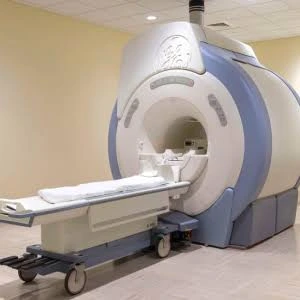
Magnetic resonance imaging, commonly known as an MRI scan, is a medical imaging technique that uses a powerful magnetic field, radio waves and computer processing to produce detailed images of organs, tissues and other structures inside the body.
Unlike X-rays and CT scans, MRI does not use ionising radiation. It is particularly useful for examining the brain, spine, joints, muscles, internal organs and soft tissues.
However, MRI examinations can take considerably longer than some other imaging procedures, with the duration depending on the body part being examined and the type of scan required. Patients may also need to remain still inside the MRI scanner for an extended period to prevent movement from affecting image quality.
Long scan times can contribute to patient discomfort, waiting lists and limited utilisation of MRI machines, particularly in healthcare systems where access to advanced diagnostic equipment is already constrained.
How GenScan AI Could Change MRI Scans
GenScan AI is designed to address the time required to acquire and reconstruct MRI images. The technology uses the C-MORE algorithm to reconstruct images in a one-step process, allowing MRI scans to potentially be completed much faster without requiring hospitals to replace their existing MRI hardware.
The innovation could enable healthcare providers to attend to more patients, reduce waiting times and improve the utilisation of existing MRI equipment, a development particularly significant in Nigeria, where access to advanced diagnostic services remains a challenge in some parts of the country.
Speaking at the presentation, NLNG’s General Manager, External Relations and Sustainable Development, Sophia Horsfall, said the company was interested in ensuring that scientific research translated into practical improvements in people’s lives.
“Our interest goes beyond recognising an outstanding idea. We want to see scientific research make a practical difference in people’s lives,” Horsfall said.
She added that GenScan AI offered the prospect of faster medical imaging and better use of existing equipment.
“GenScan AI offers the prospect of faster medical imaging and better use of existing equipment. This presentation creates an opportunity to discuss what is needed to move that promise towards practical application,” she said.
Horsfall stressed the importance of accurate diagnosis to effective treatment, noting that diagnostic imaging provides evidence that enables medical teams to identify health conditions and make informed decisions about patient care.