By Kehinde Owoseni
That is the finding of a study of 365 residents in the Ifako-Ijaiye area, which examined whether television campaigns on proper waste disposal are changing how people handle their rubbish.
Television appears to be doing its part. Residents are exposed to waste-management campaigns and understand the health and environmental dangers of indiscriminate dumping, open burning and blocked drainage. But when the waste collector does not arrive, the message on television quickly meets the reality on the street.
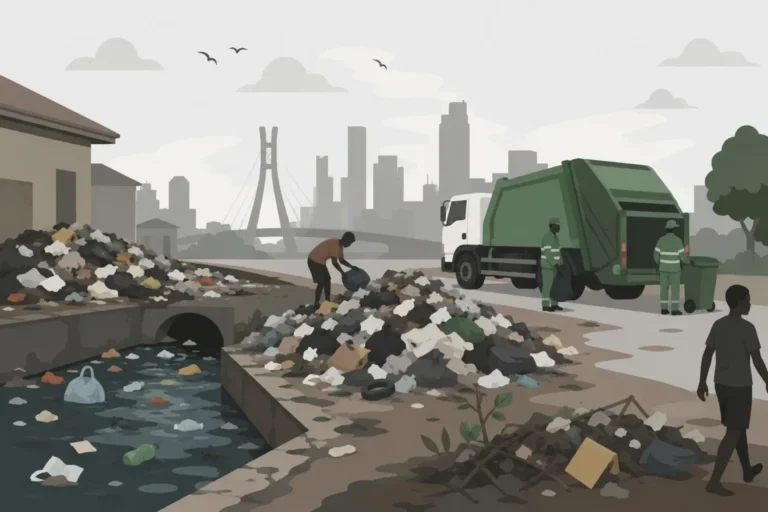
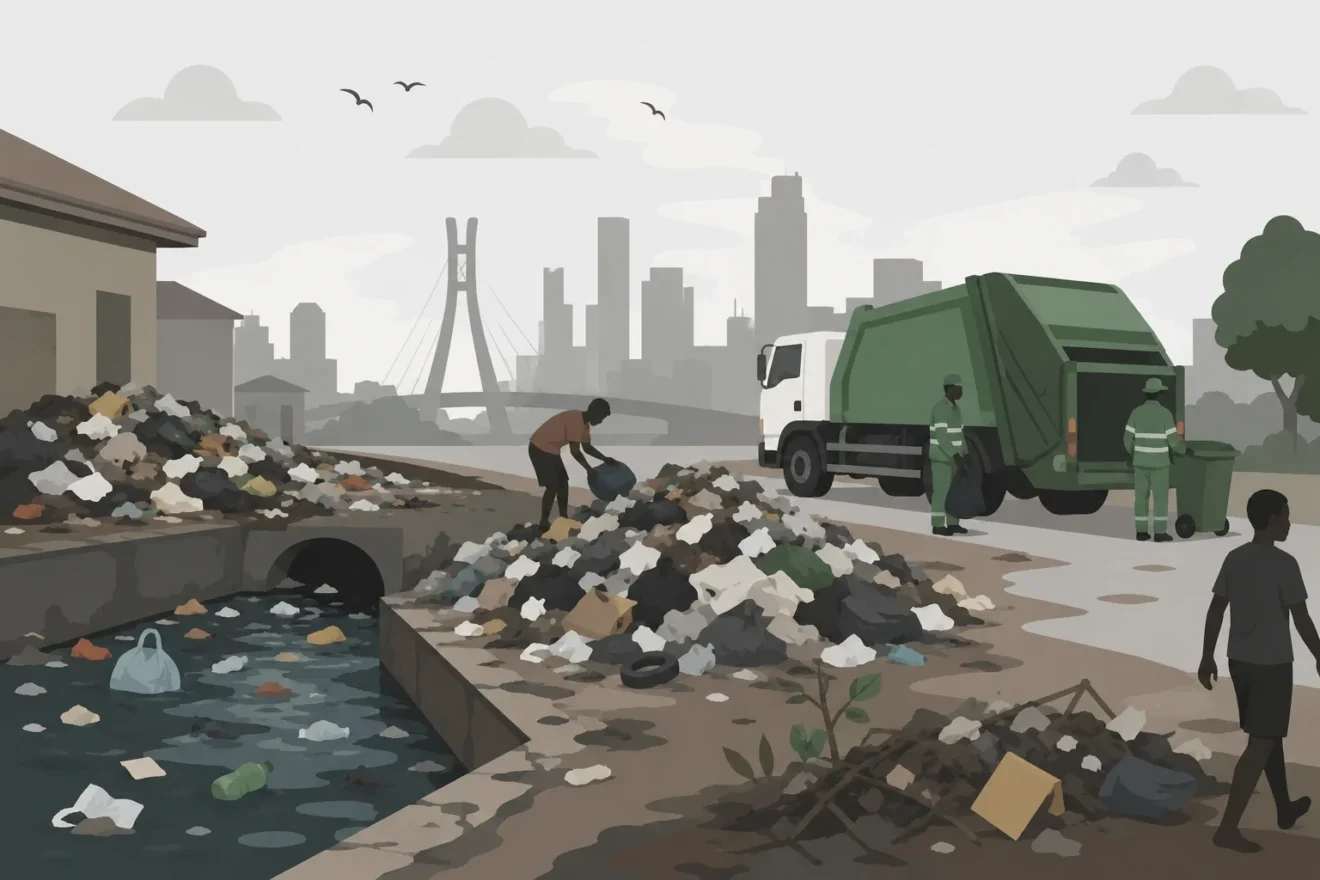
A bag of rubbish becomes two. Then three. Eventually, refuse starts piling up outside homes, along roads and, in some cases, inside drainage channels. For residents, knowing the right thing to do does not always mean having the means to do it.
Television is Getting Message Through
Residents interviewed showed strong awareness of the consequences of poor waste management and an understanding that refuse heaps can attract pests and contribute to health problems, while burning waste can expose people to harmful fumes.
They also understood the importance of sorting waste and using waste collectors rather than dumping rubbish indiscriminately which is important because Lagos has invested heavily in public education around environmental sanitation.
A 2024 study of waste-management awareness in Lagos similarly found that public awareness is an important part of changing waste-management behaviour, although it identified physical infrastructure as a critical part of the equation.
Waste Collection Still a Problem
For many households, the waste collector is the final link between awareness and action with residents surveyed revealing they generally preferred having their waste collected rather than burning it or dumping it themselves.
When a collector fails to arrive on schedule, households have to store their waste for longer periods. In densely populated communities, that can quickly become difficult. This is one reason the waste crisis in Lagos cannot simply be blamed on residents.
Lagos currently generates between 13,000 and 16,000 tonnes of waste daily, according to recent statements by the Lagos Waste Management Authority (LAWMA). The volume has put significant pressure on collection, transportation and disposal infrastructure.
LAWMA has also acknowledged infrastructure and operational challenges within the state’s waste-management system, including ageing disposal facilities and difficulties moving waste through the collection chain. The result of this failure is familiar across parts of Lagos: refuse waiting on streets for collection while households wait for the trucks.
Awareness cannot collect a bag of rubbish
The Ifako-Ijaiye study exposes a weakness in the way waste-management campaigns are often judged as it is relatively easy to measure whether people have heard a message but much harder to determine whether they can act on it.
A resident may know that dumping a plastic bottle in a drainage channel is wrong, may also know that burning household waste is harmful but if the waste collector has not arrived for days and there is no convenient alternative, the resident is left with a practical problem rather than an information problem.
Lagos’ approach cannot rely on public enlightenment alone as there has to be a combination of education, enforcement and reliable collection.
The state has promoted recycling and waste sorting, distributed colour-coded bins through its “Adopt-a-Bin” programme and supported initiatives designed to encourage residents to exchange recyclable waste for cash.
In 2022, OMO’s “Dirt for Good” campaign promoted plastic recycling among young people, while environmental agencies have used community-based initiatives to encourage better waste practices. The challenge is however keeping the system working after the campaign ends.
When waste is dumped in drainage channels, plastics and other non-biodegradable materials can obstruct the movement of water, a waste problem can quickly become a flooding problem. This is why the gap between what residents know and what they are able to do matters to the wider Lagos environment.
What Should Change?
More frequent television campaigns, particularly in local languages should be done in an interactive manner, giving residents opportunities to ask questions and engage with presenters through social media, call-in programmes and community forums.
Residents who understand proper waste management can also pass the message to neighbours, friends and family members, extending the reach of campaigns beyond television.

But the most straightforward recommendation may also be the most important: Waste collectors need to show up as for residents who already know what proper waste disposal looks like, another television advert may not be the missing ingredient, a functioning collection system might be.
LAWMA has been pursuing wider reforms, including new transfer stations, material recovery facilities and other infrastructure intended to move Lagos away from dependence on ageing disposal sites but until those investments translate into more reliable collection at the household level, residents will continue to be trapped in the same loop of knowing where the waste should go but being unable to always get it there.