For much of the past decade, Africa’s technology boom was defined by companies digitising payments. Moove’s latest fundraising suggests investors are beginning to place equally large bets on something more tangible: the infrastructure needed to move people and goods in an era of autonomous transport.
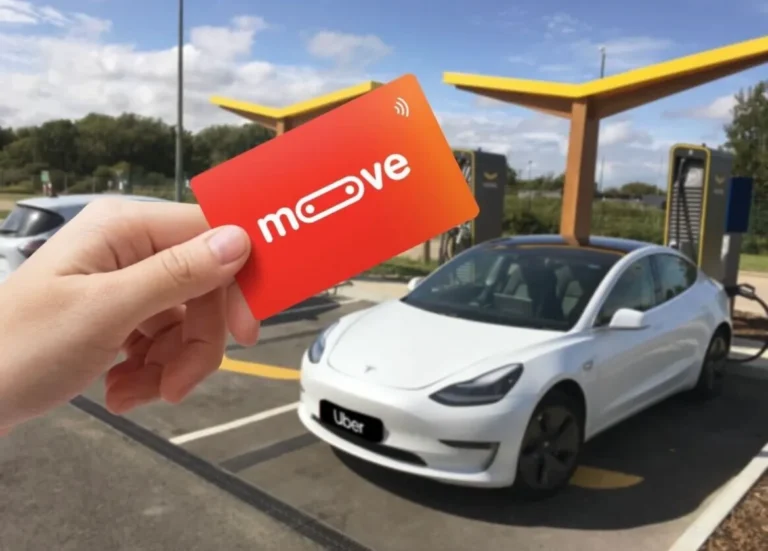
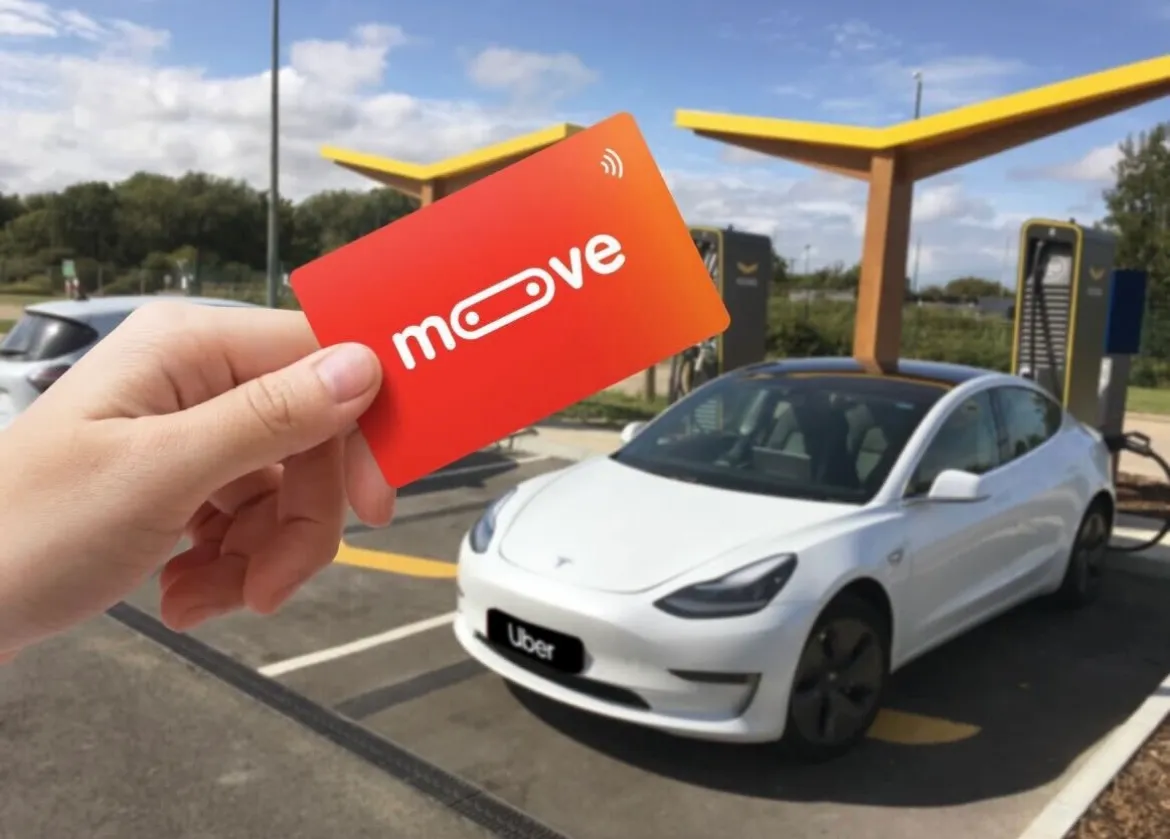
The Nigerian-founded mobility technology company has raised $250 million in Series C financing, valuing the business at $2.1 billion and making it Africa’s newest unicorn. The investment, led by Abu Dhabi’s Mubadala Investment Company and co-led by Woven Capital, Toyota’s growth investment arm, alongside Ion Pacific, ranks as the largest single venture capital round publicly announced by an African startup in 2026.
The deal arrives as venture investment globally is becoming increasingly selective. Investors have shifted away from the growth-at-all-costs model that characterised the technology boom of 2021, favouring businesses capable of generating recurring revenue while owning critical infrastructure.
Moove fits that profile. Unlike software-only startups, it owns and manages vehicle fleets, financing assets that generate long-term cash flows while serving ride-hailing and increasingly autonomous mobility operators.
From Vehicle Financing to Mobility Infrastructure
When Moove launched in Lagos in 2020, its business addressed a problem that had long constrained Africa’s ride-hailing economy: many drivers could generate income but lacked access to affordable vehicle financing because traditional banks considered them too risky.
Rather than relying on conventional lending, Moove introduced a revenue-based financing model in which repayments were deducted directly from drivers’ earnings on ride-hailing platforms. The approach reduced default risk while allowing thousands of drivers to acquire vehicles without substantial upfront capital.
That business has since evolved into something considerably larger.
Today, Moove operates around 42,000 vehicles across 29 cities in 13 countries, employing approximately 3,300 people worldwide. According to the company, annual recurring revenue has reached $420 million, supported by expansion across Africa, Europe, Asia and Latin America through acquisitions including Brazil’s Kovi and Japan’s Tokyo Taxi.
The latest investment reflects investors’ belief that fleet ownership itself may become one of the most valuable assets in autonomous transportation.
Building What Autonomous Cars Cannot
Much of the public conversation around autonomous vehicles centres on artificial intelligence, sensors and self-driving software developed by companies such as Waymo, Tesla and Chinese competitors.
The economics, however, depend on an entirely different layer of infrastructure.
Autonomous vehicles require charging networks, maintenance facilities, cleaning operations, remote monitoring, insurance management and fleet scheduling to remain commercially viable. Unlike privately owned cars, robotaxis are expected to operate for much of the day, making downtime exceptionally costly.
Moove says the new funding will finance robotics-enabled depots—internally called “Nests”—that integrate charging, servicing, maintenance and operational management for autonomous fleets. It also intends to expand its autonomous mobility workforce from roughly 150 employees to about 500 before year-end.
Rather than competing with autonomous driving companies, Moove is positioning itself as a fleet operator capable of deploying their technology across multiple markets.
That strategy already extends beyond Africa. Through its partnership with Waymo, the Alphabet-owned autonomous driving company, Moove operates self-driving vehicle fleets in Phoenix and Miami, with London expected to become another deployment market.
Why Sovereign Investors Are Interested
The composition of the investor group offers insight into how mobility is increasingly being viewed as infrastructure rather than simply technology.
Mubadala, Abu Dhabi’s sovereign investment company, has steadily expanded investments in logistics, transport and artificial intelligence as Gulf states diversify beyond hydrocarbons.
Toyota’s Woven Capital, meanwhile, was established to identify businesses likely to shape the future automotive ecosystem rather than merely manufacture vehicles.
The participation of long-term institutional investors including BlackRock, MUFG, Franklin Templeton and the Ontario Power Generation Pension Plan also reflects growing interest in companies capable of producing infrastructure-like returns from technology-enabled transport assets.
That contrasts with earlier generations of venture-backed startups whose valuations depended primarily on rapid customer acquisition.
Africa’s Venture Capital Narrative Is Changing
Moove’s fundraising also illustrates how Africa’s startup ecosystem is becoming more diversified.
For years, fintech companies attracted the overwhelming majority of venture capital entering the continent, driven by low banking penetration and expanding digital payments.
Mobility is emerging as another major destination for investment.
Earlier this year, electric mobility company Spiro secured $270 million across two financing rounds, although spread over separate transactions. Together with Moove’s latest raise, the deals indicate that investors increasingly see transportation, logistics and mobility infrastructure as sectors capable of producing globally competitive businesses from Africa.
The shift reflects demographic realities as much as technological optimism. African cities remain among the world’s fastest-growing urban centres, yet transport infrastructure continues to lag population growth. Companies able to organise fleets more efficiently—whether human-driven today or autonomous tomorrow—stand to benefit from long-term urbanisation trends.
A Different Kind of African Unicorn
Moove’s entry into Africa’s unicorn club also marks an evolution in the continent’s technology landscape.
Earlier billion-dollar startups—including Flutterwave, OPay, Interswitch and Moniepoint—largely built businesses around digital financial services.
Moove’s valuation instead rests on ownership and operation of physical transport assets linked by software, placing it closer to infrastructure businesses than conventional fintech companies.

At $2.1 billion, the company becomes one of Africa’s most valuable privately held technology firms and the continent’s 10th unicorn, joining a group that includes Flutterwave, OPay, Andela, Wave, Chipper Cash, Tyme, MNT-Halan, Interswitch and Moniepoint.
Whether autonomous vehicles become mainstream over the next decade remains uncertain. What appears clearer is that investors increasingly believe the companies owning the infrastructure around those vehicles may ultimately prove as valuable as those developing the software that drives them. In backing Moove, they are wagering that a company founded in Lagos can become one of those global infrastructure operators.