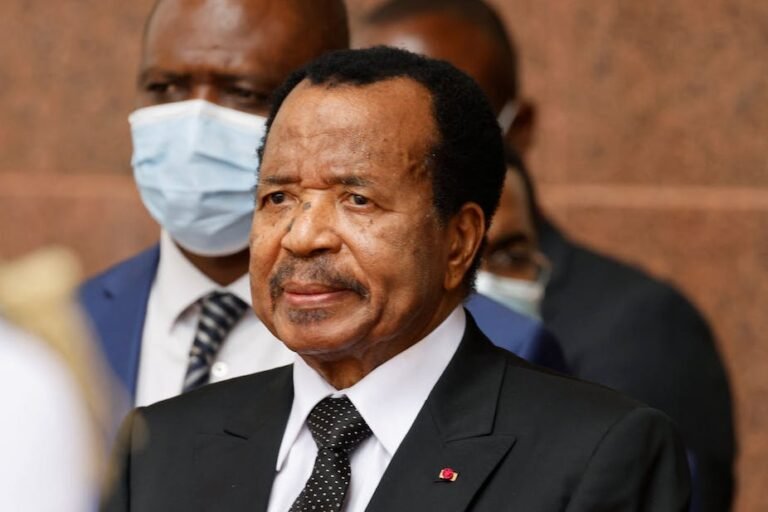
Nearly two months after leaving Cameroon for what officials described as a private visit to Switzerland, President Paul Biya has approved another reshuffle of the country’s military leadership, reinforcing command over the armed forces as uncertainty surrounding his prolonged absence increasingly dominates national politics.
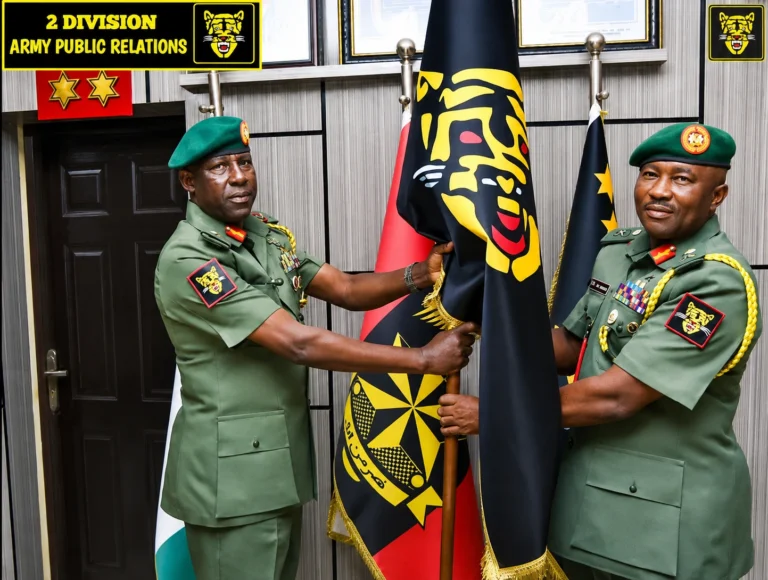
The decrees, signed from Geneva, promoted five colonels to brigadier general and reassigned several senior officers across the army. Among the most consequential decisions was the promotion and immediate reappointment of Raymond Jean Charles Beko’o Abondo as commander of the Presidential Guard, the elite force responsible for protecting the presidency and securing the country’s highest political institutions.
The appointments come at a sensitive moment for Cameroon. At 93, Biya is the world’s oldest serving head of state and has governed the Central African nation since November 1982, making him the second-longest-serving national leader globally after Teodoro Obiang Nguema Mbasogo.
His nearly 44-year presidency has survived economic crises, separatist conflict in the country’s English-speaking regions, Boko Haram insurgency in the Far North, constitutional reforms and repeated opposition challenges.
Military loyalty remains central to Biya’s rule
Unlike many African governments where civilian institutions dominate political succession, Cameroon’s presidency has historically relied heavily on the loyalty of the security establishment. Control of the armed forces, intelligence agencies and the Presidential Guard has become a defining feature of Biya’s governing model, particularly since an attempted coup in 1984 by elements of the Republican Guard just two years after he assumed office.
That failed uprising fundamentally reshaped Cameroon’s security architecture. Subsequent administrations strengthened presidential control over elite military units while ensuring frequent rotations among senior commanders to prevent competing centres of power from emerging.
Analysts say recent promotions fit that longstanding pattern rather than representing an isolated personnel exercise.
Regional instability has sharpened security concerns
The military reshuffle also reflects a wider regional environment that has become markedly less predictable.
Since 2020, Central and West Africa have experienced an unprecedented wave of military coups stretching from Mali and Burkina Faso to Niger and Gabon. The overthrow of Gabon’s President Ali Bongo Ondimba in 2023 carried particular significance for Cameroon because the neighbouring state had, like Cameroon, been ruled by a long-standing political dynasty with close ties to France.
Within weeks of the Gabon coup, Yaoundé announced changes across sections of its military leadership. Similar adjustments followed ahead of Cameroon’s 2025 presidential election and again earlier this year, suggesting the government continues to prioritise institutional loyalty amid shifting regional security dynamics.
Governing from abroad tests constitutional boundaries
Although Cameroon has no explicit constitutional prohibition preventing a president from exercising authority while overseas, Biya’s prolonged stay abroad has revived debate over how executive power should function during extended absences.
Government officials insist the president remains fully in office, pointing to a steady stream of signed decrees covering military appointments, financial agreements with international lenders and other executive decisions.
Communication Minister René Emmanuel Sadi has rejected speculation surrounding Biya’s health, maintaining that the president continues to discharge his constitutional responsibilities from Geneva and will return to Cameroon.
Opposition politicians argue that formal legality does not necessarily resolve broader concerns about governance. The Cameroon Renaissance Movement (CRM), the country’s principal opposition party, says prolonged remote leadership weakens public accountability at a time when economic pressures, insecurity and institutional reforms require visible political direction.
Succession remains Cameroon’s unanswered political question
Despite repeated speculation over the years, Biya has never publicly identified a political successor.
That uncertainty has become more pronounced since constitutional amendments adopted earlier this year created the office of vice-president, a position that remains vacant months after the reforms took effect. The absence of an appointment has complicated discussion about how executive authority would be managed in the event of an unexpected transition.
Following his re-election for another term, Biya also pledged to appoint a new cabinet but has yet to announce one, leaving several political decisions effectively on hold while the presidency continues to operate from abroad.
International partners are watching carefully
Cameroon occupies a strategically important position in Central Africa, bordering Nigeria, Chad, the Central African Republic, Equatorial Guinea, Gabon and the Republic of the Congo. It serves as a regional security partner for Western governments combating extremist groups around the Lake Chad Basin while hosting major infrastructure and energy projects backed by international financial institutions.
Political stability in Yaoundé therefore carries implications beyond domestic politics, affecting regional counterterrorism cooperation, cross-border trade and investment across Central Africa.
For international lenders and foreign investors, continuity within Cameroon’s security institutions has often been viewed as essential, even as governance indicators and transparency rankings have attracted criticism from organisations monitoring democratic accountability.
A familiar strategy under growing scrutiny
Military reshuffles have become one of Biya’s preferred instruments for managing political uncertainty. By regularly promoting officers while rotating command appointments, the presidency limits the accumulation of independent military influence and reinforces personal loyalty within the armed forces.

Whether the latest changes merely reflect that long-established governing strategy or signal preparations for a more consequential political transition remains impossible to verify publicly.
What is clear is that as Biya approaches six decades in national leadership—including his years as prime minister before assuming the presidency—the question dominating Cameroon’s political future is no longer simply who commands the military, but how and when power will eventually pass beyond one of Africa’s most enduring rulers.