For more than three years, Russia’s media landscape has operated under strict political constraints, leaving little room for public criticism of President Vladimir Putin or Moscow’s military campaign in Ukraine.
Yet an examination of the country’s leading newspapers suggests economic realities are becoming increasingly difficult to obscure. Even publications that avoid political dissent are reporting mounting pressures across key sectors of the Russian economy.
The reporting reflects a broader contradiction facing the Kremlin. Russia’s economy has so far avoided the collapse many Western governments predicted after sweeping sanctions followed the 2022 invasion of Ukraine.
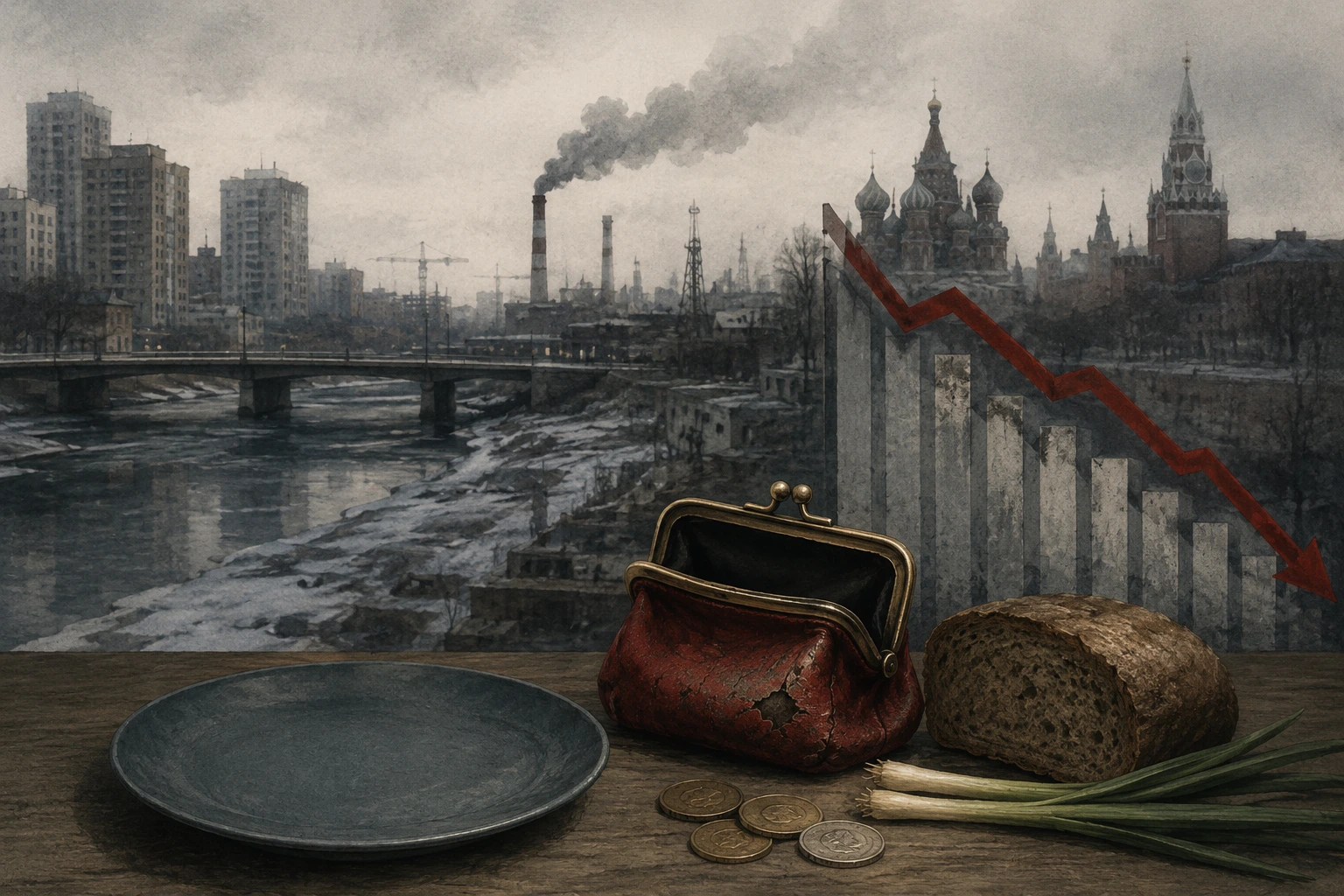
Massive military spending, energy exports redirected toward Asia and extensive state intervention have sustained headline growth. But economists have increasingly argued that wartime expansion masks structural weaknesses, including labour shortages, inflation, high borrowing costs and declining private investment.
Those concerns are now becoming visible in Russia’s own newspapers.
Agriculture, Once a Success Story, Shows Signs of Strain
One of the starkest assessments came from Nezavisimaya Gazeta, which described the country’s agricultural sector as “plunging into crisis.” Agriculture has occupied a central place in Moscow’s economic strategy since Western sanctions and Russian counter-sanctions accelerated efforts to replace imported food with domestic production.
Difficulties in the sector therefore extend beyond farming, touching food security, inflation and one of the Kremlin’s most prominent economic success stories. Construction, another industry that benefited from years of state-backed investment and subsidised mortgages, is also reported to be under severe pressure.
Russian newspapers said the sector is already operating “deep in the red,” while growth in real disposable household income has slowed almost sixfold compared with the previous year. For many Russians, weaker wage growth is coinciding with persistent inflation that continues to erode purchasing power despite repeated interest-rate increases by the Central Bank.
Business leaders appear to share those concerns. Kommersant, one of Russia’s leading business newspapers, reported that the business climate index compiled by the Russian Union of Industrialists and Entrepreneurs continued to decline. The survey is closely watched because it offers one of the few regular indicators of confidence among major Russian companies navigating sanctions, restricted access to Western technology and increasingly expensive credit.
War Reaches the Economy Through Energy Infrastructure
The newspapers linked weakening business sentiment to repeated attacks on Russian oil refineries—an apparent reference to Ukrainian drone strikes—as well as disruptions affecting logistics, agriculture and manufacturing. The strikes have increasingly targeted Russia’s energy infrastructure, forcing costly repairs and creating periodic disruptions to fuel production, even as oil revenues remain vital to financing government spending.
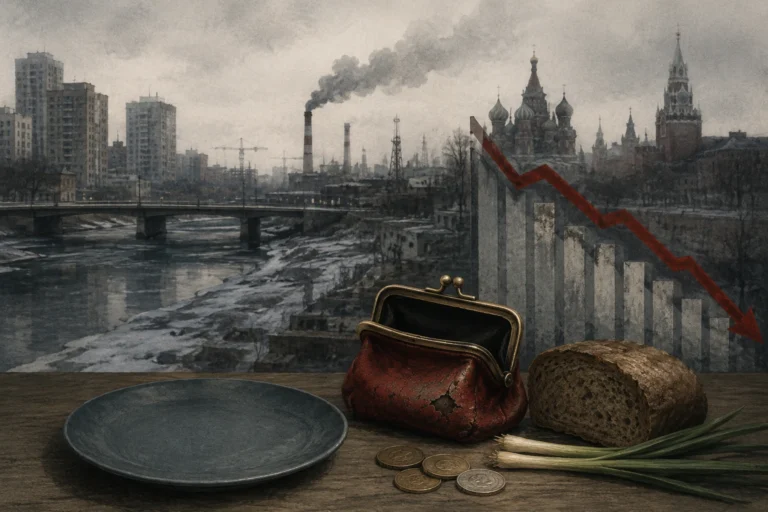
Economic anxiety is also filtering into popular culture. In Komsomolskaya Pravda, rising prices became the subject of humour rather than official statistics. One joke observed that spring onions had become so expensive that presenting a bunch as a gift for International Women’s Day would no longer be embarrassing.
Behind the humour lies an acknowledgement familiar to many Russian households: food inflation has become noticeable enough to enter everyday conversation.
Economic Reporting Becomes a Window Into Public Concerns
Such reporting illustrates how economic journalism has become one of the few areas where Russian newspapers can acknowledge hardship without directly confronting the country’s political leadership.
Articles focus on sectoral performance, business surveys and consumer prices rather than assigning responsibility, allowing publications to discuss the consequences of economic pressure while remaining within the boundaries imposed by wartime censorship.

For international observers, these reports provide a useful counterpoint to official economic messaging. Russia continues to post growth figures supported by defence production and public spending, but domestic reporting increasingly points to an economy divided between sectors buoyed by wartime demand and civilian industries facing weaker investment, labour shortages and slowing consumer incomes.
The picture emerging from Russia’s own newspapers is not one of imminent economic collapse, but of an economy whose underlying stresses are becoming harder to conceal—even in a media environment where criticism of the Kremlin remains largely off limits.