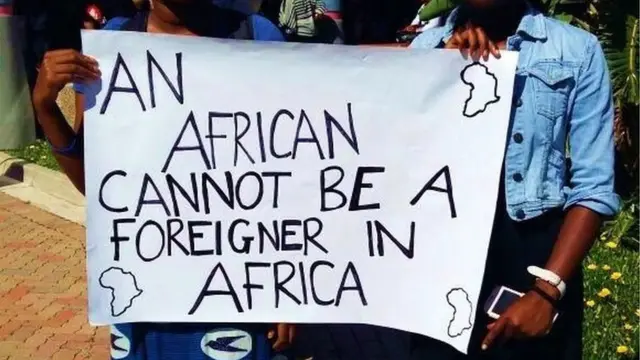
South Africa’s Minister of Justice and Constitutional Development, Mmamoloko Kubayi, has acknowledged that the country’s ongoing xenophobia crisis is harming its international reputation and causing financial losses for South African artists across Africa.
Speaking during a public broadcast, Kubayi revealed that several South African performers have had engagements cancelled in other African countries amid growing backlash over attacks on foreign nationals, particularly African migrants.
According to the minister, the cancellations are depriving artists of significant income, given their dependence on performances across the continent.
“Majority of South African artists perform on the continent and many of them are seeing their gigs being cancelled. That is another impact of the work because they benefit quite a lot,” Kubayi said.
She disclosed that at least one artist personally informed her that all scheduled performances across Africa had been cancelled as a result of the negative sentiment surrounding South Africa’s handling of migration-related tensions.
The minister admitted that the country’s image has suffered internationally and said the government is taking steps to repair its reputation while engaging stakeholders in the arts and culture sector to assess the extent of the economic damage.
Kubayi, however, rejected the notion that South Africans are inherently xenophobic, arguing that concerns about illegal immigration should be addressed through lawful channels rather than attacks on foreign nationals.
She urged authorities to enforce immigration laws while ensuring the protection of legally resident migrants.
“Those that you have within the borders legally, please protect them like you would protect South Africans,” she said.
Rising Concerns Over Social Cohesion
The minister warned that hostility toward foreign nationals could have long-term consequences beyond international relations, threatening social stability within South Africa itself.
According to her, some South African citizens have also become victims of attacks after being mistakenly identified as foreigners due to their language, accent, or appearance.
Kubayi cautioned that unchecked vigilantism could deepen existing cultural and tribal divisions within the country, undermining national unity.
“If we don’t deal with this both internally, it can also hurt us internally and externally,” she said.
Renewed Xenophobic Attacks
The comments come amid a fresh wave of xenophobic violence that has affected African migrants, including Nigerians, since April 2026.
The situation has strained diplomatic relations between South Africa and several African nations, prompting concerns from governments and regional stakeholders.

Recently, the Nigerians in Diaspora Commission (NIDCOM) confirmed the commencement of a repatriation exercise for Nigerians affected by the unrest. The first batch of 262 Nigerians departed Johannesburg for Lagos on June 11 as authorities intensified efforts to ensure the safety of citizens caught up in the crisis.
The development underscores growing concerns about the economic, diplomatic, and social consequences of xenophobia in one of Africa’s largest economies.