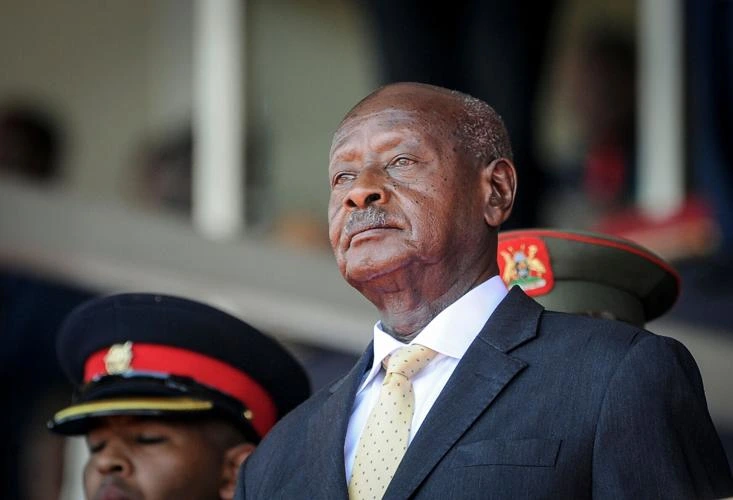
Ugandan President Yoweri Museveni has officially begun another five-year term in office, extending a rule that has now lasted four decades and intensifying speculation over who could eventually succeed him.
The 81-year-old leader was sworn in on Tuesday during a large state ceremony held at Kololo ceremonial grounds in Kampala, where thousands of supporters gathered alongside regional dignitaries and military officials.
Fighter jets flew overhead as security forces staged a parade overseen by Museveni’s son, Muhoozi Kainerugaba, who is widely viewed as the president’s likely successor.
Museveni first came to power in 1986 after leading a guerrilla movement that ended years of political instability and conflict in Uganda. Since then, he has remained one of Africa’s longest-serving leaders, surviving multiple political challenges and constitutional changes that removed presidential term and age limits.
Although the veteran leader has not publicly announced retirement plans, discussions surrounding succession have become increasingly prominent in Uganda’s political landscape.
Growing Focus on Muhoozi Kainerugaba
Kainerugaba, currently serving as Uganda’s army chief, has openly expressed interest in eventually leading the country. In recent months, senior members of the ruling establishment have also publicly backed his ambitions.
Political observers say his growing influence within the military and government suggests that a transition of power may already be informally underway.
Analyst Angelo Izama, who heads the Uganda-based Fanaka Kwawote think tank, argued that Kainerugaba already holds substantial influence over national security matters, describing the current situation as a “de facto transition.”
The 52-year-old military officer trained in both the United States and Britain before rising through Uganda’s armed forces.
Critics, however, have long questioned the speed of his ascent, with opponents referring to it as the “Muhoozi Project” — an alleged long-term effort to prepare him for the presidency.
Supporters within the ruling party insist his rise reflects experience and loyalty to the state.
Opposition Remains Skeptical
Opposition leader Bobi Wine, who has twice contested the presidency against Museveni, remains one of the most visible critics of the government.
Wine rejected the results of the January election that secured Museveni another term, maintaining that the political environment remains unfair to opposition candidates.
His party, the National Unity Platform, recently condemned proposed legislation aimed at regulating foreign funding for organizations and political groups.
The controversial bill would require entities receiving significant foreign financial support to seek approval from Uganda’s interior minister. Critics fear the measure could weaken civil society organizations and opposition movements.
Concerns Over Uganda’s Political Future
While Museveni is credited by supporters with maintaining relative stability and strengthening Uganda’s regional security role, critics accuse his administration of becoming increasingly authoritarian over the years.
Human rights groups and opposition figures have repeatedly raised concerns about arrests, political intimidation, and shrinking democratic space.

Even so, many Ugandans view Museveni as the only national leader they have ever known, making the question of succession one of the country’s most significant political issues.
Whether Uganda eventually experiences a constitutional transfer of power or a military-backed transition remains uncertain, but analysts agree that attention is now increasingly focused on what comes after Museveni’s long presidency.