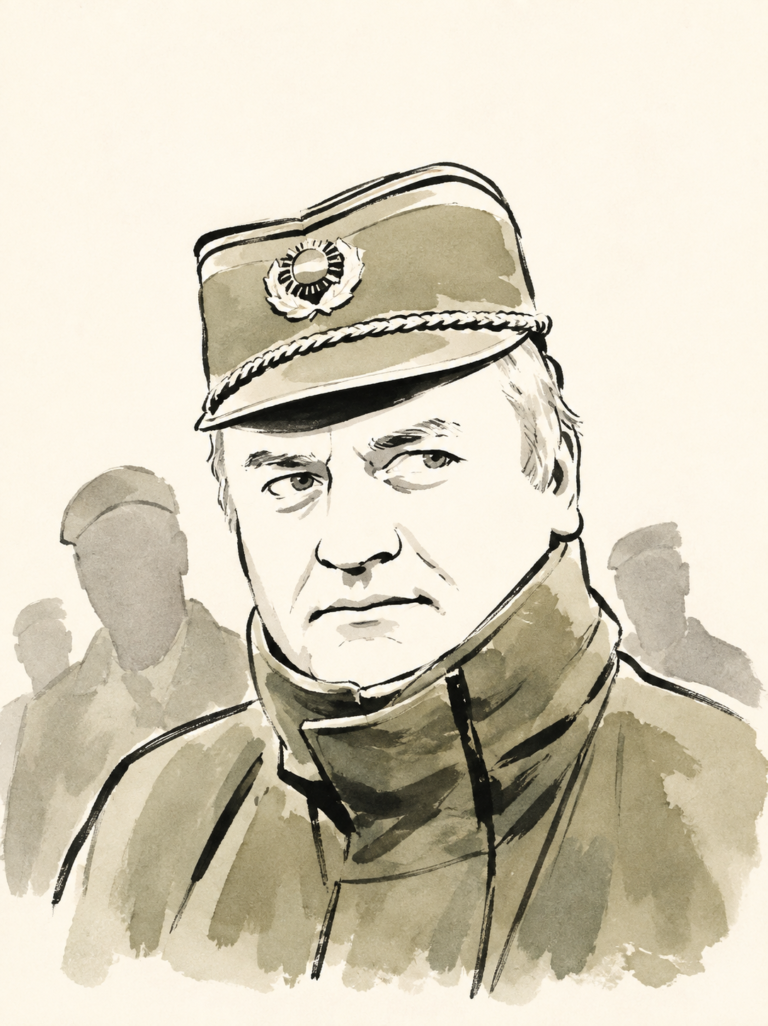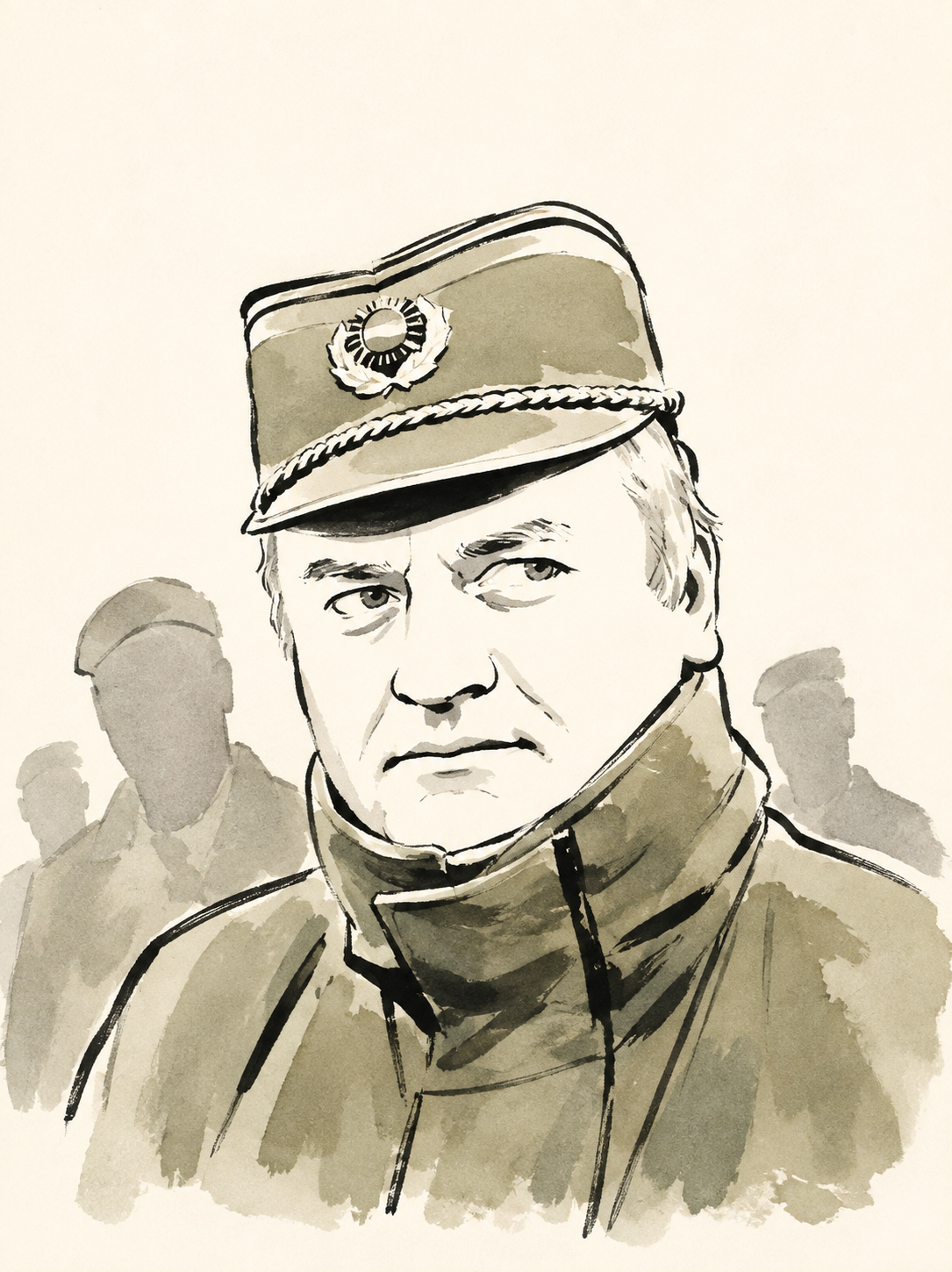
Ratko Mladić, the former Bosnian Serb military commander widely known as the “Butcher of Bosnia” convicted of genocide and other war crimes committed during the 1992–1995 Bosnian War, has died at the age of 84.
Serbian state broadcaster RTS reported on Thursday, August 27, that Mladić died in a prison hospital in The Hague after suffering several strokes. Mladić was convicted in 2017 by the International Criminal Tribunal for the former Yugoslavia (ICTY) of one count of genocide, five counts of crimes against humanity and four counts of war crimes. His life sentence was upheld by a UN appeals court in 2021.
Role in the Srebrenica Genocide
Mladić’s name is most closely associated with the Srebrenica genocide of July 1995, when Bosnian Serb forces killed more than 8,000 Bosniak men and boys. Srebrenica remains the worst single atrocity committed in Europe since the Second World War and has been legally recognised as genocide by international courts.
The ICTY found that Mladić gave orders for Bosnian Serb troops to round up and execute men and boys attempting to flee Srebrenica after the UN-declared safe area fell to his forces. The victims were buried in mass graves, with their remains later moved between locations in an attempt to conceal evidence of the killings.
Mladić was also held responsible for the prolonged siege and bombardment of Sarajevo, the Bosnian capital. The siege began in April 1992 and lasted until February 1996, extending beyond the signing of the Dayton peace agreement that formally ended the Bosnian War.
According to the ICTY, the siege resulted in the deaths of thousands of people, including civilians, while tens of thousands more were wounded in addition to a broader campaign aimed at removing non-Serb populations from territory claimed by Bosnian Serb forces.
The campaign involved killings, torture, detention, sexual violence, forced displacement and other abuses. More than one million people were forcibly displaced during the conflict as opposing forces sought to alter Bosnia’s ethnic composition.
Arrest
Despite being indicted for war crimes in 1995, Mladić remained at large for 16 years before he was finally arrested in May 2011 in the Serbian village of Lazarevo after an anonymous tip led authorities to a man suspected of being the fugitive commander.
His trial began in The Hague in 2012 and in 2017, judges concluded that he had played a central role in the crimes committed by Bosnian Serb forces.

“The crimes committed rank among the most heinous known to humankind,” presiding judge Alphons Orie said while summarising the judgment.
While international courts convicted him of genocide, crimes against humanity and war crimes, Mladić has continued to be regarded as a hero by some Bosnian Serb and Serbian nationalists.