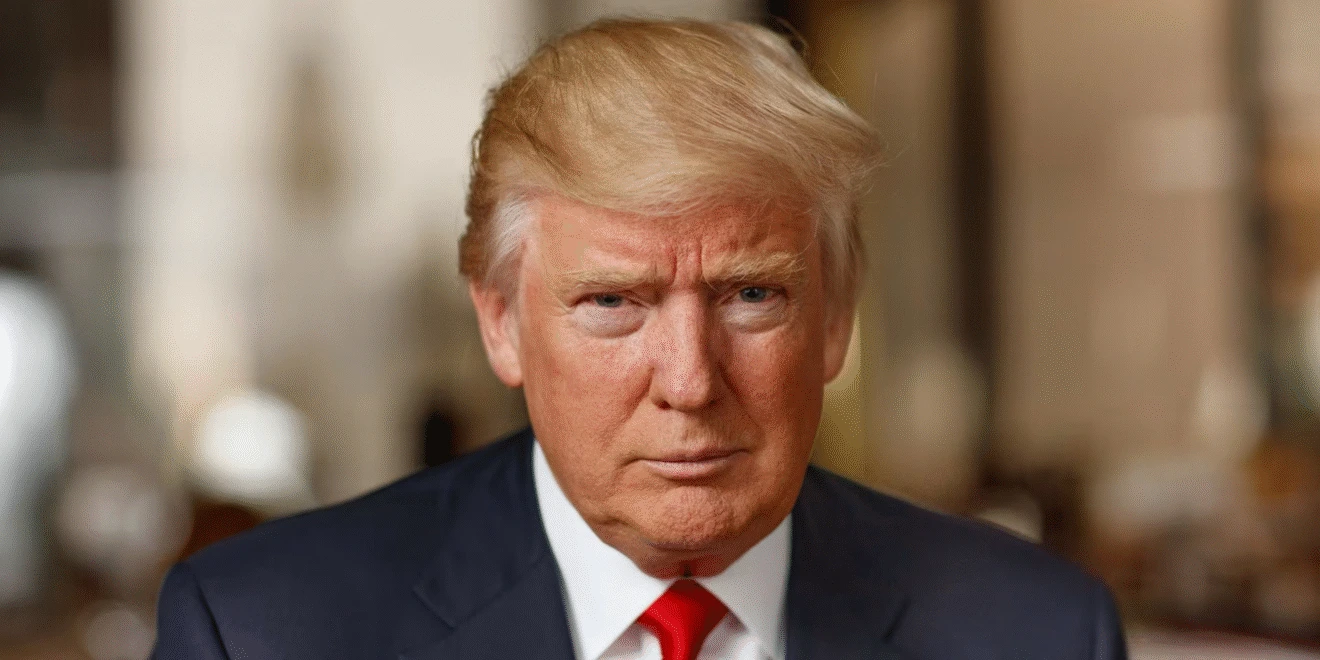
The move is the latest escalation in President Donald Trump’s effort to tighten legal immigration into the United States and could create fresh delays for thousands of people seeking permanent residence through family and employment-based immigration routes.
But despite headlines suggesting that the United States has stopped issuing visas altogether, the measure does not amount to a blanket suspension of every US visa category.
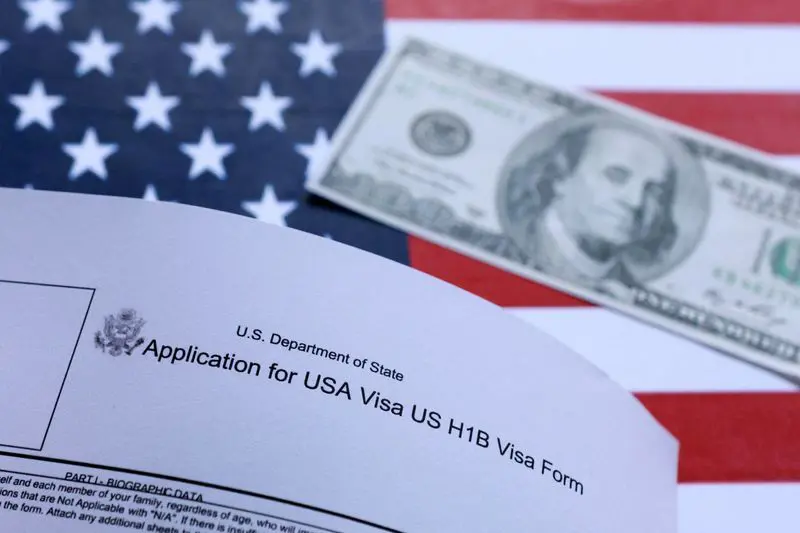
The immediate disruption concerns immigrant visa processing and scheduled appointments, while the administration trains consular officers and implements updated guidance.
Why has the US paused immigrant visa processing?
At the heart of the policy is the Trump administration’s renewed emphasis on the so-called public charge rule.
US immigration law allows authorities to consider whether someone seeking permanent admission is likely to become primarily dependent on government assistance.
The Trump administration is now seeking to apply that principle more aggressively.
The State Department says consular officers are being given additional training so they can assess applicants more comprehensively and consistently.
In practical terms, applicants may face greater scrutiny over their ability to support themselves financially after arriving in the US.
That can bring factors such as employment prospects, financial resources, age, education, skills, family circumstances and other legally relevant considerations into sharper focus.
The administration’s argument is straightforward: people being admitted permanently should be capable of establishing themselves economically rather than relying heavily on public benefits.
Critics, however, argue that the policy risks turning economic status into a much more powerful barrier to immigration and disproportionately affecting applicants from poorer countries.
This is bigger than a training exercise
The temporary pause is best understood as part of a much wider immigration strategy rather than an isolated administrative decision.
Since returning to office, Trump has pursued restrictions affecting both undocumented migrants and people seeking to enter the country legally.
The administration has increased scrutiny of visa applicants, expanded social-media screening, increased some visa-related costs and pursued measures aimed at revoking visas from certain migrants already in the United States.
The immigrant-visa pause therefore comes at a time when the administration is attempting to fundamentally change how US immigration officers assess applicants.
The training of consular officers is significant because it could determine how aggressively the new standards are applied once interviews resume.
Nigeria is particularly exposed
For Nigerians, the development deserves close attention.
Nigeria was among the countries affected by the Trump administration’s earlier attempt to suspend immigrant visa processing on public-charge grounds.
That earlier policy covered nationals of 75 countries and was designed around concerns that applicants from those countries were more likely to rely on US government assistance.
The policy subsequently faced a major legal challenge.
A federal judge overturned the measure, raising questions about the administration’s authority to impose such a broad restriction.
That legal setback makes the latest worldwide pause particularly significant.
Rather than simply announcing another country-by-country suspension, the administration is now rebuilding the screening process across the entire immigrant-visa system.
For Nigerian applicants, this could mean that the question is no longer simply whether Nigeria is on a restricted-country list.
Instead, individual applicants may face much closer scrutiny of their financial circumstances and ability to establish themselves in America.
What happens to people who already have appointments?
One of the most immediate consequences is disruption.
Applicants who had already secured interview dates have reportedly been informed that their appointments were cancelled and that they would receive new dates later.
That does not necessarily mean that their applications have been rejected.
A cancelled interview and a visa refusal are two different things.
The bigger problem is uncertainty.
Applicants may have already spent substantial amounts on visa fees, medical examinations, documentation and travel arrangements.
Some may also have made life-changing decisions based on their expected departure dates.
An applicant relocating to the United States may have resigned from a job, sold property, moved children out of school or made arrangements to leave Nigeria.
A delay of several weeks may be manageable.
A delay with no clear resumption date is considerably more difficult.
Will applicants now have to prove they are wealthy?
Not necessarily.
The public-charge assessment does not mean that every immigrant must be rich or have a large bank balance.
The issue is whether the applicant is likely to become primarily dependent on government assistance.
However, the Trump administration’s approach could make financial circumstances much more important in the decision-making process.
That creates a potentially significant change for applicants from countries where salaries and household incomes are substantially lower than in the United States.
A Nigerian applicant who has a strong family-based immigration case, for example, could still face questions about how they intend to support themselves after arrival.
Sponsors and applicants may therefore need to prepare more comprehensive evidence of income, assets, employment prospects and financial support.
The US has already created a possible escape route
The administration has also introduced a mechanism involving public-charge bonds for certain immigrant visa applicants.
Under the system, some applicants may be required to post a financial bond as a condition for receiving an immigrant visa if the consular officer determines that a public-charge concern exists.
The bond mechanism is important because it demonstrates that the administration is not necessarily seeking to reject every applicant who raises financial concerns.
Instead, it is creating additional safeguards intended to reduce the financial risk to the US government.
But for applicants, that could introduce another financial hurdle.
Someone who has already spent thousands of dollars navigating the immigration process could face another significant financial obligation before being allowed to enter the country permanently.
What about tourist and business visas?
This is where some of the reporting around the announcement can become confusing.
The move should not be interpreted as meaning that the United States has stopped processing every US visa worldwide.
Immigrant visas are fundamentally different from nonimmigrant visas.
An immigrant visa is generally used by someone seeking to move permanently to the United States and become a lawful permanent resident.
Tourist and business visas, student visas and other temporary categories operate under different rules.
Therefore, someone applying for a B1/B2 visitor visa should not automatically assume that this announcement means their application has been cancelled.
The precise effect depends on the visa category and the applicant’s individual case.
Why the legal challenge matters
The administration’s earlier public-charge restrictions provide an important clue about what could happen next.
Trump’s immigration policies have repeatedly encountered legal challenges because immigration authority is divided among Congress, the executive branch and the courts.
The administration can instruct agencies and consular officers to enforce immigration laws more aggressively, but those actions still have to operate within the limits of US law.
The previous court ruling against the 75-country immigrant-visa suspension demonstrates that broad restrictions can face serious legal obstacles.
If the new system is ultimately challenged as discriminatory, excessively broad or inconsistent with existing immigration law, the courts could once again become the battleground.
Could this become a permanent slowdown?
That is one of the major questions applicants now face.
The administration has described the immediate disruption in terms of training and implementation.
If interviews resume relatively quickly, the impact may ultimately be limited to a temporary backlog followed by tougher screening.
But if the new rules result in substantially more requests for evidence, public-charge determinations, bonds or refusals, the effects could last much longer.
US embassies and consulates could also face a growing backlog if cancelled appointments have to be rescheduled alongside new applications.
That could mean longer waiting times even for applicants who ultimately qualify for visas.
What does this mean for Nigerians planning to move to America?
For Nigerians with active immigrant-visa cases, the most important point is not to confuse the pause with an automatic rejection.
Applicants whose interviews were cancelled should monitor communications from the relevant US embassy or consulate and wait for instructions regarding rescheduling.
They should also be prepared for more extensive financial scrutiny.
That could include keeping documentation relating to income, employment, savings, assets, sponsorship and other sources of financial support organised and up to date.
Applicants should also avoid making irreversible financial decisions based solely on an expected interview date until their case is moving again.
For people who have not yet started the immigration process, the development is a warning that the path to permanent US residence could become more expensive, slower and more demanding.
The bigger picture
The significance of Trump’s latest move goes beyond cancelled appointments.
The administration is attempting to change the underlying philosophy of US immigration screening.
For decades, the US immigration system has relied on a combination of family relationships, employment qualifications, eligibility requirements, security screening and other statutory criteria.
Trump’s administration is placing greater emphasis on another question:
Can this person establish themselves financially in America without becoming dependent on public assistance?
That question could increasingly shape who is admitted as a permanent immigrant.
For Nigerians and other applicants from developing economies, the consequences could be substantial.
The immediate pause may eventually end once consular officers complete their training.
But the tougher screening system being built behind it could remain long after the appointments resume.

And that is why the latest announcement is more significant than a temporary cancellation of visa interviews.
The pause may be temporary. The change in how America evaluates prospective immigrants could be much more permanent.