Lagos will observe Thursday, August 20, as a work-free day for its public servants to mark Ìṣẹ̀ṣe Day, extending a policy that has increasingly given official space to Yoruba traditional institutions and indigenous religious practices.
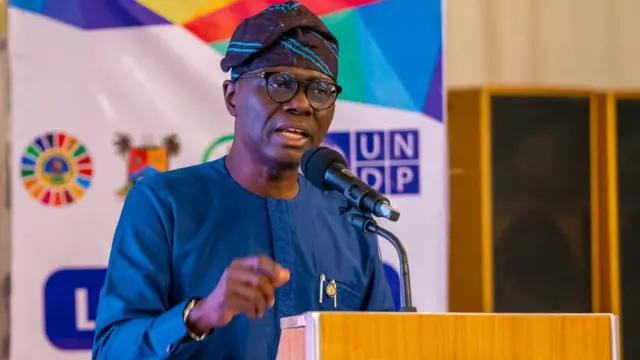
The announcement was made on Wednesday by Idris Aregbe, Special Adviser to Governor Babajide Sanwo-Olu on Tourism, Arts and Culture. According to the state government, the celebration is expected to draw millions of traditional religion adherents and visitors.
The designation, however, is more precise than the phrase “public holiday” might suggest.
Previous Lagos directives have specifically applied the work-free arrangement to state public servants rather than automatically closing every private business or workplace in the state. In 2025, for example, the government again directed public servants to observe August 20 as a work-free day.
From religious observance to government policy
Lagos’ decision is part of a broader shift in south-western Nigeria, where governments have increasingly treated indigenous traditions as both religious practices and cultural assets.
Osun was an early mover. Its government declared August 20 a public holiday for Isese in 2013 and again in 2014, describing the measure as part of an effort to give traditional believers equal recognition alongside other religious communities.
Lagos followed with its own annual work-free observance. In 2023, the Lagos State Council of Obas and Chiefs publicly pressed the government to recognise August 20, arguing that traditional believers should receive the same civic consideration given to other religious communities. Sanwo-Olu subsequently approved a work-free day for public servants.
The practice continued in 2024 and 2025, making the 2026 declaration less an isolated decision than an established feature of Lagos’ annual calendar.
That development also sits within Nigeria’s constitutional framework. Section 38 of the Constitution protects freedom of thought, conscience and religion, including the right to manifest religious belief through worship, teaching and practice.
What Ìṣẹ̀ṣe actually represents
Ìṣẹ̀ṣe is commonly translated as “tradition”, but the annual observance is not simply a cultural festival in the secular sense.
For adherents of Yoruba traditional religion, it provides a period for religious observances connected to Òrìṣà, ancestors, divination and other elements of indigenous spiritual life.
The annual celebration also incorporates music, procession, traditional dress and other public expressions of Yoruba culture.
The distinction matters because Yoruba heritage extends well beyond religious practice.
UNESCO has recognised the Ifa divination system as an element of the world’s intangible cultural heritage. Its documentation describes Ifa as a sophisticated body of knowledge involving an extensive literary corpus, mathematical formulas and oral transmission among Yoruba communities and their descendants in the Americas and Caribbean.
UNESCO has also documented the historical pressures faced by the tradition, including religious intolerance and difficulties in transferring specialised knowledge from older practitioners to younger generations.
That gives the modern Isese movement a dimension beyond the granting of a day off: governments and traditional institutions are also confronting the question of how indigenous knowledge survives in a rapidly changing society.
Lagos as a cultural crossroads
The Lagos government has framed this year’s celebration in explicitly international terms, pointing to Yoruba-descended communities in countries including Cuba, Brazil and elsewhere in the Caribbean.
There is substantial historical basis for that wider connection. UNESCO notes that Ifa is practised not only among Yoruba communities in Nigeria but also across the African diaspora in the Americas and Caribbean. The Osun-Osogbo sacred grove, meanwhile, is recognised as a site of importance to Yoruba communities and practitioners of Ifa in Africa and the diaspora.
For Lagos, the diaspora connection also fits the state’s long-running effort to position itself as a cultural and tourism centre.
The city is simultaneously a commercial capital, a major African media centre and a gateway for visitors interested in Nigerian history and culture. Giving indigenous festivals a visible place within the official calendar allows the state to connect cultural preservation with tourism and the wider global interest in African heritage.
The economic question behind the celebration
The immediate economic effect of a work-free day is mixed.
Government offices will lose a day of normal administrative activity, while businesses operating around cultural events, transport, hospitality, food, entertainment and tourism may benefit from increased movement and spending.
The larger economic opportunity lies in whether festivals can be turned into sustained cultural industries rather than isolated annual events.
UNESCO’s work on Ifa illustrates the scale of that challenge. The organisation has supported efforts to safeguard the tradition by strengthening the transmission of knowledge, documenting its literary corpus and improving training for practitioners.
For Lagos, the question is therefore not simply whether August 20 should be a work-free day. It is whether the growing official recognition of Ìṣẹ̀ṣe can help build durable institutions around cultural tourism, scholarship, archives, festivals and creative industries.
A more complicated religious landscape
The government’s decision also illustrates the changing relationship between Nigeria’s indigenous religions and the country’s overwhelmingly Christian and Muslim public life.
Traditional religion has often occupied an ambiguous position: deeply embedded in Yoruba history and cultural institutions, but frequently treated as separate from the modern religious mainstream.
Official recognition does not erase that tension. Nor does a work-free day mean that Lagos residents as a whole will participate in Ìṣẹ̀ṣe observances.
Instead, the policy gives traditional practitioners a degree of public visibility and institutional recognition that was far less common in Nigeria’s recent past.

On Thursday, the most visible expression will be the ceremonies, prayers, processions, drumming and cultural displays associated with the festival.
The more consequential development may be quieter: Lagos is continuing to move indigenous Yoruba heritage from the margins of the official calendar towards the centre of its cultural policy.