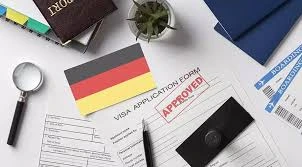
Germany has cut the qualification timeline for permanent residency for certain foreign graduates who complete university studies or vocational training in the country and subsequently take up qualified employment.
Under official guidance published on the federal government’s “Make it in Germany” portal, eligible international graduates can qualify for a settlement permit (Niederlassungserlaubnis) after two years of qualified employment, subject to meeting other statutory requirements.
The provision applies to foreign nationals who completed their university studies or vocational training in Germany and hold a temporary residence permit for skilled employment.Standard Pathway
Under the standard pathway, many skilled foreign workers may need to wait up to five years before qualifying for permanent residency. The special provision for graduates trained in Germany provides a shorter route to settlement.
To qualify, applicants must have held a residence permit for skilled employment under Sections 18a, 18b, 18d or 18g of the Residence Act for at least two years. They must also be working in a position authorised by their current residence permit.
Applicants must have made contributions to Germany’s statutory pension insurance scheme for at least 24 months.
They are also required to demonstrate German-language proficiency at B1 level under the Common European Framework of Reference for Languages and show a basic understanding of Germany’s legal and social system, typically through the “Living in Germany” test.
Other requirements include having adequate living space for themselves and their household members, while a settlement permit application fee also applies.
A settlement permit allows eligible foreign nationals to remain in Germany indefinitely and provides greater flexibility in the labour market, including the ability to change jobs or become self-employed without the restrictions associated with some temporary residence permits.

Permanent residents may also benefit from less restrictive conditions for family reunification compared with some temporary residence statuses.
The accelerated pathway comes as Germany seeks to attract and retain skilled workers amid labour shortages across sectors including healthcare, engineering, technology, education, medical technology and hospitality.