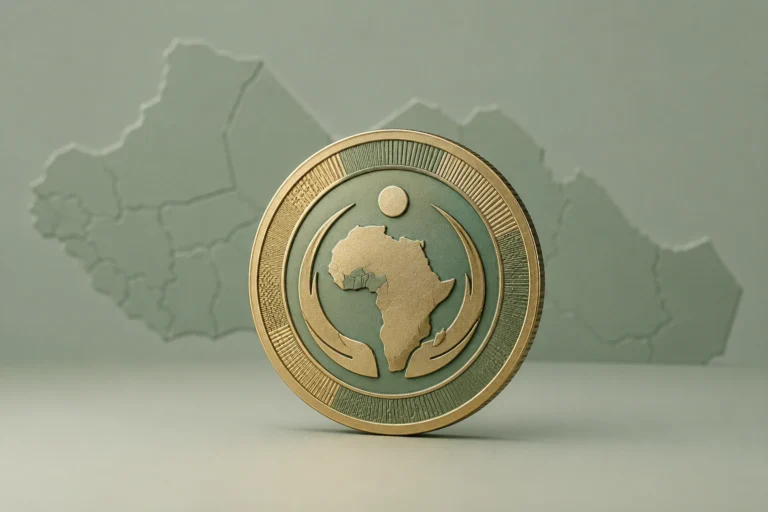
The Central Bank of Nigeria (CBN) has called for greater representation for Nigeria in the governance structure of the proposed Economic Community of West African States (ECOWAS) single currency, arguing that countries making larger financial contributions should have a corresponding influence in decision-making.
CBN Governor, Olayemi Cardoso, said Nigeria’s financial commitments, economic importance and exposure to risks associated with the proposed monetary union should be reflected in its participation in the institutions responsible for managing the ECO currency.
Cardoso made the position known while representing Nigeria at the Ministerial Session of the 6th Presidential Task Force Meeting on the ECOWAS Single Currency Programme in Abidjan, Côte d’Ivoire, according to a statement released by the apex bank on Sunday, November 22, 2026.
The meeting brought together finance ministers and central bank governors from member states to discuss institutional and governance arrangements ahead of the proposed phased introduction of the ECO from 2027.
CBN Governor Calls for Greater Representation for Major Contributors
Cardoso argued that although regional solidarity and the sovereign equality of member states remain important, these principles should be balanced against the financial responsibilities and risks assumed by individual countries.
“While bigger economies continue to take up the burden, they should also be considered to play a significant role because of the risk and systemic importance they have in the sub-region,” he said.
He explained that countries making substantial financial commitments must be able to justify their contributions to their respective parliaments and civil society, particularly where their influence in the monetary union does not reflect their obligations.
“Where obligations are shared but influence is not, arrangements may be agreed, but their long-term sustainability may be difficult to guarantee,” Cardoso added.
The CBN Governor maintained that Nigeria’s position was not driven by a desire for dominance but by its responsibilities as West Africa’s largest economy and a major contributor to the proposed monetary union.
He said Nigeria had demonstrated its commitment through substantial financial contributions, technical support and compromises made in the interest of regional consensus.
Cardoso added that Nigeria would commit significant financial resources, reserves and institutional capital towards establishing the ECO, making it necessary for its governance responsibilities to reflect the scale of its contributions.
He reaffirmed Nigeria’s commitment to the project, describing the country’s support for regional monetary integration as longstanding and unwavering.
Governance arrangements emerge as major issue
Cardoso described the Abidjan meeting as an important milestone in West Africa’s monetary integration efforts, noting that discussions had increasingly shifted towards the institutional structure of the proposed union.

Key issues include the location of the monetary union’s institutions, leadership appointments, and the distribution of authority and responsibilities among participating countries.
He warned that decisions on these arrangements would have long-term implications for the credibility of the monetary union