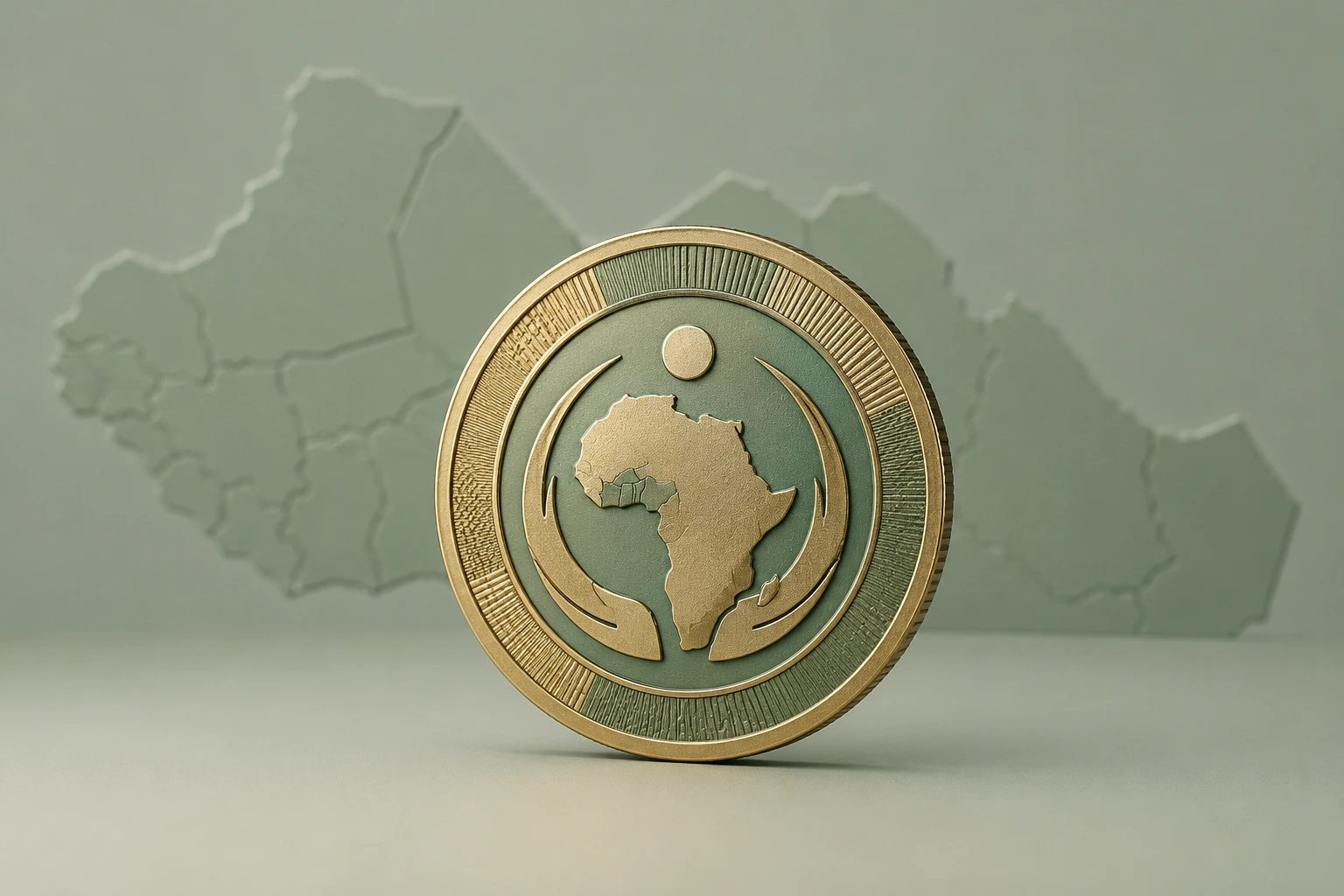
The Economic Community of West African States (ECOWAS) has reaffirmed its commitment to launching the long-awaited single regional currency, the ECO, in 2027, describing it as a major step towards deeper economic integration, stronger regional trade and sustainable growth across West Africa.
The decision was one of the major outcomes of the 69th Ordinary Session of the ECOWAS Authority of Heads of State and Government held on Sunday in Lungi, Sierra Leone, under the chairmanship of Sierra Leonean President Julius Maada Bio.
In a final communiqué issued on Tuesday, following the end of the summit, the leaders said ECOWAS economies remained resilient despite global economic challenges and projected a favourable outlook for 2026, supported by declining inflation, lower public debt-to-GDP ratios and a widening current account surplus, although fiscal deficits remain a concern.

On the single currency programme, the Authority declared that “the Authority reiterates its firm commitment to the launch of the ECO in 2027 as a key instrument for deepening regional economic integration and promoting sustainable, inclusive and resilient growth within the Community.”
According to the communiqué, the ECO will initially be adopted by member states that meet the agreed convergence criteria, while countries yet to qualify will receive support to enable them join the regional currency at a later stage.
How ECOWAS Single Currency Would Work
The proposed ECOWAS single currency, known as the Eco, is designed to function in much the same way as the euro does in the Eurozone. Rather than each member country maintaining its own national currency, participating ECOWAS states would adopt the Eco as their official legal tender.
This means consumers would earn salaries, pay taxes, purchase goods and services, and conduct financial transactions using the Eco instead of currencies such as the Nigerian naira, Ghanaian cedi, CFA franc, Sierra Leonean leone or Liberian dollar. The objective is to deepen economic integration, facilitate trade and investment, and create a more unified regional market across West Africa.
The proposed West African Central Bank, which would be responsible for issuing the currency, setting interest rates, maintaining price stability, controlling inflation, managing foreign exchange reserves, and supervising monetary policy for all participating countries.
Implications of Eco Adoption
A major implication of adopting the Eco is that participating countries would surrender independent control over their monetary policies. National central banks would no longer have the authority to print money, independently adjust interest rates, or devalue their currencies to respond to domestic economic challenges. Instead, these decisions would be made collectively by the regional central bank.
The adoption of a single currency would also lower transaction costs for businesses and individuals. Currency conversion fees, banking charges associated with foreign exchange transactions, and delays in settling cross-border payments would be significantly reduced. Consumers travelling within West Africa would no longer need to exchange currencies, while businesses would find it easier to price products and services consistently across multiple markets. These efficiencies could improve regional competitiveness and encourage greater labour mobility and tourism.
However, not every ECOWAS member state would automatically qualify to adopt the Eco. Countries are expected to meet a series of economic convergence criteria before joining the monetary union. These requirements include maintaining low and stable inflation, keeping government budget deficits within agreed limits, ensuring sustainable public debt levels, maintaining stable exchange rates, and holding adequate foreign exchange reserves. These benchmarks are intended to ensure that all participating economies are sufficiently stable and reduce the risk that one country’s economic problems could undermine the shared currency.
Fiscal discipline would become even more important under the Eco because governments would lose the ability to finance spending by printing money. Member states would need to maintain prudent public finances, as excessive borrowing or persistent budget deficits by one country could weaken confidence in the entire currency union.