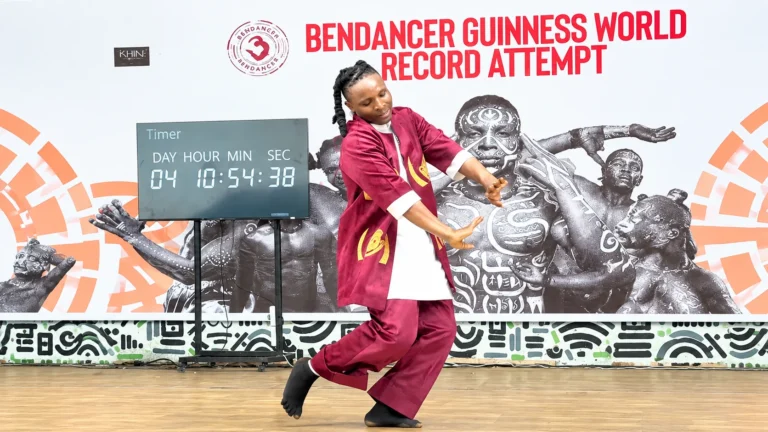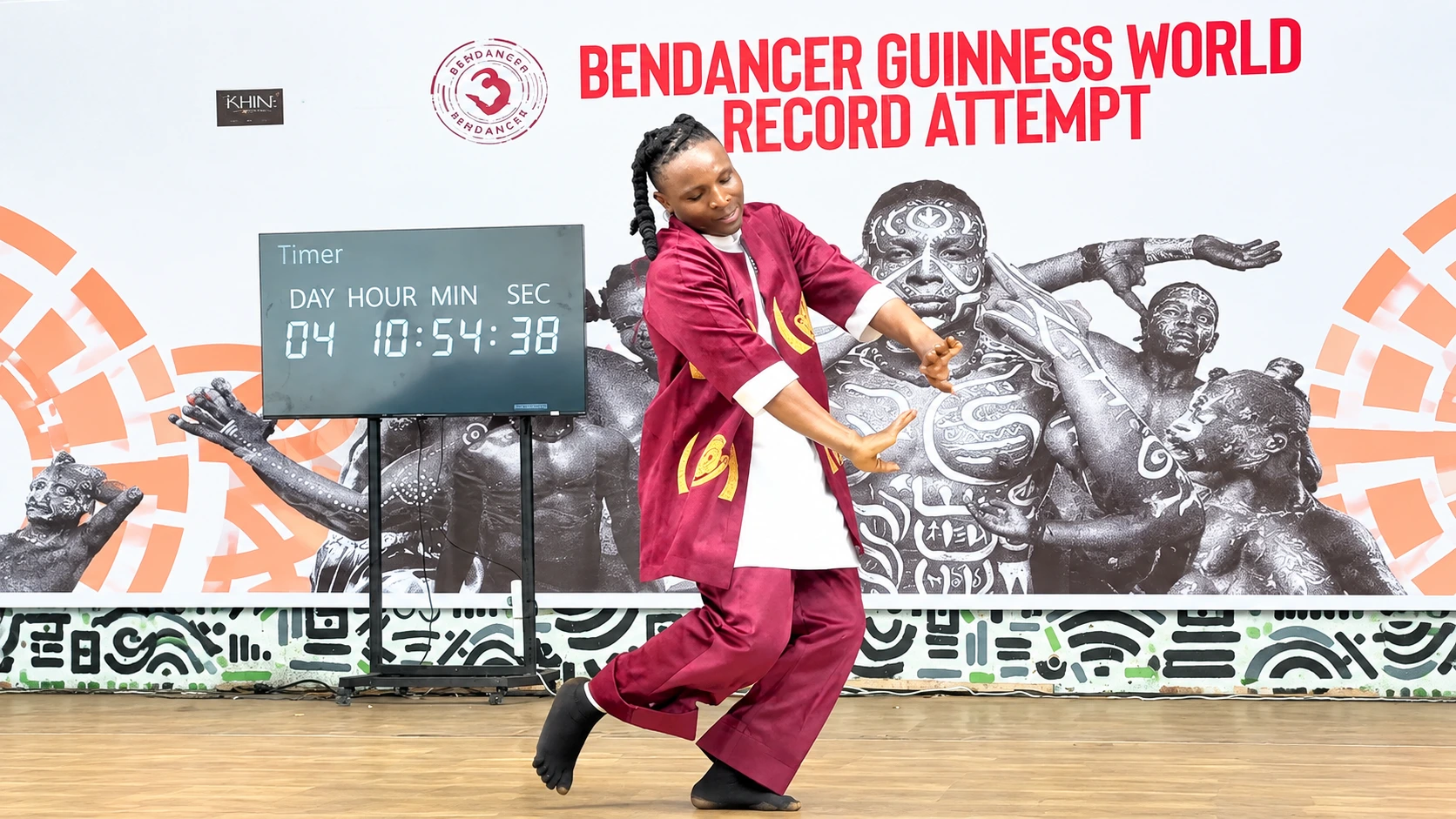
Nigerian contemporary dancer and choreographer Benjamin Daniel Gabriel has taken on a 168-hour dance marathon in Lagos, seeking to establish a new Guinness World Records mark for the longest dance marathon by an individual.
Gabriel, popularly known as BENDANCER, staged the challenge at Freedom Park, Lagos, from September 21 to 27, 2026, according to event organisers and multiple Nigerian media reports. The attempt was designed to last seven days and place Nigerian and African dance at the centre of an international record attempt.
The 168-hour target would represent a significant increase on the existing Guinness World Records record for the longest dance marathon by an individual.
Guinness World Records currently lists the record at 127 hours, achieved by India’s Srushti Sudhir Jagtap in Latur between May 29 and June 3, 2023. Jagtap was 16 when she completed the record-breaking performance.
That means Gabriel’s proposed 168-hour target is 41 hours longer than the current published record.
Guinness rules allow rest breaks
The challenge is not technically 168 hours of uninterrupted dancing without any breaks.
Guinness World Records’ rules for marathon records allow participants five minutes of rest for every continuous hour of activity, with unused rest time capable of being accumulated. Guinness said these breaks can be used for activities including sleeping and using the bathroom.
The distinction is important because completing a seven-day event does not automatically make an attempt a Guinness World Records achievement. The organisation must assess the evidence and determine whether the attempt satisfied the applicable record requirements.
Guinness currently lists Jagtap’s 127-hour performance as the official individual record, rather than Gabriel’s 168-hour attempt.
Who is Benjamin Daniel Gabriel?
Gabriel is the founder of Bendancer Academy International and has more than 18 years of professional experience in dance, according to profiles published ahead of the attempt.
His work spans choreography, creative direction, dance consultancy, modelling and fitness instruction. He has also been involved in dance education and talent development, including workshops in Bauchi and creative leadership programmes organised with Nigerian arts organisations and the British Council.
One of the notable stages in his career was his work with Made Kuti and The Movement. Nigerian media reports describe him as the first and only male dance artist to perform within the Kuti family’s performance tradition at the New Afrika Shrine.
Gabriel has also participated in cultural events including Felabration, the Big Brother Naija finale, Trophy Shout International Festival, Global Citizenship and Project Asia, according to reports about his career.
A record attempt with an African cultural message
For Gabriel, the challenge has been presented as more than an endurance test.
Ahead of the marathon, he said the attempt was intended to demonstrate what discipline and persistence could achieve while giving greater visibility to African dance and encouraging younger creatives.
The event was supported by Inspiro Productions, which handled media access and operational logistics, while partners reportedly included Freedom Park, Eventport, Aurelia African Fashion, Bethcare, Robo Fitness, Bulux, The Kuti Family, Ishine Worldwide and others.
Freedom Park was also opened to members of the public during the event, allowing dancers, artists, cultural stakeholders and supporters to follow the challenge in Lagos.
What happens next?
The key question is whether the 168-hour attempt will ultimately be recognised by Guinness World Records.
As of September 29, Guinness World Records’ published record page still identifies Srushti Sudhir Jagtap’s 127-hour performance as the individual record. Gabriel’s 168-hour challenge has been widely reported as an attempt, but no Guinness World Records confirmation establishing him as the new record holder was found in the sources reviewed for this report.

Al Jazeera also reported on September 28 that Gabriel was pursuing the 168-hour challenge in Lagos, describing it as an attempt to secure the Guinness title and bring African dance to a global audience.
Until Guinness verifies the evidence and updates its official record, the appropriate description is therefore a 168-hour Guinness World Records attempt, rather than a confirmed new world record.