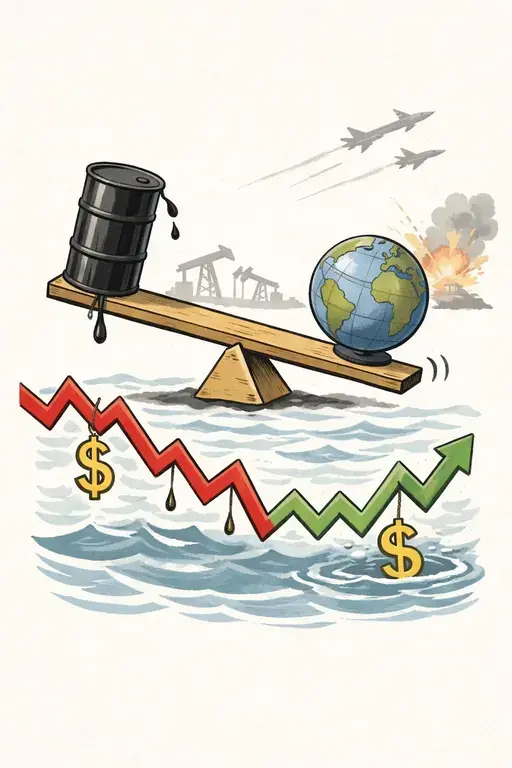
Brent crude surged 3.77% to $108.30 a barrel on Monday, September 28, as oil markets reacted to U.S. President Donald Trump’s rejection of an Iranian proposal to reopen the Strait of Hormuz and revive negotiations.
West Texas Intermediate (WTI) also jumped 3.76% to $95.88 a barrel. November WTI futures rose 3.31% to $95.47, while Brent futures gained 3.36% to $107.82 in early trading.
The rally reversed some of the recent decline in crude prices as traders reassessed the risk of prolonged disruption to oil supplies from the Middle East.
Iranian Foreign Minister Abbas Araghchi had proposed a seven-day roadmap under which Tehran would reopen the strategically important Strait of Hormuz and resume negotiations if Washington met a series of conditions.
The proposal included an end to what Tehran describes as U.S. military aggression, the lifting of the naval blockade on Iranian ports and measures to ease pressure on Iran’s oil exports. Trump confirmed on Saturday that he had rejected the proposal, telling reporters, “I reject their proposal.”
Oil Market Reverses Recent Decline
The latest rally comes after oil prices had eased as physical crude flows through the region showed signs of improvement.
Saudi Arabia has restarted some exports through alternative routes, while crude loadings through the Strait of Hormuz have also recovered from earlier disruptions. The improvement in flows had helped ease some of the supply concerns that drove the mid-September rally.
The latest price action follows a volatile month for crude. On September 15, WTI traded around $101.70 a barrel while Brent stood at about $105.70 after several sessions of gains driven by fears over Middle East supply disruptions.
Prices subsequently declined as physical flows improved before rebounding on renewed concerns about the lack of progress towards a diplomatic settlement.
Trump Rejection Raises Uncertainty
The rejection of Iran’s proposal has increased uncertainty over the duration of the conflict and the future of oil flows through Hormuz.
The Wall Street Journal has reported that Trump told aides he expected U.S. strikes on Iran to resume after the November midterm elections. However, Trump has also indicated that further talks with Iran could take place this week, leaving the diplomatic track open despite the rejection of Tehran’s latest proposal.
Iran, meanwhile, has maintained its conditions for reopening the waterway. AFP reported that Tehran continued to stand by its seven-day proposal despite Washington’s rejection.
The uncertainty has kept the oil market highly sensitive to developments involving the U.S., Iran and the Strait of Hormuz.

Any renewed military escalation could increase concerns about supply disruptions and support crude prices, while a credible diplomatic breakthrough could ease the risk premium that has pushed prices higher.
For now, traders are watching for further signals on the timing of U.S. military action, the possibility of renewed negotiations and the extent to which crude shipments through Hormuz can continue recovering.