Nigeria and the United States have formalised a new partnership aimed at expanding investment and cooperation across Nigeria’s solid minerals industry, putting greater emphasis on exploration, processing, infrastructure and technical capacity.
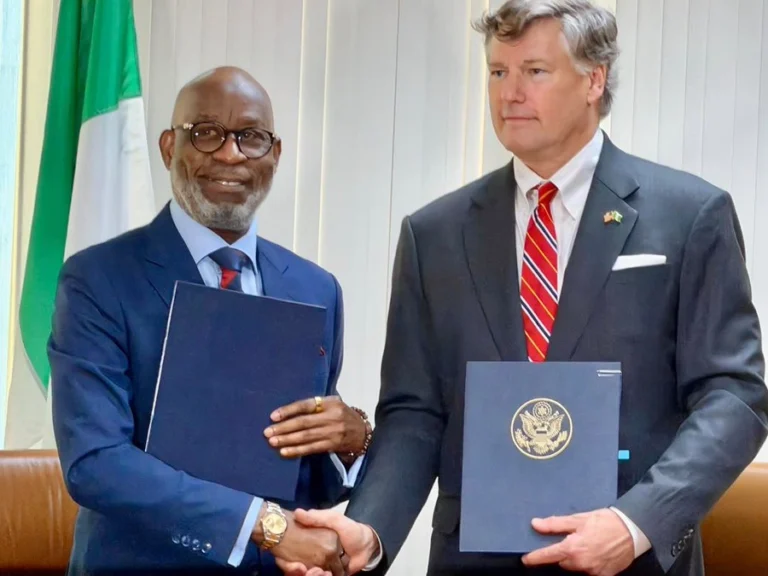
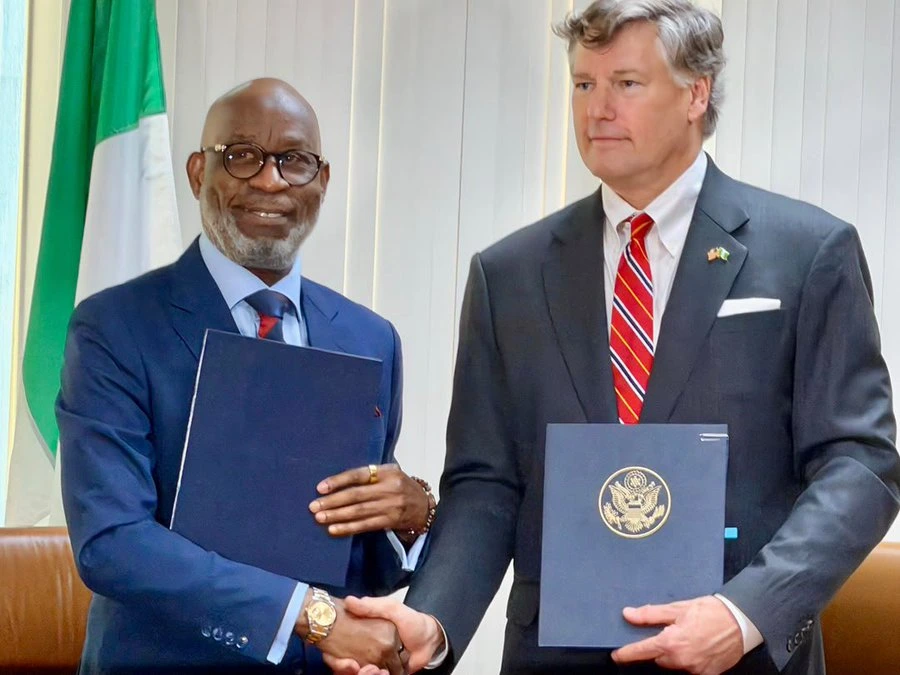
The memorandum of understanding was signed in New York by Nigeria’s Minister of Solid Minerals Development, Dele Alake, and US Deputy Secretary of State Christopher Landau on the sidelines of the 81st United Nations General Assembly.
The agreement comes as Nigeria seeks to reposition mining as a larger contributor to industrialisation and economic diversification rather than relying primarily on the export of unprocessed minerals.
From mineral deposits to industrial value
Under the framework, Nigeria and the US are expected to cooperate in geological data, mineral exploration, mineral development and processing, infrastructure and technical skills.
For Nigeria, the significance of the agreement lies less in the signing itself than in whether it can translate the country’s mineral potential into operating mines, processing facilities, jobs and businesses.
Alake said Nigeria wanted to move away from an economic model in which the country supplies raw materials while much of the higher-value activity takes place elsewhere.
He said the objective was to expand local processing, develop skills, create quality employment and increase opportunities for Nigerian companies.
The minister also said implementation would support President Bola Tinubu’s economic diversification and industrialisation agenda.
US investment and critical minerals
The agreement also reflects the growing importance of critical minerals to global supply chains and industrial policy.
Nigeria has been seeking to attract foreign capital and technical expertise into mining while developing greater domestic capacity across the mineral value chain.
The Federal Government has increasingly presented local beneficiation and processing as central to its mining strategy, rather than treating mineral extraction and export as the end point.
The latest agreement provides a framework for cooperation, but it does not by itself establish a specific mining project or announce a fixed investment amount. The commercial impact will therefore depend on projects and investments that emerge from the partnership.
Alake indicated that the next phase would involve identifying viable projects and building commercial relationships capable of producing measurable results.
Washington signals broader partnership
Landau said the agreement represented a broader signal of cooperation between Nigeria and the United States, describing the two countries as partners.
He said Washington viewed Nigeria as a major regional power and expressed US support for the country’s economic development.
The US official also backed Nigeria’s objective of retaining a larger share of the value generated from its mineral resources, including through value-added processing.
That position aligns with Nigeria’s growing effort to negotiate mineral partnerships around industrial development rather than extraction alone.
What happens after the signing
The immediate question for Nigeria is how quickly the framework produces investment on the ground.
That means moving from geological surveys and exploration to commercially viable mines, processing plants, supporting infrastructure and skilled employment.
Nigeria’s challenge has historically extended beyond the availability of mineral deposits. Developing the sector at scale requires reliable infrastructure, investment, geological information, technical expertise, regulation and access to markets.
The government will therefore need to convert the diplomatic framework into specific projects and commercial agreements if the partnership is to materially alter the contribution of mining to the Nigerian economy.

The signing took place as Nigerian and African officials were also using the UN General Assembly period to push a broader argument for greater African participation in the value chains created around the continent’s critical minerals.
For Nigeria, the US agreement adds another international partner to that effort — but its economic significance will ultimately be measured by the processing capacity, investment, businesses and jobs that follow.