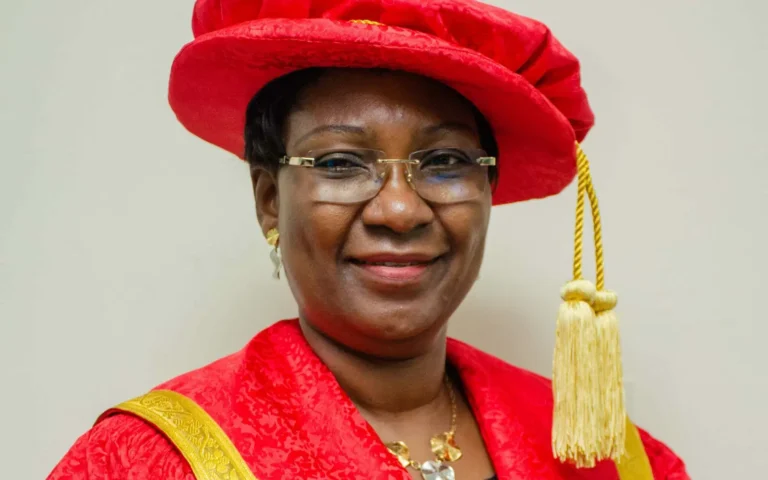
Nigeria’s public universities may have to charge significantly higher tuition fees if they are expected to become financially self-sustaining, according to former Lagos State University Vice Chancellor Ibiyemi Olatunji-Bello.
Olatunji-Bello, whose five-year tenure at LASU ended on Saturday, said the university’s growing internally generated revenue had not been enough to meet its recurrent expenditure, particularly its wage bill.
LASU currently spends more than N1 billion each month on salaries, while its annual internally generated revenue is about N13 billion, she said in an interview with Punch.
The figures illustrate the scale of the funding challenge facing public universities: even an institution that has substantially expanded its own revenue remains unable to finance its salary obligations from internally generated funds alone.
“Universities can achieve financial self-sustainability. If they can innovate and ensure improvements in the institution, money will come in,” Olatunji-Bello said.
But she added that generating more revenue would have to be accompanied by changes in what students pay.
Why N1m tuition is being proposed
According to the former LASU vice chancellor, universities seeking to operate with less dependence on government funding would need to move away from very low annual fees.
She said some secondary schools already charge more than N1 million per term, while students at some public universities pay around N100,000 annually.
“Good quality education needs money,” she said, arguing that universities require substantial funding to maintain educational standards.
Olatunji-Bello therefore said a public university pursuing financial independence could need to charge at least N1 million per student per year.
The figure represents a major increase from the fees charged by many Nigerian public universities and highlights the difficult trade-off between university financing and affordability for students and their families.
The former vice chancellor’s argument also points to a broader question for Nigeria’s higher-education system: whether public universities can maintain expanding enrolments and quality standards while relying heavily on government subventions and relatively low student charges.
LASU increased internally generated revenue
Olatunji-Bello said LASU had nevertheless made substantial progress in raising its own revenue during her administration.
She said the university increased internally generated revenue from approximately N3 billion to N13 billion over the five-year period.
The growth was attributed to new academic programmes, digital initiatives and other revenue-generating activities.
Despite the fourfold increase, the university’s current revenue remains below the amount required to cover salaries for a full year, based on the figures she provided.
At a monthly payroll of more than N1 billion, LASU’s annual salary bill would exceed N12 billion before other major operating expenses are considered.
That leaves relatively little room for other university costs even if the N13 billion IGR figure is achieved.
The affordability problem
A move towards N1 million annual tuition would have implications beyond university balance sheets.
For students from lower- and middle-income households, the cost of tuition is only one part of the financial burden of higher education. Accommodation, transportation, textbooks, feeding, technology and other academic expenses would add to the total cost.
Higher fees could therefore improve the financial position of universities while simultaneously increasing the amount families must find to keep students in school.
The debate over university financing consequently extends beyond the question of how much institutions should charge. It also involves the level of public funding available to universities, the efficiency with which institutions spend their resources, alternative revenue sources and mechanisms for supporting students who cannot afford higher fees.
LASU’s biggest successes and setbacks
Reflecting on her tenure, Olatunji-Bello described a 2024 protest over a N10,000 payment for computer-based testing as the lowest point of her administration.
She identified LASU’s strong demand among prospective university students as one of its major achievements.
The university was the most subscribed institution among candidates seeking admission through the Unified Tertiary Matriculation Examination in 2025, according to the former vice chancellor.
She said LASU retained the position in 2026 and received N25 million for maintaining compliance with JAMB regulations.
The contrasting experiences — rising demand for admission alongside persistent financial pressures — underline the challenge confronting institutions such as LASU.

More students increase the need for classrooms, lecturers, infrastructure and other services, while low tuition limits the amount universities can recover directly from those they educate.
For Nigeria’s public university system, the central financing question is therefore becoming increasingly difficult to avoid: how can institutions expand access and maintain quality without either placing a much larger burden on government or substantially increasing what students pay?