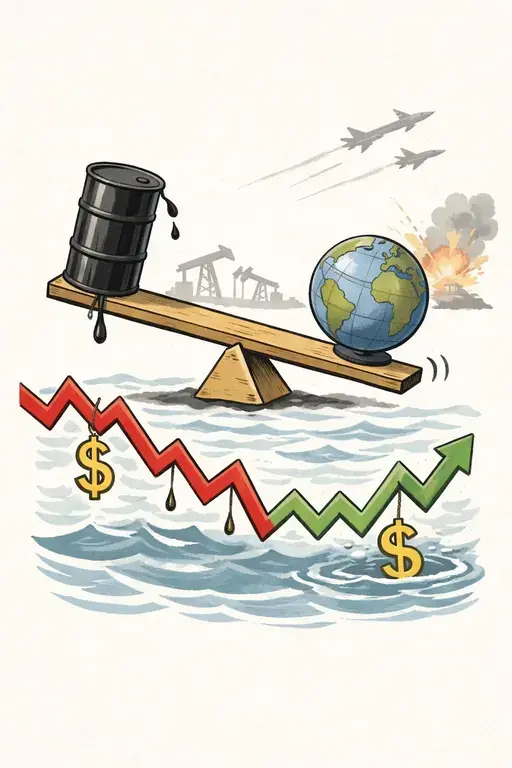
US President Donald Trump has pressed Ukrainian President Volodymyr Zelenskyy to stop attacks on Russian oil refineries, linking Kyiv’s campaign against Russia’s energy infrastructure to a worsening global shortage of diesel and rising fuel prices.
The Financial Times reported that Trump repeatedly raised diesel during a telephone call with Zelenskyy on Sunday and urged Ukraine to halt drone and missile strikes on Russian refining facilities. The newspaper cited Ukrainian officials familiar with the call. The White House had not publicly confirmed the account at the time of publication.
The intervention comes with global oil prices still unusually high. Reuters reported that Brent crude was trading at about $101.75 a barrel on Monday, while US West Texas Intermediate was around $98.34. Brent had fallen to an 11-day low as markets reacted to hopes of diplomatic progress in the US-Iran conflict and signs that Saudi oil exports were recovering, but the benchmark remained above $100 a barrel.
That distinction is important. The immediate concern surrounding Russian refinery attacks is less about the availability of crude oil than about the ability of refineries to turn crude into diesel and other fuels. A country can continue exporting large volumes of crude while producing and exporting less diesel if refining capacity is damaged.
Reuters reported last week that three of Russia’s six largest diesel-producing refineries had either sharply reduced output or stopped production during September after drone attacks. Separate attacks also forced the Syzran and Saratov refineries to suspend operations, adding to pressure on Russia’s domestic fuel market and exports.
Data from the Kyiv School of Economics underline the divergence between crude and refined products. Russian seaborne crude exports remained near historically high levels in July at roughly 4.2 million barrels a day, but oil-product exports fell by 31.6 per cent from the previous month to about 1.36 million barrels a day, the lowest level recorded in the institute’s series. Russia had already imposed restrictions on diesel and other fuel exports as domestic supplies tightened.
Global Oil Crisis
The Russian disruptions are, however, only one part of the present energy shock. Middle East conflict has also affected refineries, shipping routes and export infrastructure. A recent Reuters analysis said disruptions in the Gulf, together with reduced Russian refining output, have tightened diesel supply significantly. The fall in crude prices on Monday therefore does not mean that the pressure on refined fuels has disappeared.
Ukraine has used long-range drones and missiles to strike refineries and other energy assets inside Russia, arguing that the campaign reduces the revenues and fuel supplies available to Moscow for the war. Russia, meanwhile, has continued attacks on Ukrainian energy and commercial infrastructure. Both sides have carried on with energy strikes despite recent US efforts to secure a reciprocal moratorium.
The latest dispute followed a major Ukrainian drone attack on the Moscow region over the weekend. Reuters reported that Russian authorities said the attack damaged the Moscow refinery and killed three people in the wider region. Zelenskyy described his subsequent conversation with Trump as important and said the two leaders expected to meet on the sidelines of the United Nations General Assembly in New York.
For energy markets, the episode illustrates why crude oil prices alone no longer capture the full scale of the supply risk. Brent at roughly $102 a barrel already signals a market carrying a substantial geopolitical premium. But shortages of diesel can be even more economically disruptive because they feed directly into freight, farming, manufacturing and distribution costs.
The distinction also matters for Nigeria. Higher crude prices can support export earnings and government oil revenues, but a global shortage of refined products can raise international diesel benchmarks, shipping costs and input costs for businesses. Nigeria’s exposure is therefore two-sided: it can gain from stronger crude prices while still facing inflationary pressure from expensive refined fuels.