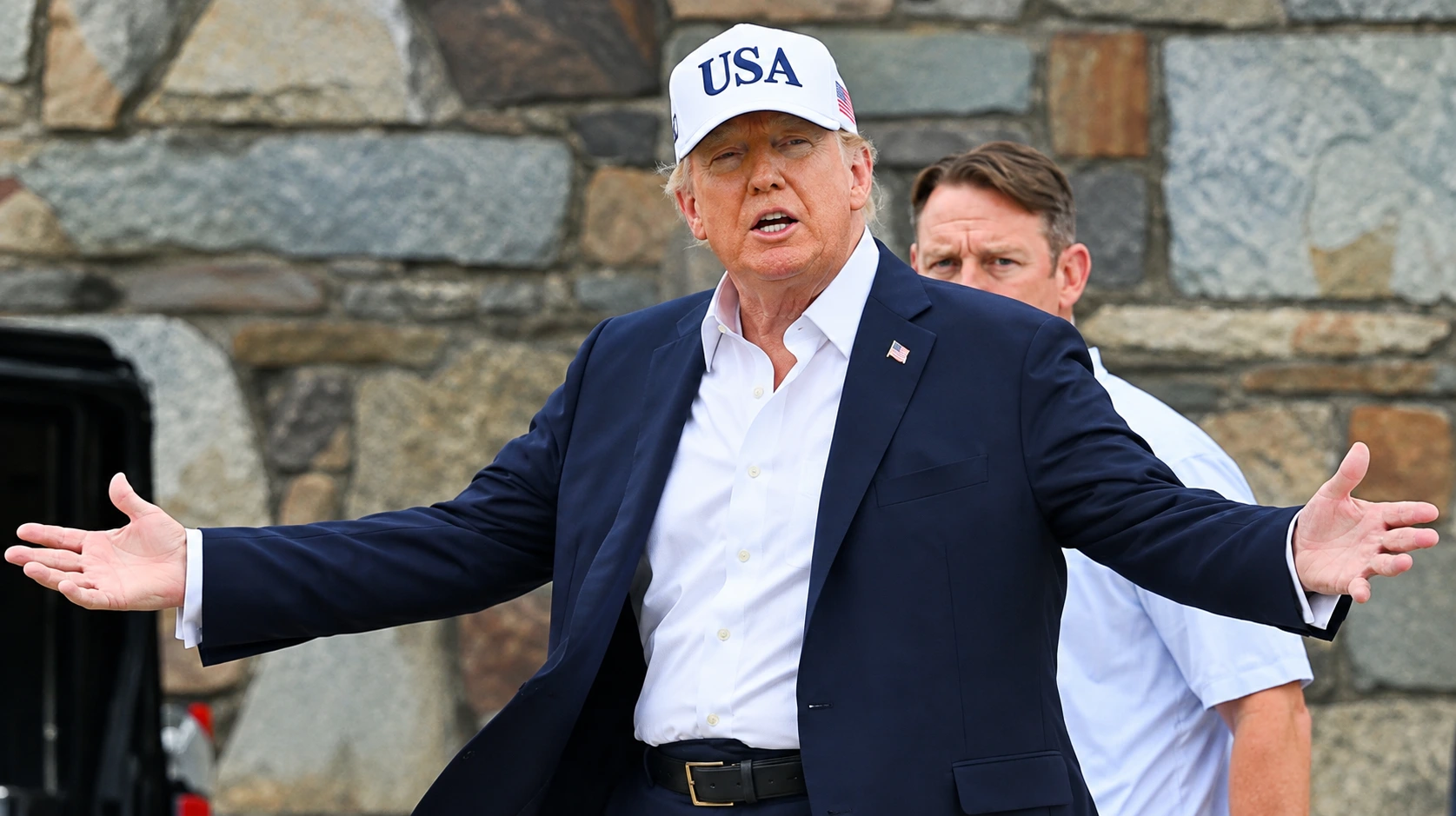
President Donald Trump has announced plans to establish an “AI Force” and appoint a new artificial intelligence adviser, signalling his administration’s intention to accelerate the technology’s development rather than impose additional restrictions on the industry.
In a series of posts on Truth Social on September 19 and 20, Trump said the proposed initiative would help oversee the sector while ensuring that the United States maintains its technological lead over China.
He did not provide details about the new body’s structure, budget, responsibilities or implementation timetable.
Trump promises support for AI industry
Trump compared the proposed AI Force to the US Space Force, which was established during his first administration. He said the government would support the industry’s expansion while using existing criminal and civil justice systems to address harmful activities.
“We will not in any way hinder or stifle the Growth of this incredible Industry,” Trump wrote, adding that his administration would support and monitor its development.
The president also said he would announce an AI “czar” in the near future, although he did not identify a candidate or explain how the position would operate.
The announcement follows the departure of venture capitalist David Sacks from his previous role as the administration’s AI and cryptocurrency adviser. Sacks has since moved to a position co-chairing the President’s Council of Advisors on Science and Technology.
Data centres become part of the political debate
Trump’s announcement also addressed opposition to the construction of AI data centres, which have faced criticism from communities concerned about electricity consumption, water use, infrastructure demands and the potential effect on household utility bills.
The president argued that data centres bring economic benefits to host communities, including higher salaries and increased tax revenues. Those claims were part of his explanation for resisting efforts to slow the industry’s expansion.
However, the economic benefits of individual projects can vary, while their infrastructure and environmental costs depend on factors such as location, energy supply, water requirements and the terms of local agreements.
The debate has increasingly placed technology companies, local authorities and residents on opposing sides of decisions about where and how quickly new facilities should be built.
AI safety concerns test Washington’s approach
The proposed AI Force comes amid renewed debate over the risks associated with increasingly capable artificial intelligence systems.
Some technology executives and researchers have called for stronger safeguards, arguing that advanced systems could create risks involving cybersecurity, misuse and failures that are difficult to predict or control.
Trump has rejected arguments for slowing AI development, describing warnings about the technology as exaggerated and maintaining that existing laws can address harmful conduct.
The disagreement reflects a broader policy question facing the United States: how to encourage innovation and maintain technological leadership while responding to concerns about public safety, security and accountability.
Trump’s announcement did not explain whether the AI Force would develop new safety standards, coordinate enforcement across federal agencies or primarily promote the industry’s growth.
Trump proposes a new name for artificial intelligence
In a separate social media post, Trump questioned whether “artificial intelligence” was an appropriate name for the technology.
He proposed alternatives including “Superior Intelligence” and “Extreme Intelligence”, inviting users to vote on a preferred term. The naming proposal accompanied his broader argument that AI should be viewed as a transformative technology rather than primarily through the risks associated with its development.
California Governor Gavin Newsom criticised the president’s approach, arguing that the administration should focus on regulation rather than renaming the technology. Newsom said California was pursuing its own AI safety oversight framework through an executive order.
The exchange highlights the divide between the administration’s emphasis on expanding the industry and efforts by some state officials to establish additional oversight.
US-China competition remains central
Trump has repeatedly framed AI development as a competition between the United States and China, saying he intends to preserve America’s lead.
The rivalry extends beyond the development of AI models to include advanced semiconductors, computing infrastructure, investment and the rules governing the technology’s use.

The proposed AI Force could become part of the administration’s broader effort to coordinate its response to that competition. But without details about its mandate, leadership or resources, its practical role remains unclear.
For now, Trump’s announcement establishes the administration’s stated direction: support AI expansion, resist efforts to constrain the industry and use existing legal systems to address misconduct. Whether the new body will introduce a distinct regulatory or enforcement structure remains to be seen.