The Gates Foundation is committing at least $1 billion over the next two years to develop and deploy artificial intelligence for healthcare, education and agriculture in communities that have so far had little influence over how the technology is built.
The announcement, made alongside the foundation’s 2026 Goalkeepers Report, goes beyond funding individual AI applications.
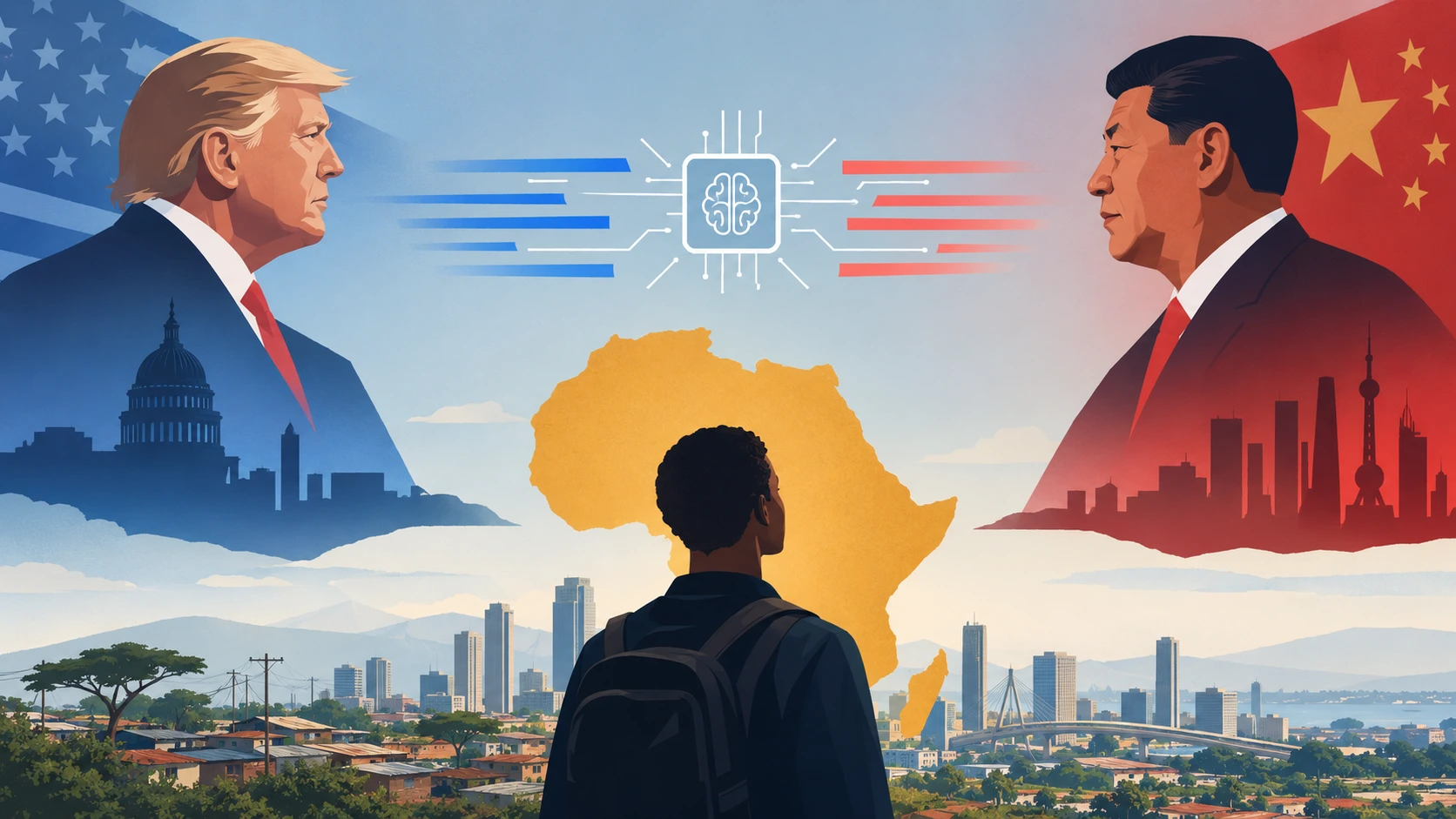
It targets a structural problem in the industry: the world’s most powerful AI systems are being developed around the languages, data and purchasing power of wealthier populations.
The foundation plans to divide the money roughly equally between education and healthcare, with 40% allocated to each, while 10% will go to agriculture and another 10% to the digital infrastructure and datasets needed to make AI useful across languages and communities.
That allocation puts the initiative at the intersection of two different AI races.
Wealthy countries and technology companies are spending enormous sums on computing infrastructure and increasingly capable models, while the Gates Foundation is betting that the value of AI in poorer countries will depend less on access to the most powerful model and more on whether that model understands the people using it.
Africa is a test of whether AI can cross the language divide
Africa is central to that problem.
The Gates Foundation’s report says more than 90% of the data used to train early large language models came from English-language sources. For a continent with thousands of languages, that imbalance can translate directly into weaker AI performance for people who do not communicate primarily in English.
The foundation has already been financing attempts to address the gap.
In September 2025, it committed almost $5 million to the Masakhane Research Foundation, a Kenya-based organisation working on language models and digital tools for people who primarily speak African languages.
It has also funded work in Nigeria. A 2024 grant to Data Science Nigeria supported development of an AI governance and policy framework intended to encourage local innovation and more sustainable AI development on the continent.
A newer grant illustrates where the strategy is heading. In August 2026, the foundation committed about $1.85 million to Eedi to build open, context-adapted numeracy AI infrastructure for sub-Saharan Africa, including local knowledge graphs and student-response datasets.
These projects suggest that the foundation’s approach is not simply to bring existing American or European AI products into African markets.
It is also trying to increase the amount of African data, language and educational context available to the systems themselves.
Healthcare may deliver the fastest test
Healthcare is where the foundation has already moved from experimentation toward large-scale deployment.
In January, it announced Horizon1000, a partnership with OpenAI aimed at bringing AI tools to 1,000 primary healthcare clinics and surrounding communities across sub-Saharan Africa.
The foundation has pointed to the region’s shortage of healthcare workers as a reason AI could have unusually large effects there. Its 2026 annual letter estimates a shortfall of nearly 6 million health workers in sub-Saharan Africa.
The intended applications range from patient intake and triage to clinical decision support and follow-up care.
That model is different from the way AI is often discussed in richer economies, where the emphasis is on replacing or augmenting highly paid knowledge workers.
In a rural African clinic, the immediate economic value may instead come from helping a limited number of nurses or clinicians manage larger patient loads.
The constraint is that AI cannot solve a shortage of doctors if the underlying system lacks electricity, connectivity, medicines or trained staff.
The technology therefore has to work inside the infrastructure that already exists rather than the infrastructure available in Silicon Valley hospitals.
Education and farming bring a different set of problems
The foundation is directing another 40% of its new commitment to education.
One target is AI tutoring that can adapt to individual students, alongside tools intended to help teachers identify learning gaps and provide more personalised instruction.
For developing countries, the question is not simply whether an AI tutor can answer a student’s question. It is whether it can do so accurately in the student’s language, reflect the local curriculum and function where teachers and digital resources are scarce.
Agriculture presents a similar opportunity.
The foundation wants AI systems to provide smallholder farmers with advice adapted to their soil, weather and crops, potentially allowing agricultural information to reach farmers more quickly and at lower cost.
The foundation has already identified locally relevant data and local-language delivery as important parts of that work. Its partnership with Anthropic, for example, includes agricultural applications designed to give farmers real-time advice on planting, soil health, crop disease, livestock and market conditions.
The money is large for philanthropy, but tiny beside the AI infrastructure race
The $1 billion commitment is substantial for a philanthropic organisation but sits in a very different financial universe from the global AI infrastructure boom.
The Bank for International Settlements has estimated that the five largest global technology companies are on course to invest more than $1 trillion in AI during 2025 and 2026, while overall global AI investment could reach $4 trillion by 2030.
That disparity explains the particular role Gates is attempting to play.
The foundation cannot compete with technology companies on computing capacity. It can, however, direct capital toward problems that commercial markets may consider too small, too poor or too difficult to serve.
The foundation’s own report describes this as a market problem: without intervention, AI developers have an economic incentive to build first for people and institutions capable of paying the most.
The unresolved issue is who controls the data
The Gates initiative also leaves a question that money alone cannot settle: who owns the digital infrastructure created with the money?
If health records, agricultural data and educational information are collected through AI systems built or operated by foreign companies, countries could gain access to useful tools while becoming more dependent on external technology providers.
That makes data governance as important as AI capability.
African governments will have to decide where sensitive data is stored, who can access it, how it can be reused and what happens when a philanthropic programme ends.
There is also a question of whether local companies and researchers can capture enough of the resulting economic value to build sustainable industries around the technology.
The Gates Foundation’s stated objective is to make AI more accessible. Whether that ultimately produces greater technological independence will depend partly on the institutions that control the systems after the initial funding is spent.
Gates is betting on the distribution of AI, not just its development
Bill Gates has increasingly framed AI as a technology whose benefits could be particularly valuable in developing countries, while warning that governments are not moving quickly enough to prepare for its effects on jobs, security and society.
The foundation’s new programme reflects that argument.
The central competition in AI is no longer only over who builds the most capable model. It is also over whose languages are represented, whose problems are prioritised and who can afford to use the resulting technology.
For Africa, that distinction could determine whether AI becomes another imported digital service or contributes to the development of locally relevant systems, datasets and companies.

The $1 billion commitment cannot resolve that question by itself.
But it puts philanthropic money behind a proposition that the commercial AI industry has historically had fewer incentives to pursue: that some of the world’s largest potential gains from artificial intelligence may lie in populations that currently have the least influence over how it is built.