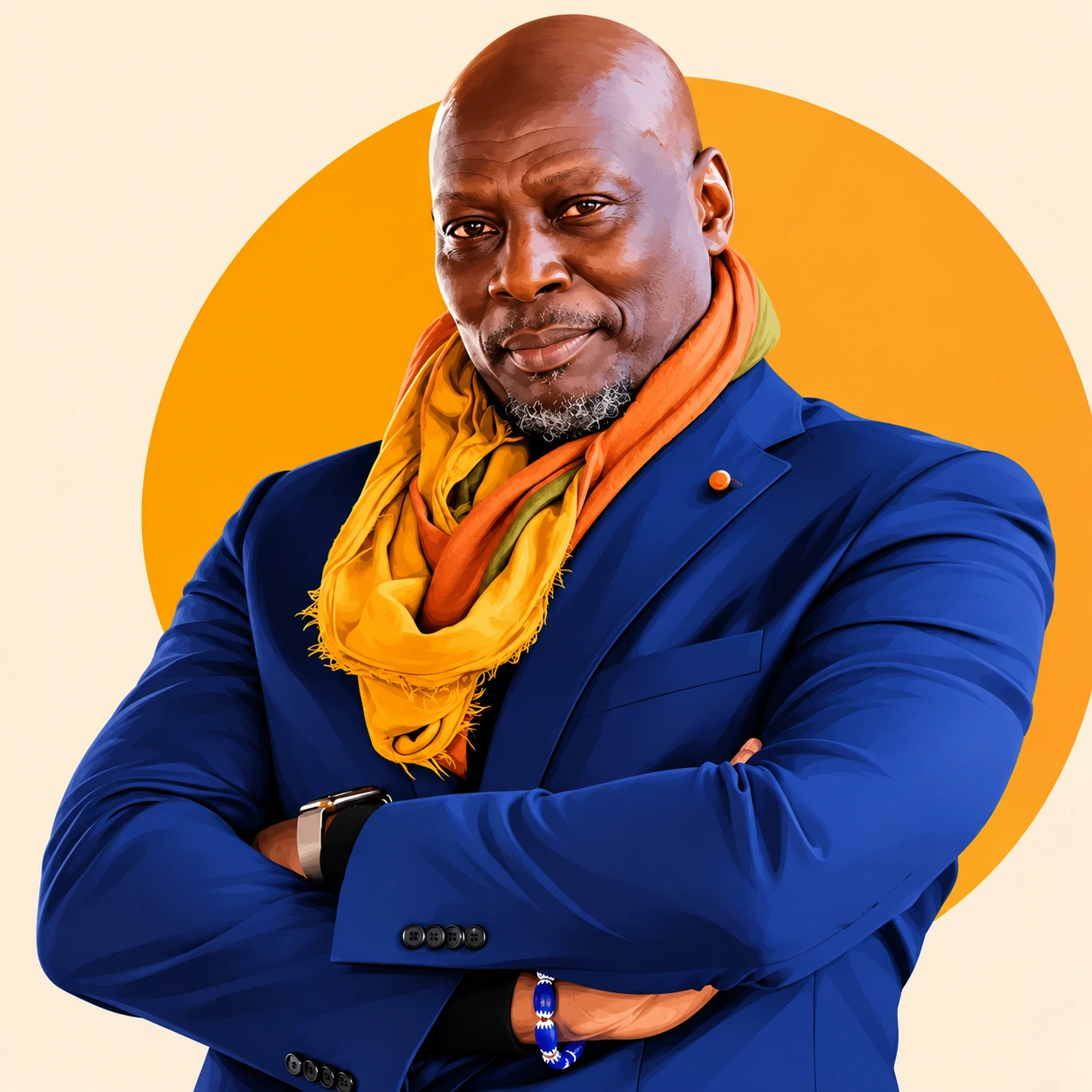
Stanford University professor Ato Quayson has delivered one of the sharpest critiques yet of the institutional failures surrounding former Cambridge professor Jason Arday, arguing that Cambridge appeared to have been captivated by Arday’s extraordinary personal narrative and failed to subject his academic record to sufficiently rigorous scrutiny.
Quayson, a Ghanaian scholar who earned his PhD at Cambridge and later taught in its English Faculty for a decade, said the controversy should not be understood simply as a story about one academic accused of plagiarism. In his account, it raises broader questions about doctoral supervision, academic mentoring, the treatment of Black scholars and the procedures elite universities use when appointing professors.
“One wonders why the Cambridge University search process was not able to pick up the flaws in Arday’s profile,” Quayson wrote in a commentary titled Jason Arday: Fabulism versus Irresponsibility. “Clearly, they were enamoured of the fairy tales Arday shared with them.”
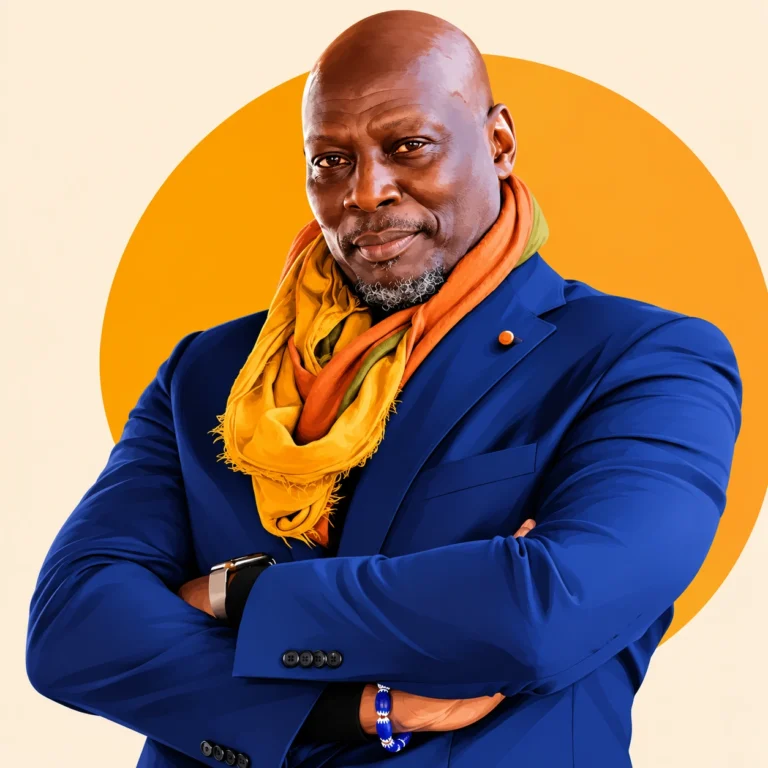
Quayson is the Jean G. and Morris M. Doyle Professor of Interdisciplinary Studies at Stanford, professor of English and of African and African American Studies, and chair of Stanford’s Department of African and African American Studies. Stanford says he took his PhD at Cambridge in 1995, subsequently returned to the university as a faculty member, and remained there until 2005.
His intervention comes after Arday resigned from Cambridge in August 2026 amid renewed scrutiny of plagiarism allegations and questions over claims concerning his academic record and personal history. Cambridge had announced a fresh investigation after receiving what it described as new information about Arday’s qualifications and career. Arday has denied plagiarism and said earlier institutional inquiries had not found academic misconduct.
A “highly inventive fabulist”
Quayson’s most severe criticism is directed at what he sees as a recurring pattern in Arday’s self-presentation. He described Arday as a “highly inventive fabulist”, pointing to stories about extraordinary endurance feats and his account of overcoming profound childhood developmental and educational difficulties.
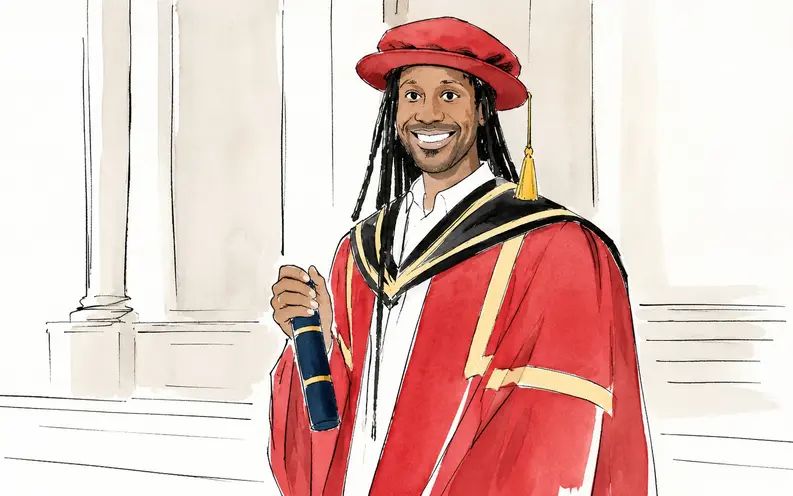
Quayson argued that the claims share a consistent theme: that Arday, despite formidable disadvantages, repeatedly presents himself as capable of almost superhuman acts of perseverance. Some elements of Arday’s biography were prominently repeated by Cambridge itself when announcing his appointment in 2023. The university described him as having been unable to speak until age 11 and unable to read or write until 18, before later becoming a professor.
Quayson did not argue that an unusual life story is itself evidence of wrongdoing. His point was that, in an appointment to a senior academic post, an institution should separate the appeal of a candidate’s biography from the evaluation of the candidate’s scholarship, publication record and claims about professional achievements.
Liverpool John Moores also comes under fire
Quayson also placed substantial responsibility on Liverpool John Moores University, where Arday completed his doctorate in education in 2015. He argued that supervisors and mentors should have identified problematic citation or attribution practices at an early stage and corrected them.
“If so, then he should not have been allowed to graduate with a PhD from the institution,” Quayson wrote, while acknowledging that some students can resist advice. Liverpool John Moores previously investigated plagiarism allegations concerning Arday’s thesis and did not uphold them, according to reports, attributing the issues it examined to “honest and reasonable error”.
Arday’s doctoral thesis remains listed in the university’s research repository. The controversy has therefore shifted attention from the individual scholar to the systems of supervision and examination that certify doctoral work.
The Chris Spence comparison
To illustrate his argument that universities can fail at the point of doctoral supervision and later correct the record, Quayson cited the case of Chris Spence, the former director of the Toronto District School Board. Spence resigned from the board in 2013 after admitting plagiarism in newspaper writing, and allegations later emerged concerning his 1996 University of Toronto doctoral dissertation.
Quayson noted that the University of Toronto subsequently investigated the case and rescinded Spence’s doctorate. He used the episode to argue that universities have a continuing responsibility for the integrity of degrees they award, even years after graduation.
The comparison is important because it sharpens the question now surrounding Arday’s PhD: not simply whether passages were improperly attributed, but whether the original doctoral supervision, examination and later review were sufficiently rigorous.
A warning against lower standards for Black academics
Quayson also addressed the racial dimension of the controversy. He said he suspected that mentors and institutions can sometimes become less demanding when dealing with Black students whose progress is seen through the prism of adversity and representation.
He described that possibility as an insult to Black students and academics who meet the same demanding standards as everyone else. In Quayson’s argument, applying softer standards in the name of inclusion would ultimately undermine the very scholars such policies are intended to support.
He was equally dismissive of the suggestion that serious scrutiny of plagiarism allegations should automatically be interpreted as racial persecution. Arday has said he has been subjected to racist abuse and has described aspects of the scrutiny of his work as racialised. Quayson said genuine racism does not remove an academic’s obligation to answer substantive questions about scholarly standards.
Did Cambridge’s appointment system fail?
The most consequential part of Quayson’s critique concerns Cambridge itself. He contrasted Cambridge’s appointment process with Stanford’s system for full professorships, where, he said, departments commonly solicit at least nine external referee letters and sometimes as many as 15.
According to Quayson, the breadth of external assessment makes it more likely that concerns about a candidate’s research record or professional history will surface before an appointment is approved. Once negative issues appear in a referee report, he said, the department must address them and the dossier then undergoes further scrutiny at higher levels of the university.
Quayson suggested that Cambridge’s problem may therefore lie less with the members of one search committee than with the design of the appointment process itself. That argument is likely to resonate because Cambridge’s own 2023 announcement was unusually celebratory, presenting Arday not only as a scholar but as the embodiment of a remarkable story of triumph over disadvantage.
Cambridge described him at the time as a “highly respected scholar” who had “established himself as a leading scholar in his field”. The university also highlighted his childhood diagnosis, delayed speech and literacy, his work on race and inequality, and his ambition to inspire people from under-represented backgrounds.
The contrast between that endorsement and the questions that emerged three years later is the core of Quayson’s charge: that the power of an inspirational narrative may have weakened the scepticism normally expected in an elite academic appointment.
Cambridge moved from defence to investigation
Cambridge initially defended Arday amid the allegations. But after further questions emerged over his academic affiliations, qualifications and other biographical claims, the university said it had received new information and opened a fresh investigation. Jesus College, where Arday was a fellow, also began a review.
Arday resigned before the investigations were completed. In his resignation statement he said the controversy had caused severe harm to him and his family and that stepping down was the only way to bring the episode to an end. He continued to reject allegations that he had deliberately plagiarised his work.
Quayson welcomed Cambridge’s eventual decision to investigate, but said the real lesson should be institutional. Universities, he argued, have an obligation not merely to celebrate unusual routes into academia but to ensure that mentorship, doctoral supervision and senior appointments are conducted with the same seriousness and diligence for every candidate.

Why Quayson’s intervention matters
Quayson’s criticism carries particular weight because it does not come from an opponent of diversity initiatives or an outsider to elite academia. He is Ghanaian, Cambridge-trained, a former Cambridge faculty member, a former University Professor at the University of Toronto and currently chairs Stanford’s African and African American Studies department.
His argument is therefore not that universities should retreat from efforts to diversify their faculties. It is that diversity becomes vulnerable when institutions appear to relax the ordinary safeguards of academic appointment. In that reading, the Arday affair is not a case against inclusion; it is a case for ensuring that inclusion and rigorous academic standards are treated as inseparable.