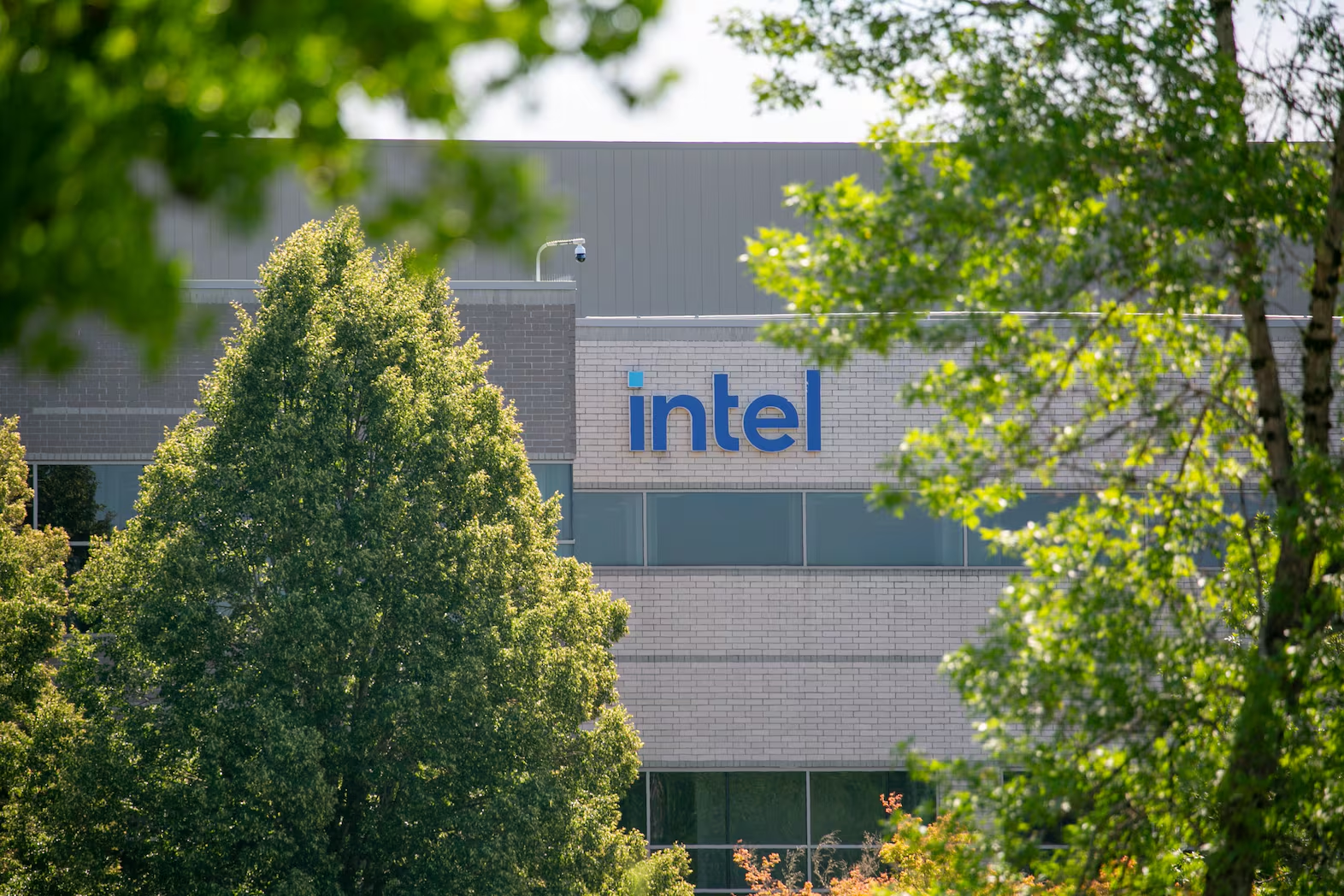
Intel has raised $20 billion through an upsized share offering, giving the US chipmaker fresh capital to finance its ambitious expansion into contract chip manufacturing as it seeks to challenge Taiwan Semiconductor Manufacturing Company and rebuild its position in the global semiconductor industry.
The company priced the offering at $95 per share, a 2.6% discount to its previous closing price. Intel had initially targeted $15 billion from the sale before increasing the size of the offering.
Intel, once the dominant player in global processors, has been investing heavily in new semiconductor fabrication facilities and advanced packaging technologies as it attempts to establish its foundry business as a credible competitor to TSMC.
The company has also increased its capital expenditure forecast for 2026 to $20 billion from $18 billion, citing stronger demand for central processing units driven by the rapid adoption of AI agents.
Intel Chip Manufacturing Expansion
The latest capital raise gives Intel additional financial capacity as it ramps up spending on its manufacturing ambitions, including its next-generation 14A process. Intel has committed to high-volume production using its 14A manufacturing technology in 2028 after previously warning that the technology could be shelved without securing a major external customer.
The company’s foundry business has secured Tesla as a customer for its 14A process, while expectations of another major customer have risen following US President Donald Trump’s statement that Apple would work with Intel to manufacture processors. Neither Apple nor Intel has confirmed the arrangement.
Intel is also expanding its manufacturing footprint outside the United States. Last month, the company announced a €5 billion ($5.77 billion) investment to upgrade and expand its semiconductor manufacturing operations in Ireland, representing more than a quarter of its planned 2026 capital spending.

The investment comes as Intel attempts to reverse years of manufacturing delays and strategic setbacks that allowed competitors including TSMC and AMD to gain ground.
The $20 billion proceeds will therefore provide Intel with a significant source of funding as it attempts to execute one of the most expensive strategic transformations in its history: shifting from primarily designing and manufacturing its own processors to becoming a major global contract chip manufacturer.