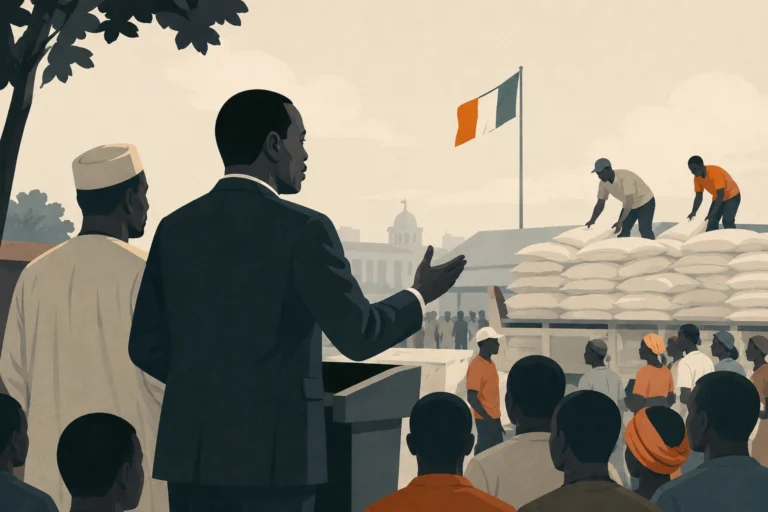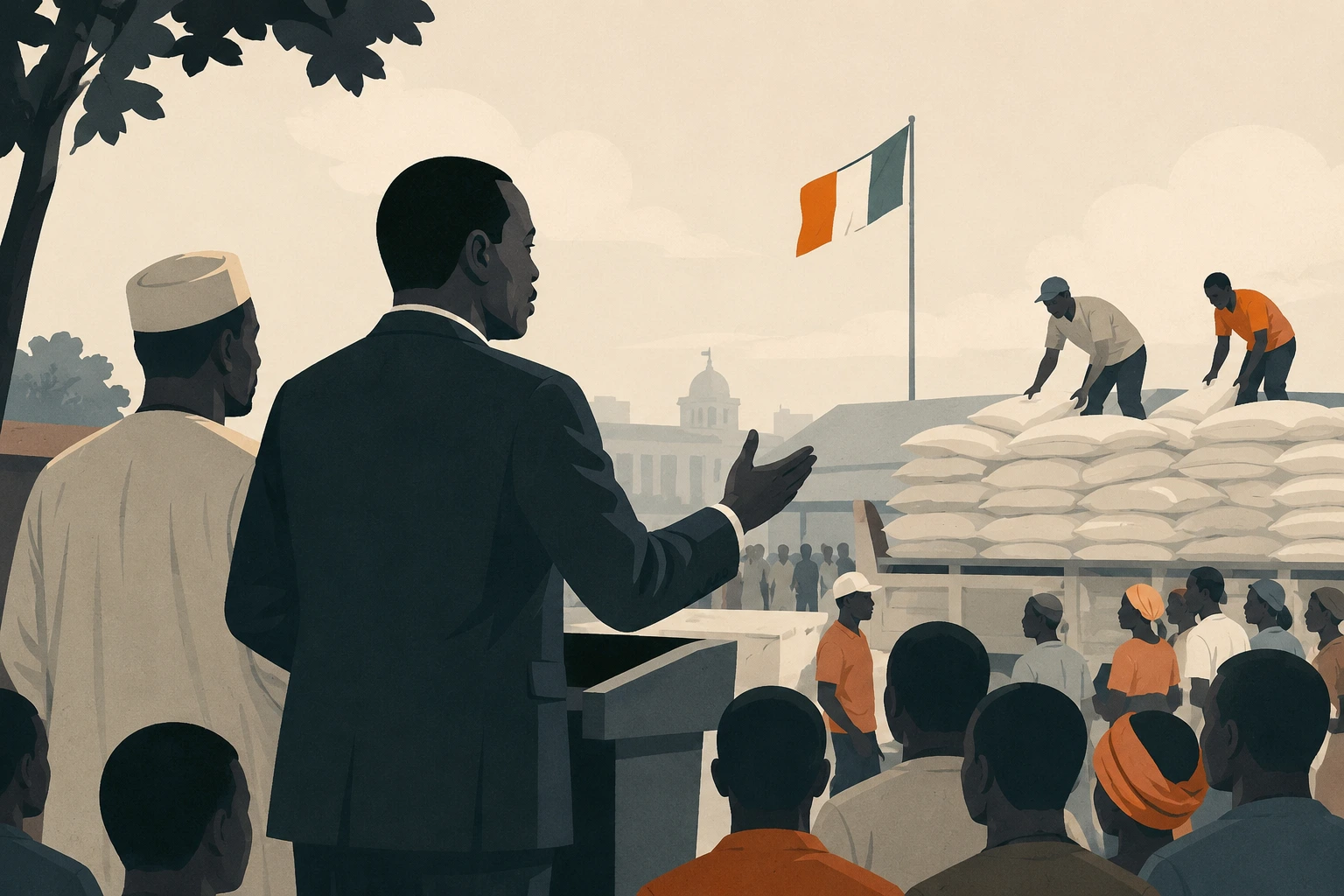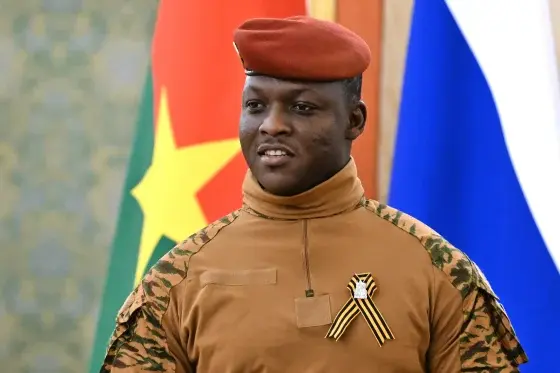
When Burkina Faso’s military ruler, Capt Ibrahim Traoré, addressed community leaders in the northern city of Ouahigouya last week, he framed his argument as one of national survival. Religion, he said, could not outrank the state; Burkina Faso would remain secular; and its education system should produce people able to build roads, run factories, treat patients and modernise agriculture.
He then turned to citizens who were not in the room. Traoré said his government had identified “more than 800” Burkinabè studying in Arab countries, many outside the knowledge of Burkina Faso’s diplomatic missions. He claimed they were studying Sharia and Islamic jurisprudence rather than technical or professional subjects.
“I’m going to bring them back. Whoever does not return is no longer Burkinabè,” he said, according to a fuller French-language account carried by local media.
A widely shared English version of the video said almost the opposite: that the students had been told to remain abroad and would not be allowed home. The available French recording and transcripts indicate that Traoré threatened to compel their return – and potentially strip those who refused of their nationality. The presidency confirmed the 16 July meeting, though its brief account did not reproduce the passage.
The distinction changes the issue from a supposed ban on re-entry to a broader claim of state power over citizens’ education, movement and legal identity. It also raises a larger question: how far can a government go in directing what its people study in the name of security and development?
A wider attempt to control study abroad
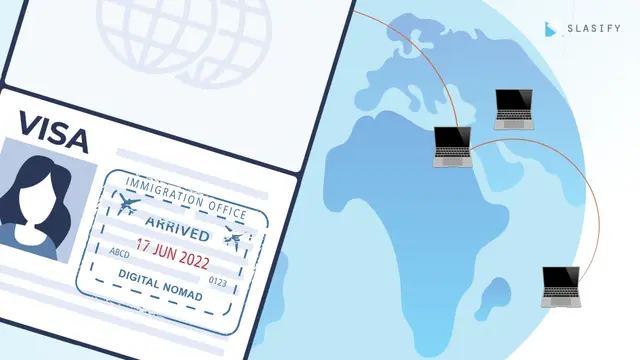
Traoré’s remarks were not made in a policy vacuum. On 25 June, his government adopted a decree requiring every Burkinabè seeking to study, train or undertake an internship abroad to obtain prior authorisation from the higher education ministry, whether publicly or privately funded.
The government says the measure will help it track students, protect them from fraudulent institutions and examine overseas courses. Human Rights Watch has argued that registration could be legitimate, but that prior permission gives the state a much wider power to decide who may leave and what may be learned.
The fate of the students remains unclear. The government has not published their names, institutions, host countries or funding arrangements, nor evidence that any has supported violence. Traoré referred generally to Arab countries; social-media posts often narrowed the claim to Saudi Arabia without showing that all the students were there.
Nor has the government explained how a recall would work. Some may be scholarship holders, others may have families abroad, and some may be close to graduation. Islamic jurisprudence is not a single ideological programme. Its graduates work as teachers, researchers, clerics and legal scholars. Studying religion is not, by itself, evidence of support for an armed group.
Faith, security and the power of the state
The speech found a receptive audience among supporters who see Traoré as confronting both jihadist violence and foreign influence. Burkina Faso has endured an Islamist insurgency for more than a decade. Millions have been displaced, public services disrupted, and large rural areas have at times fallen beyond effective state control.
Traoré, himself a Muslim, said citizens were free to practise their faith but rejected the idea that religious law could supersede the law of the republic. Yet he did not identify a documented campaign by the students abroad to introduce Sharia nationally, nor explain why religious scholarship should be treated as a security risk.
His intervention also comes amid a sharper contest between the junta and parts of the religious establishment. In June, Burkina Faso’s appointed legislature adopted a 110-article law on religious freedoms, giving the government a more detailed role in regulating religious organisations, preaching and places of worship.
Burkina Faso’s constitution protects freedom of belief and defines the country as a secular republic. The harder question is whether secularism means protection from state interference, or gives the state wider authority to police religious life. That question carries added weight under a military government whose transition has been extended while political and civic space has narrowed.
The students caught in the middle
Traoré’s nationality threat may prove rhetorical, but it raises a basic legal problem. Nationality is not normally something a government can withdraw because a citizen declines an order to return or pursues an unfavoured field of study. African and international human-rights standards reject arbitrary deprivation of nationality, particularly where it would leave someone stateless.
There is also a practical contradiction in the promised recall. If the concern is exposure to intolerant ideas abroad, abruptly cancelling students’ studies and branding them suspect could isolate them further. A credible security policy would require individual assessment, evidence and due process – not collective punishment based on a course title.
Traoré’s development argument is easier to understand. Burkina Faso needs engineers, health workers, agricultural specialists, technicians and skilled tradespeople. Its education system has been battered by conflict, and the government is promoting vocational training to reduce dependence on imported expertise.
But choosing more scientific and technical subjects is only one side of an economic strategy. Graduates need laboratories, firms willing to hire them, reliable power and transport, access to finance and a state capable of sustaining research and industrial policy. Without those institutions, a country can produce more engineers and still watch them leave.
The Ouahigouya speech may therefore be remembered less for its declaration against Sharia than for the political model behind it: a sovereign state claiming the right to decide which knowledge is useful, which religious voices are moderate and, in the most extreme formulation, who remains a citizen.
For the students invoked but not heard, the questions are more immediate. Will they be ordered home? Will completed qualifications be recognised? Can they challenge a decision? And will they be treated as citizens whose rights must be protected, or as evidence in a national argument about faith, security and development?