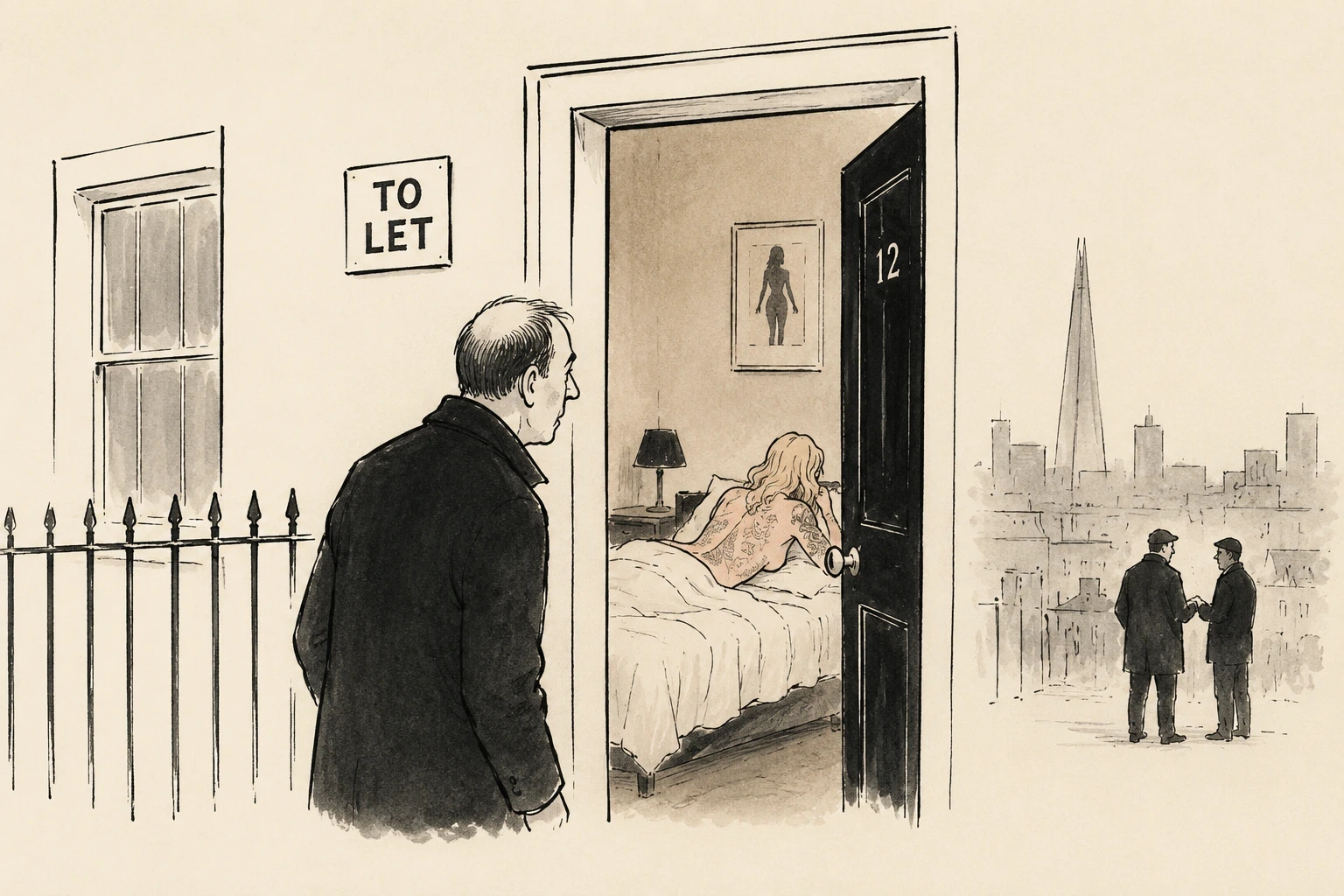
The investigation centres on the experience of landlord and property developer Craig Shepheard, whose Hertfordshire flat was allegedly taken over by a criminal network after a tenant passed routine identity and tenancy checks using what investigators later believed was a fake passport.
According to Panorama, the tenant initially appeared legitimate, claiming to work as a courier and successfully passing standard verification procedures before moving into the property.
Concerns only emerged after rental payments stopped and neighbours began reporting unusual activity. Residents complained of suspected cannabis use, blacked-out windows and a steady flow of men visiting the flat late at night.
When the tenant later reported a faulty washing machine, Shepheard visited the property and found what he described as sexual paraphernalia, prompting him to suspect the flat was being operated as a brothel.
Police Investigation Linked Property to Overseas Network
After reporting his concerns, Shepheard said police told him additional evidence was required before officers could obtain a search warrant.
He subsequently returned to the flat, where he encountered two women who admitted they were sex workers. During the visit, he discovered that the person collecting rent from the women was not the individual listed on the tenancy agreement.
According to the investigation, Hertfordshire Police later informed Shepheard that the operation formed part of an organised prostitution network linked to Brazil.
The women reportedly told investigators they each paid £400 per week for access to a room in the property, while police concluded that the original tenant had allegedly used a fake passport to obtain the tenancy before transferring control of the flat to members of the criminal network.
Case Closed Without Identifying Suspects
Despite the investigation, the original tenant’s true identity was never established and the two women disappeared before further action could be taken.
Hertfordshire Police ultimately closed the case because of insufficient evidence, according to Panorama. Shepheard said the incident left him thousands of pounds out of pocket and contributed to his decision to sell the property after concluding that the risks of remaining in the rental market outweighed the benefits.
The documentary argues that Shepheard’s experience reflects a broader vulnerability within the UK’s rental market, where organised criminal groups are increasingly exploiting identity fraud to obtain properties.
Experts interviewed by Panorama say identity fraud has become an increasingly significant criminal threat in the UK, accounting for approximately 45% of all recorded crime, making it easier for organised groups to bypass tenancy checks and establish criminal operations inside rented homes.

Questions Over Rental Market Safeguards
The investigation raises wider questions about whether existing tenant verification systems are equipped to detect sophisticated identity fraud and whether landlords and letting agents have adequate protections against organised criminal infiltration.
While Panorama documents one landlord’s experience, the programme suggests the case reflects a growing challenge facing Britain’s rental sector as criminal networks become increasingly adept at exploiting weaknesses in identity verification and property management systems.