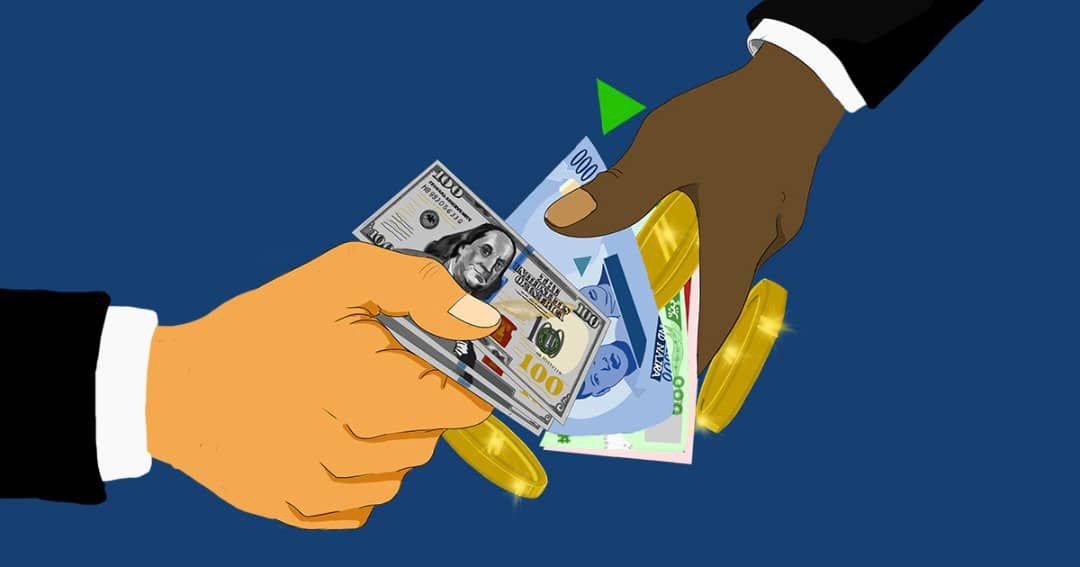
Nigeria’s FX market is showing signs of easing, with both bank card rates and parallel market prices declining in tandem after weeks of volatility.
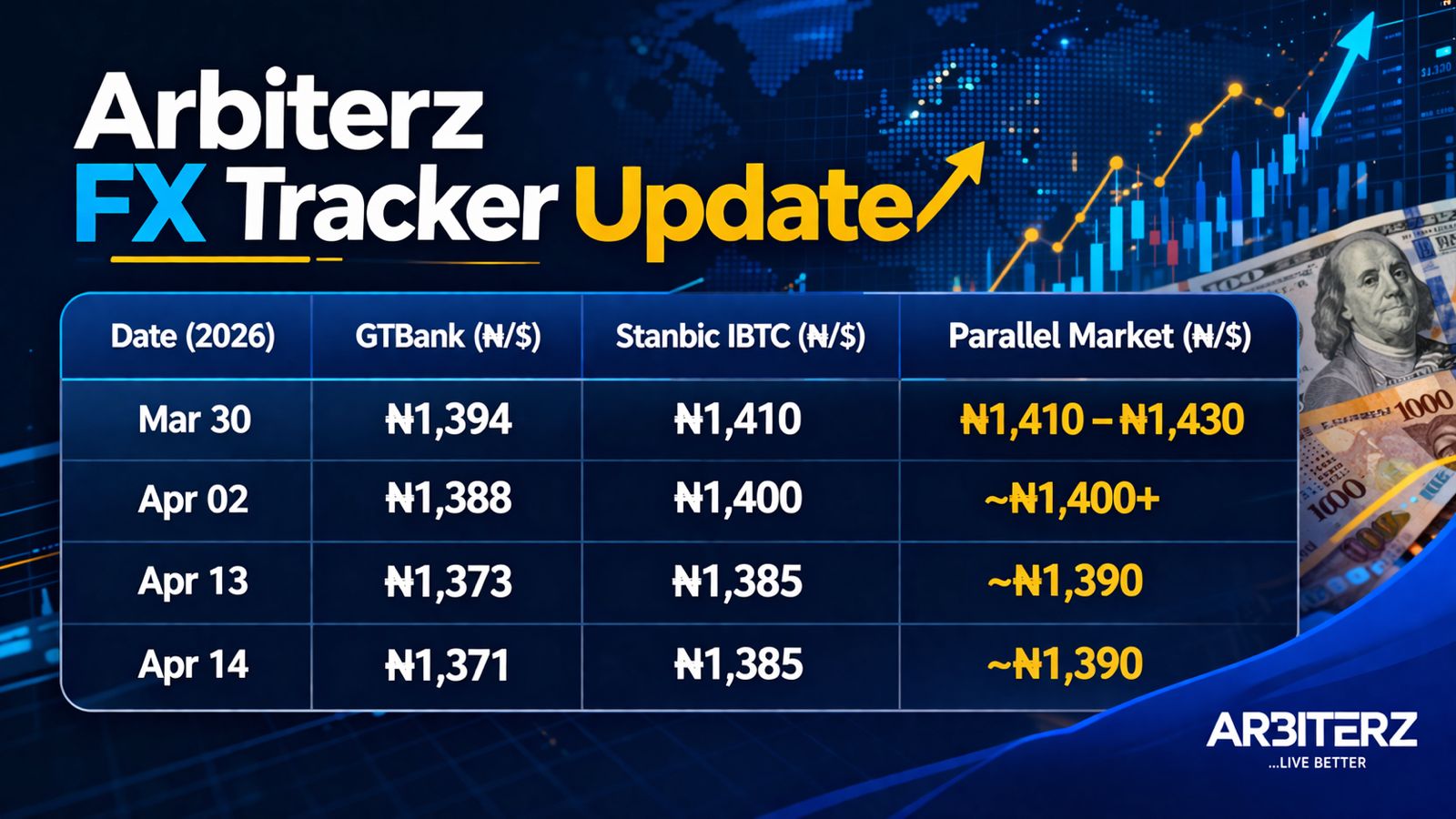
Nigeria’s banks have extended the downward adjustment in FX rates for international card payments, with GTBank quoting ₦1,371/$ on April 14 and Stanbic IBTC at ₦1,385/$.
The movement continues a trend that began in early April, with both banks steadily repricing FX exposure in response to improving liquidity conditions.
From late March highs:
GTBank: ₦1,401 → ₦1,371 (−₦30)
Stanbic IBTC: ₦1,410 → ₦1,385 (−₦25)
Movements in bank card rates are increasingly aligned with trends in Nigeria’s parallel (black) market, which remains a critical benchmark for real-time FX demand.
In early April and late March:
Parallel market rates traded as high as ₦1,410–₦1,430/$ in major cities like Lagos and Abuja.
By mid-April, rates had eased closer to ₦1,390/$ levels, according to market tracking platforms.
Earlier in March, the market had already shown pressure:
Rates ranged around ₦1,365–₦1,375/$, reflecting tight supply conditions.
Taken together, the data shows a cycle of spike → stabilisation → gradual easing.
The convergence between:
Bank card rates (₦1,371–₦1,385)
Parallel market (~₦1,390)
suggests a reduction in arbitrage opportunities, a key indicator of improving FX market efficiency.
Historically, wide gaps between official/bank rates and the black market signalled severe FX scarcity.
The current narrowing spread points to:
- Better FX supply through formal channels
- More confidence in the banking system’s ability to meet demand
- Reduced reliance on informal markets
The moderation in both bank and black market rates is likely linked to:
- Improved FX inflows (oil receipts, remittances, portfolio flows)
- Central Bank reforms encouraging market-based pricing
- Reduced speculative pressure following earlier volatility
Data also shows that over the past 30–90 days, the naira has traded within a ₦1,333–₦1,480/$ range, highlighting the broader volatility context.
Despite the easing trend, the FX market remains structurally sensitive:
- The parallel market continues to respond faster to demand shocks
- Bank rates remain flexible and subject to daily adjustments
- Liquidity conditions can shift quickly
The Central Bank does not formally recognise the black market, but it remains a de facto indicator of underlying demand pressure.
For users of international services:
- FX costs are now lower than recent peaks
- But remain market-driven and variable
- Timing and choice of bank can still affect pricing
For the broader system, the alignment between bank and parallel market rates signals a gradual normalization of Nigeria’s FX market architecture.
Date (2026)
GTBank (₦/$)
Stanbic IBTC (₦/$)
Parallel Market (₦/$)
Mar 30
₦1,394
₦1,410
₦1,410–₦1,430
Apr 02
₦1,388
₦1,400
~₦1,400+

Apr 13
₦1,373
₦1,385
~₦1,390
Apr 14
₦1,371
₦1,385
~₦1,390