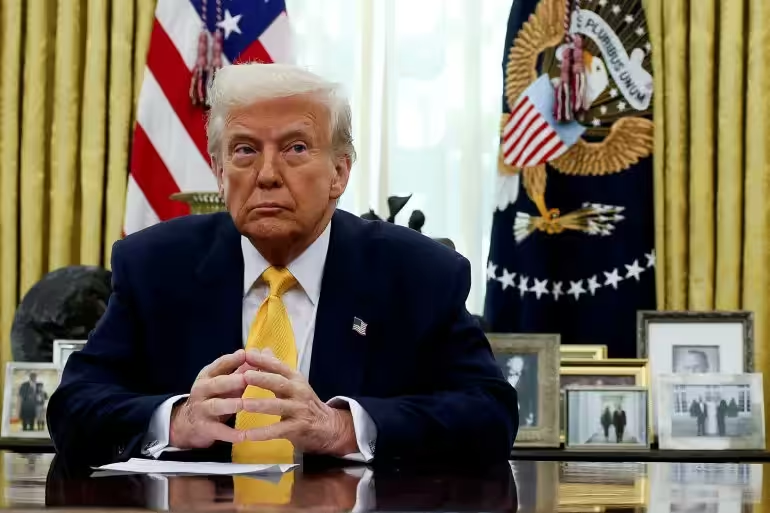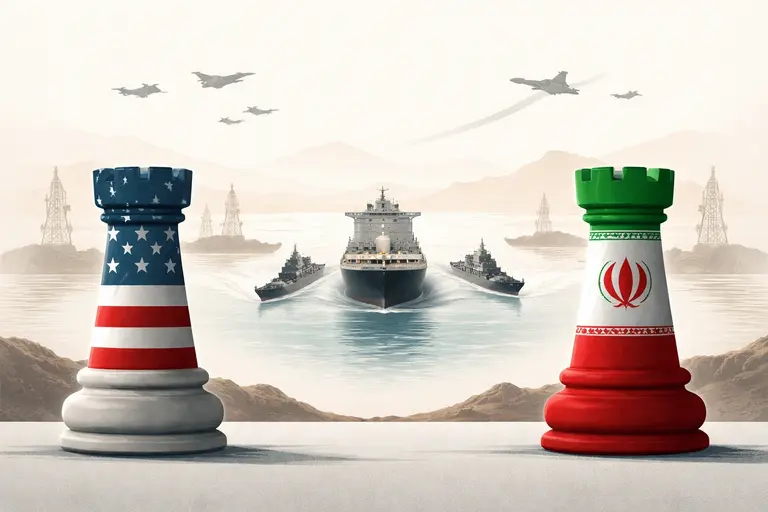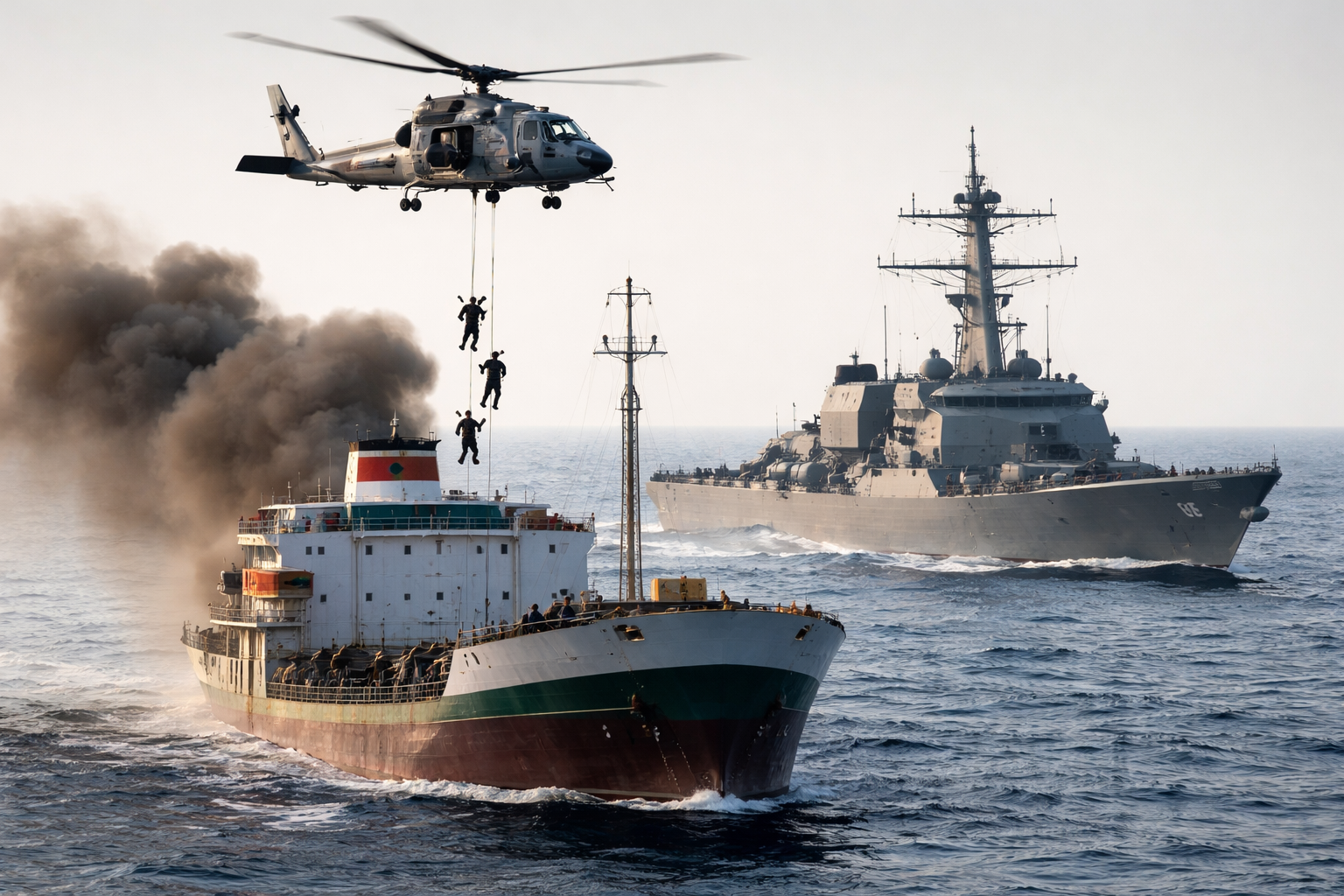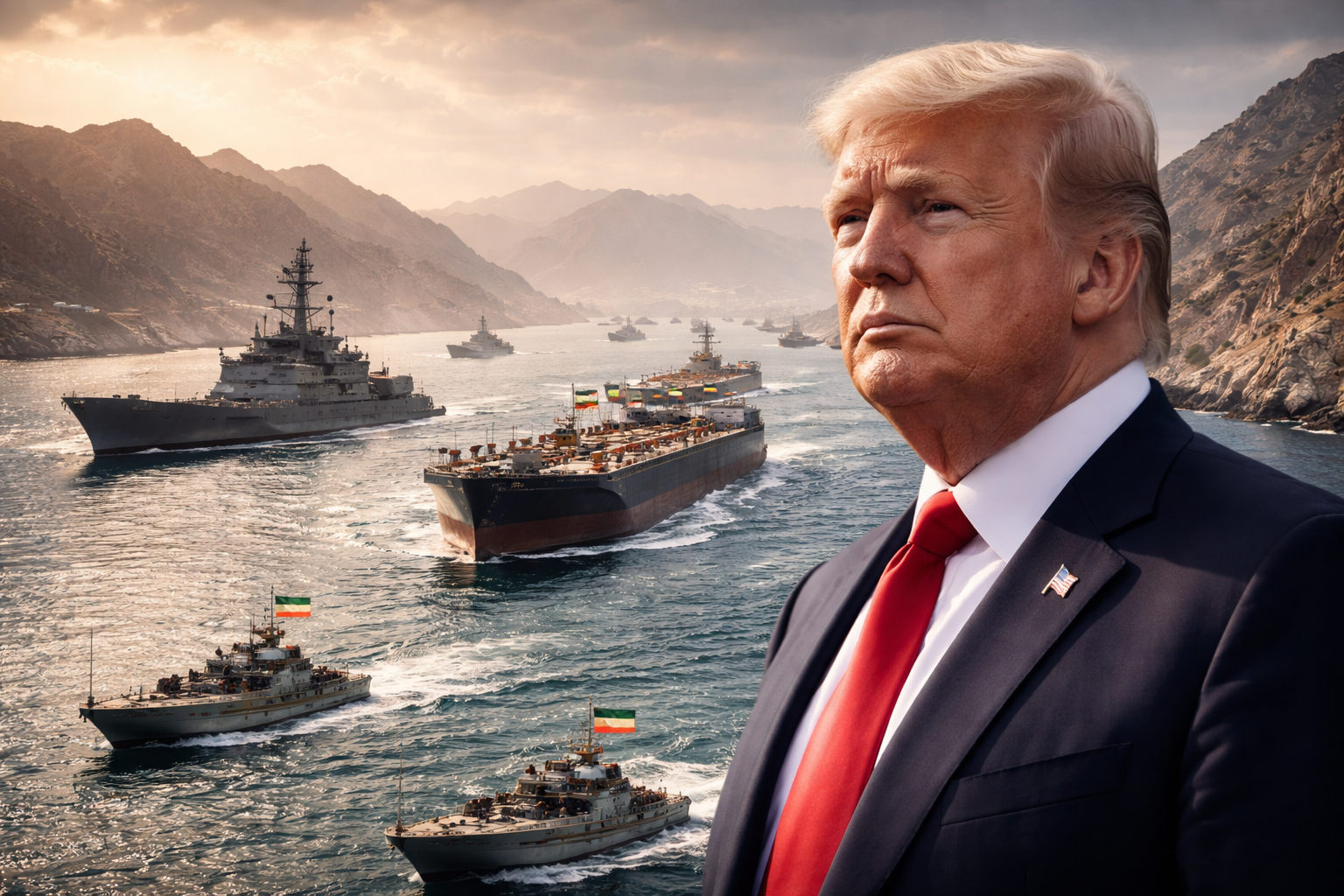
United States president Donald Trump has announced plans to impose an immediate naval blockade on the Strait of Hormuz, dramatically escalating tensions with Iran after high-stakes peace talks in Pakistan ended without a breakthrough.
Speaking on Sunday, U.S. President Donald Trump said the U.S. Navy would begin enforcing restrictions on vessels entering or leaving the strategically vital waterway. The move follows the collapse of 21 hours of face-to-face negotiations between U.S. and Iranian officials in Islamabad, which failed to produce an agreement and cast fresh doubt over a fragile two-week ceasefire.
Strategic Chokepoint at the Center of Crisis
The Strait of Hormuz is one of the world’s most critical oil transit routes, with roughly a fifth of global oil supply passing through its narrow corridor. Any disruption has immediate implications for global energy markets and maritime security.
Trump’s announcement appears to be a direct response to Iran’s insistence during negotiations that it should be allowed to collect tolls from vessels transiting the strait of Hormuz —an idea Washington has firmly rejected. “No one who pays those tolls will have safe passage on the high seas,” Trump warned, signaling a hardline stance against what the U.S. views as an attempt to control international waters.
Peace Talks Collapse After Marathon Negotiations
Diplomatic efforts in Islamabad had been seen as a critical opportunity to de-escalate tensions after weeks of brinkmanship in the Gulf. Delegations from Washington and Tehran engaged in more than 21 hours of discussions, but sources close to the talks said both sides remained far apart on key issues, including maritime rights, sanctions relief, and regional security guarantees.
Iran’s position centers on asserting greater sovereignty over the strait, while the United States insists on maintaining freedom of navigation under international law.
Risks of Escalation
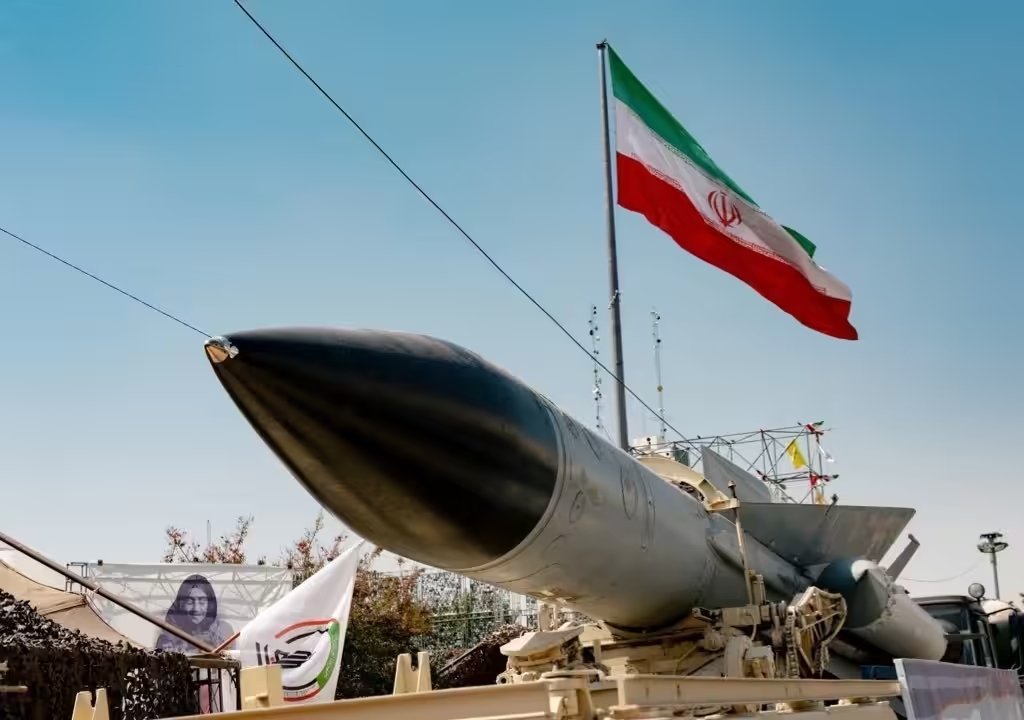
The announcement of a blockade raises the risk of direct confrontation between U.S. naval forces and Iranian vessels, including the Islamic Revolutionary Guard Corps, which has historically played a key role in Gulf maritime operations.

Security analysts warn that even limited enforcement actions could trigger retaliation, potentially disrupting oil shipments, driving up global energy prices, and drawing in other regional powers.
Energy markets are likely to react sharply to the development, given the strait’s central role in global oil flows. Previous threats to shipping in the region have led to spikes in crude prices and heightened insurance costs for maritime operators.