Two commercial cargo vessels were attacked on Wednesday in the strategically vital Strait of Hormuz, according to maritime security officials, in incidents that underscore rising tensions in the region despite ongoing ceasefire efforts between the United States and Iran.
The United Kingdom Maritime Trade Operations (UKMTO), which monitors shipping security in the area, reported that one vessel came under fire approximately eight nautical miles off the coast of Iran early Wednesday morning.
The ship’s crew were confirmed safe, and no damage was reported. Authorities have not identified those responsible for the attack.
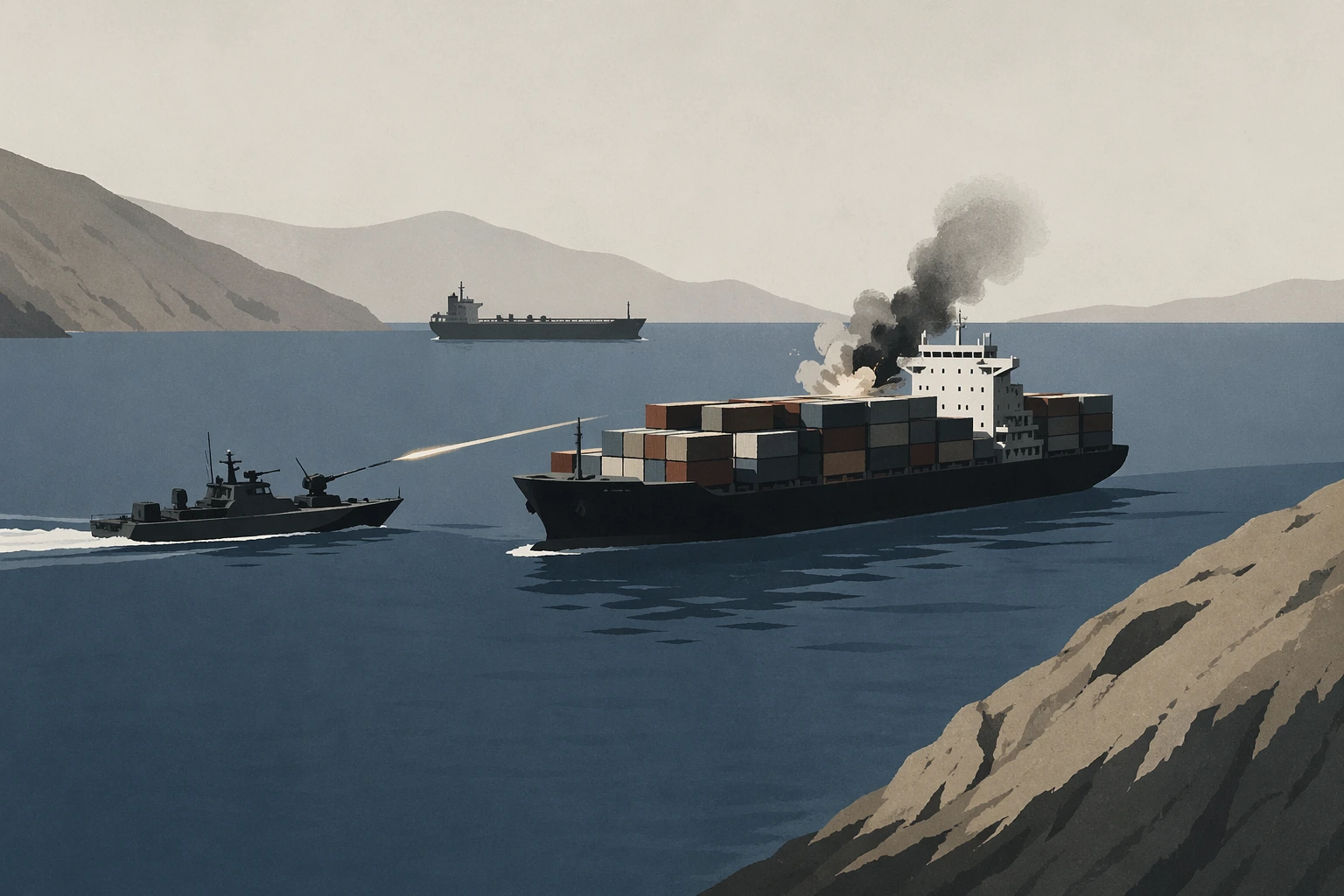
In a separate incident earlier the same day, a container ship was targeted about 15 miles northeast of Oman.
According to UKMTO, the vessel was approached by a gunboat believed to be linked to Iran’s Islamic Revolutionary Guard Corps (IRGC).
The attackers reportedly opened fire, causing significant damage to the ship’s bridge. Despite the severity of the incident, all crew members were accounted for and no injuries were reported.
Diplomatic Efforts Face Uncertainty
The attacks come just a day after U.S. President Donald Trump announced an extension of the ceasefire with Iran, a move aimed at allowing more time for diplomatic negotiations.
Efforts to bring both sides together for talks—reportedly expected to take place in Pakistan—now appear uncertain.
Media reports indicate that a planned visit by U.S. Vice President JD Vance has been put on hold, while Iranian state-linked outlets have suggested that Tehran may not participate in further negotiations.
Strategic Importance of the Strait
The Strait of Hormuz is one of the world’s most critical shipping routes, serving as a gateway between the Persian Gulf and the Gulf of Oman.
Roughly one-fifth of global oil and gas supplies pass through the narrow waterway, making it highly sensitive to geopolitical tensions.
Recent attacks on commercial vessels in the region have heightened fears of potential disruptions to global energy supplies and broader economic instability.

Increased Military Presence
Amid the rising tensions, the United States has continued to maintain a strong naval presence in nearby waters.
The aircraft carrier USS Abraham Lincoln (CVN-72) has been conducting operations in the region, highlighting ongoing efforts to secure maritime routes and deter further incidents.