In 2016, nearly 91,000 Nigerian children sat the national entrance examination for unity school places. By 2025, that number had dropped to under 65,000. The schools had not shrunk; there are, in fact, more of them now than ever. The population had not fallen. What has changed is the perception of what a unity school actually offers.
For decades, Nigeria’s unity schools have carried an ambitious brief: to put teenagers from different regions, religions and ethnic groups under the same roof, in the belief that shared dormitories and dining halls could do what politics alone could not. Schools like King’s College Lagos had been running on a similar idea since the colonial era, but it was the post-war federal military government that turned it into a national programme. Unity schools have since produced a disproportionate share of the people who run Nigeria– judges, ministers, governors, bankers and tech founders.
EduIntel’s Sofiyat Raimi and Moses Akobi did an analysis of recent allocations to the unity schools, and below I share insight from the analysis.
A look at the budget
Proposed federal allocations to the 118 unity schools this year stand at ₦155 billion, down from the record ₦171.7 billion allocated in 2025, though still well above the ₦93.5 billion budgeted in 2024.
The budget has two parts. Recurrent expenditure covers the running costs: staff salaries, food for boarding students, textbooks, electricity bills and day-to-day maintenance. This is the money schools can actually count on. It rose from ₦72 billion in 2024 to ₦120 billion in 2025, then held roughly steady at ₦119 billion in 2026.
Of that recurrent money, nearly half goes to staff salaries. Between 2024 and 2026, personnel costs averaged 47 per cent of the recurrent budget. That sounds steep, but it compares favourably with federal universities, where over 90 per cent of government funding is consumed by salaries before a single laboratory reagent is purchased.
The second part is capital expenditure, for new buildings, laboratories, hostel renovations and equipment. It more than doubled from ₦20.6 billion in 2024 to ₦51.6 billion in 2025, then was cut back to ₦36 billion in 2026. In Nigeria, money allocated for capital projects is frequently not actually released. The 2025 budget had a particularly poor record on this front. The government has promised to roll those unspent projects into 2026. In other words, some of the missing 2025 money is supposedly still coming, just later. Probably.
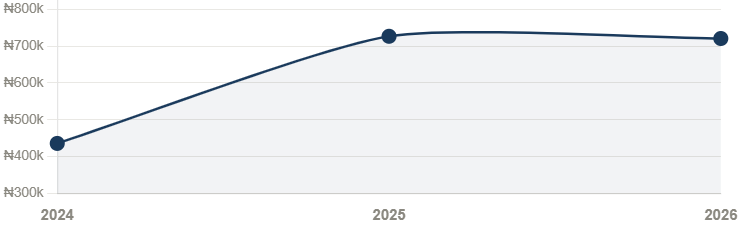
Figure 1: Per capita recurrent allocation to unity schools (2024-2026)
Which schools get the most
Looking at recurrent budgets only, the rankings have been fairly stable over three years. Federal Technical College Yaba in Lagos sits at the top in every year, receiving ₦2.56 billion in 2026. Queen’s College Lagos and King’s College Lagos both consistently feature in the top five. Schools in the Federal Capital Territory, particularly FGC Kwali, FGGC Bwari and FGC Garki, also draw large allocations year after year. These are all schools in Nigeria’s most urbanised states/territory.
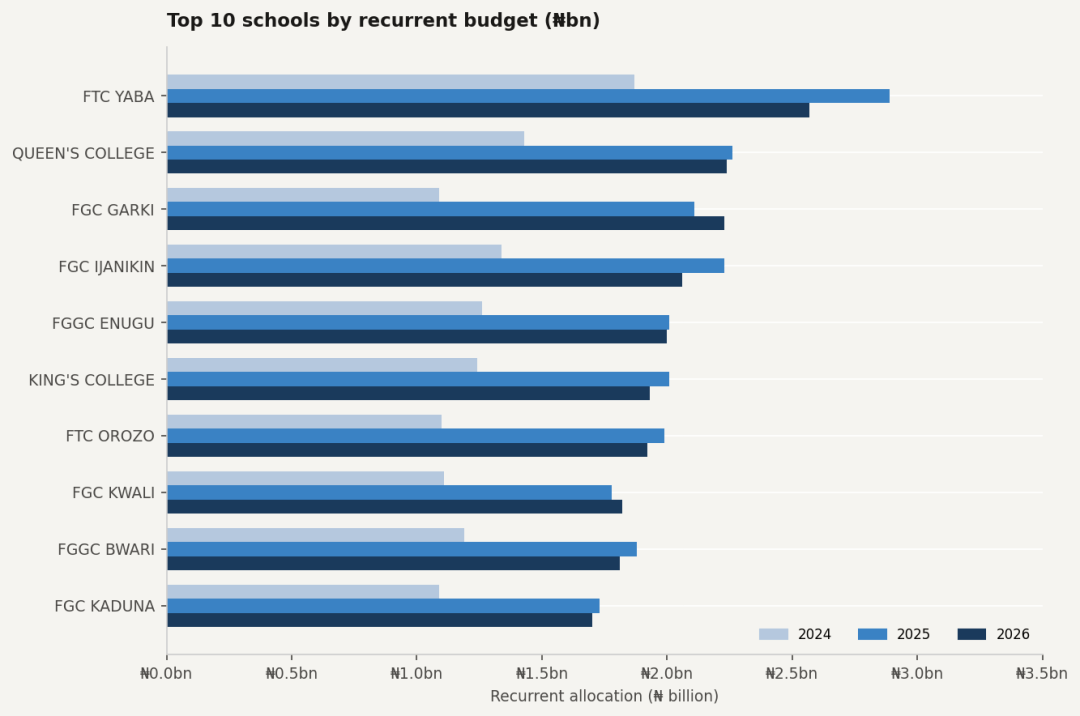
Figure 2: Top 10 unity schools by total recurrent allocation, 2024–2026. Source: FGN Appropriation Acts (2024 and 2025) and Bill (2026).
What each student actually gets
Enrolment across unity schools stands at 165,139 students as of 2021, the most recent available figure. Divide the ₦119 billion 2026 recurrent budget across those students, and you get roughly ₦721k per pupil per year. In 2024, it was ₦436,000. Not bad, even when adjusted for inflation.
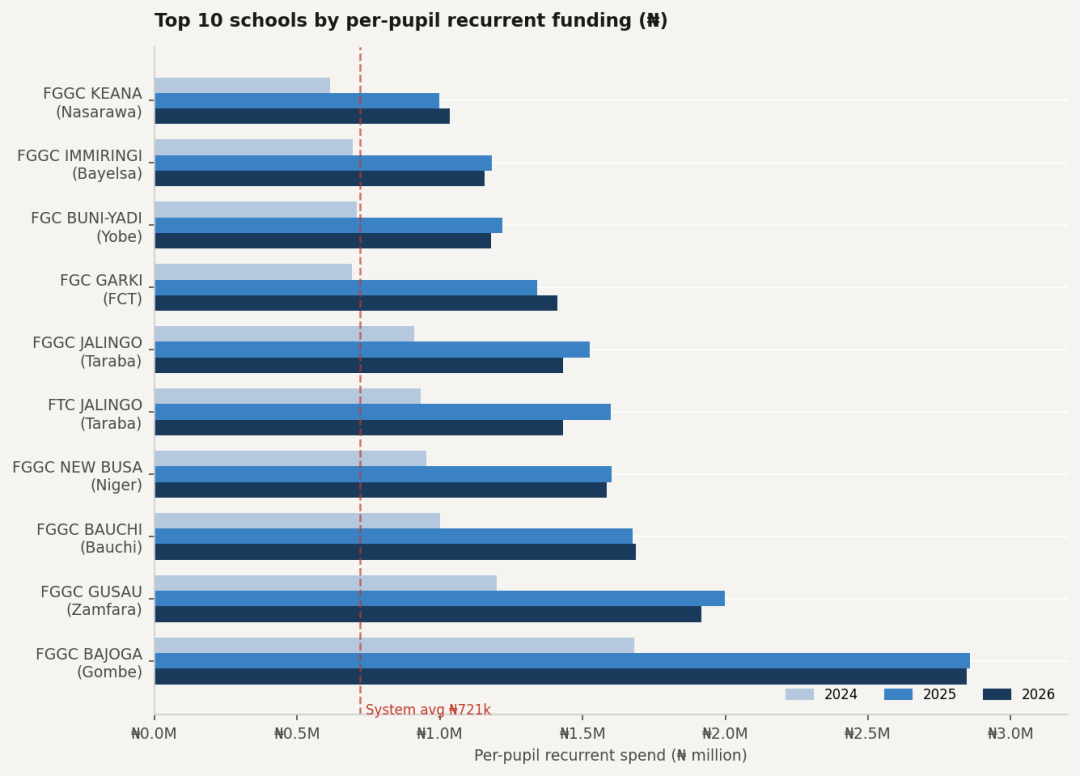
Figure 3: Top 10 schools by per-pupil recurrent funding, 2024–2026. System average of ₦721,000 shown for reference. Schools with fewer than 100 enrolled pupils are excluded.
The system-wide average, however, conceals a troubling pattern. Funding does not scale with enrolment. The ten highest-funded schools per pupil are almost entirely small institutions with fewer than 1,600 students, concentrated in the North-West, North-East and North Central. FGGC Bajoga in Gombe, with just 195 students, receives nearly ₦2.85 million per pupil in the proposed 2026 budget. FGGC Gusau in Zamfara, with 481 students, receives ₦1.92 million per pupil.
At the other end, the schools serving the most students receive the least per pupil.
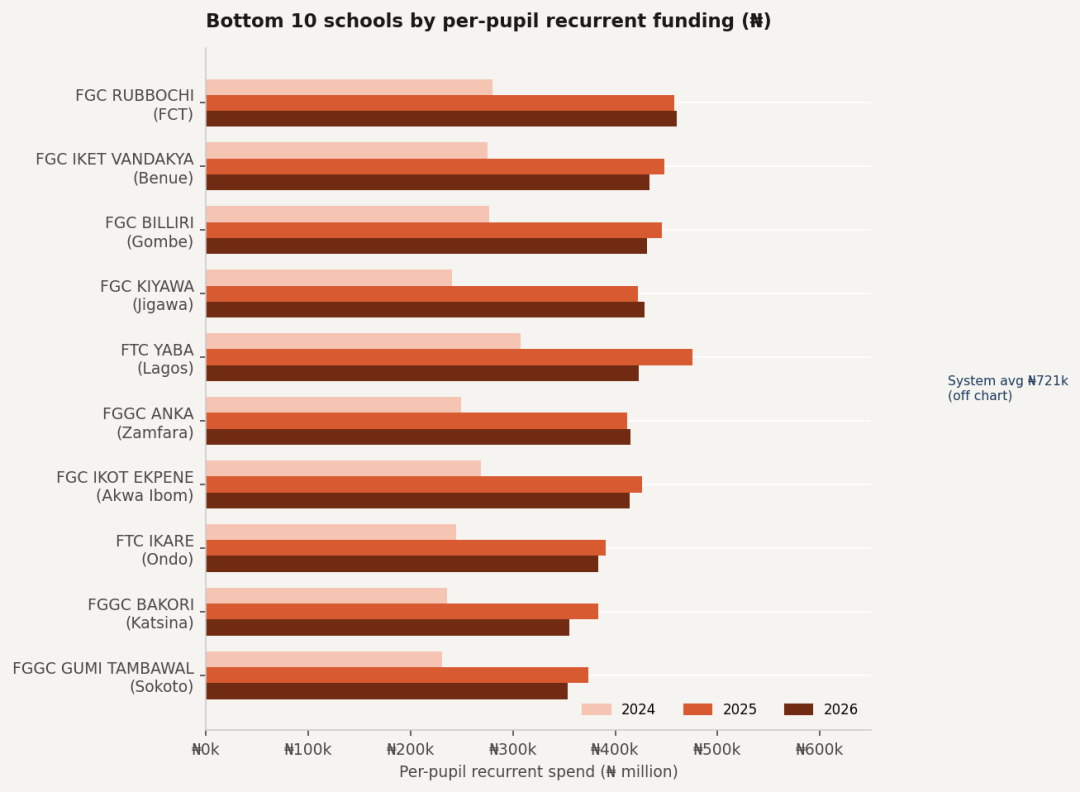
Figure 4: Bottom 10 schools by per-pupil recurrent funding, 2024–2026. All sit well below the system average of ₦721,000.
FTC Yaba, the largest unity school in the country with over 6,000 students, tops the absolute allocation table yet receives only ₦423,000 per pupil, placing it in the bottom ten on a per-capita basis. FGGC Gumi Tambuwal in Sokoto and FGGC Bakori in Katsina, with enrolments of 1,600 and 2,500 respectively, receive around ₦353,000 per student. The gap between the highest and lowest-funded schools per pupil is roughly eight to one. Even if these smaller schools had doubled their enrolment since the 2021 headcount, the gap between them and larger schools will remain blatant.
The federal government has, whether by design or neglect, built an allocation system that penalises the schools carrying the heaviest load. Some official explanation is needed here.
The boarding problem
The system-wide ₦721,000 per capita spending would have been decent for day-only schools. However, unity schools operate boarding, and this budget is simply inadequate for most of the schools. Hostels need beds, mattresses and cleaning. Kitchens need food and cooks for three meals a day (the cost of feeding a teenager alone would take half of the budget). Security runs around the clock. Medical facilities must be on site.
The consequence of underfunding in large schools especially is visible to anyone who has visited a unity school recently: overcrowded dormitories, broken laboratory equipment, classroom blocks that have not been repainted since the 1990s, and sports facilities falling apart.
Unity schools are permitted to charge student levies to fill the gap, but those fees are tightly controlled by the government and rarely cover more than 10 per cent of what a school needs. The gap between what is needed and what is available from fees and government funding remains huge for many unity schools.
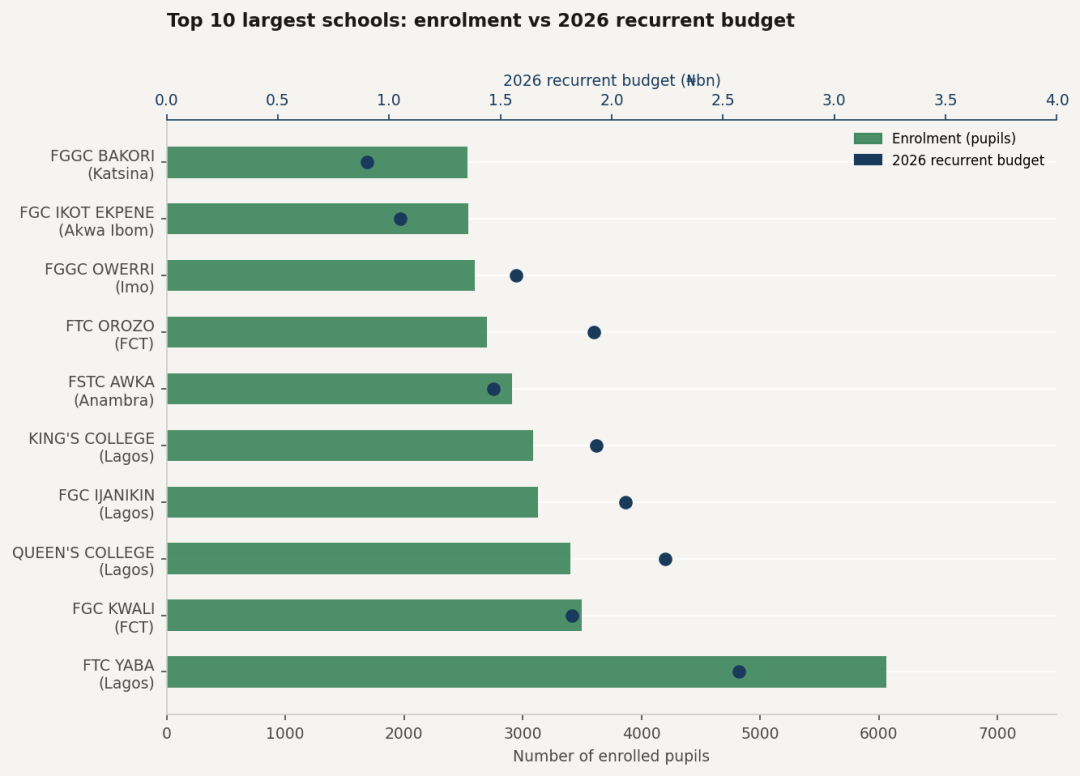
Figure 5: Nigeria’s ten largest unity schools by enrolment, with their 2026 recurrent budget. Bars show enrolment; dots show budget allocation.
What needs to change
Unity schools and the National Youth Service Corps are the two most visible institutional legacies of the military era’s belief that you could build national unity through compulsory shared experience. Whether either programme has delivered on that promise is a question Nigeria has been slow to ask out loud. But since the country has seemingly made the decision to keep these schools, then we need to back our decision with some serious funding.

For one, funding has to show some sensitivity to the student population. To whom many students are “given”, more funding should be provided. Secondly, capital investment cannot be treated as the budget line that gets trimmed when revenue falls short. The 2026 cut from ₦51.6 billion to ₦36 billion is a move in the wrong direction. Laboratories, digital infrastructure and hostels do not maintain themselves, and the cost of deferred maintenance compounds every year.
The government should also start publishing annual expenditure and academic performance reports for individual unity schools with enough detail to allow real scrutiny. Knowing what is allocated tells parents and alumni very little. Knowing what is actually spent, on what, and with what result, is the information that would make accountability possible.