U.S. President Donald Trump has intensified efforts to expand the Abraham Accords, urging several Arab and Muslim-majority nations to formally establish relations with Israel once an emerging agreement to end the ongoing conflict with Iran is finalised.
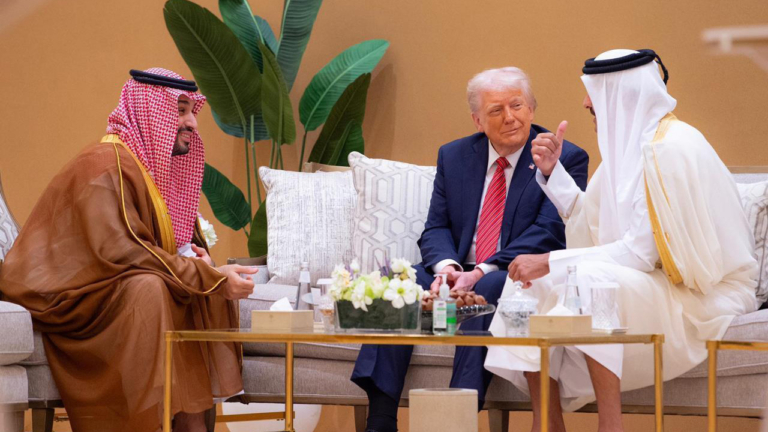
According to multiple U.S. and international reports, Trump appealed a weekend conference call involving leaders from Saudi Arabia, United Arab Emirates, Qatar, Egypt, Jordan, Bahrain, Turkey and Pakistan as negotiations over a potential Iran ceasefire and nuclear understanding gathered momentum.
Trump reportedly told the leaders that once the Iran conflict is resolved, countries that have not yet normalised ties with Israel should join the Abraham Accords framework brokered during his first administration.
Regional leaders reportedly caught off guard
Reports from Axios and other outlets indicate that several leaders on the call — particularly from Saudi Arabia, Qatar and Pakistan — were surprised by the directness of Trump’s request.
One U.S. official familiar with the conversation said there was a brief silence after Trump raised the issue, prompting the president to jokingly ask whether participants were still on the line.
Trump later said senior envoys, including Jared Kushner and Steve Witkoff, would continue follow-up discussions with regional governments in the coming weeks.
Saudi Arabia remains the strategic centerpiece
At the center of the diplomatic push is Saudi Arabia, widely regarded as the most consequential potential addition to the Abraham Accords.
The normalization agreements, first signed in 2020, established formal diplomatic ties between Israel and countries including the UAE and Bahrain, reshaping regional alignments and security cooperation in the Middle East.
However, a Saudi-Israeli agreement remains politically sensitive.
Saudi Crown Prince Mohammed bin Salman has previously signaled openness to normalization, but Riyadh continues to insist on meaningful progress toward Palestinian statehood before any formal agreement with Israel.
That demand remains a major obstacle because the current Israeli government led by Prime Minister Benjamin Netanyahu has resisted committing to a time-bound Palestinian state framework
The latest initiative reflects Trump’s attempt to merge two major regional goals:
- preventing renewed war with Iran, and
- expanding Arab-Israeli normalization.
Trump has repeatedly claimed negotiations with Iran are progressing positively, though no final agreement has yet been announced.
Pakistan and Turkey face domestic political sensitivities
Trump’s inclusion of Pakistan and Turkey in the discussions drew particular attention because neither country recognizes Israel diplomatically.
In Pakistan, recognition of Israel remains politically controversial due to longstanding public support for Palestinian statehood and strong domestic opposition to normalization.
Turkey, while maintaining formal ties with Israel, has experienced repeated diplomatic strains with Tel Aviv over Gaza and broader regional tensions.

Trump later promoted the initiative on his social media platform, Truth Social, thanking Middle Eastern leaders for their cooperation and expressing optimism that additional nations would eventually join the Abraham Accords.
Keywords: