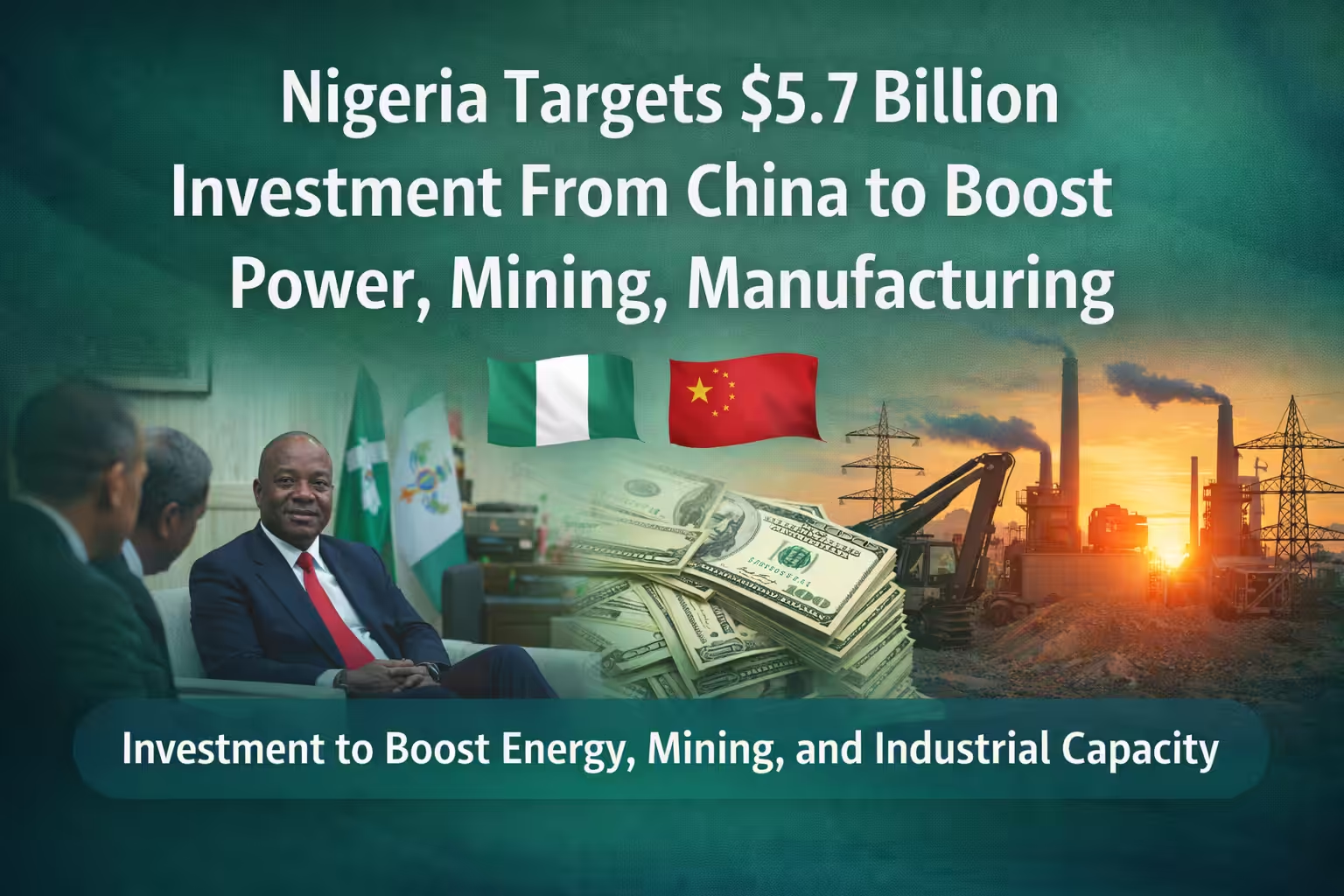
Nigeria is seeking to secure up to $5.7 billion in prospective investments from China to accelerate development across critical sectors including power generation, mining, and industrial manufacturing.
The initiative follows a high-level meeting in Abuja between Minister of Finance and Coordinating Minister of the Economy Wale Edun and a delegation from GCL Group led by Orji Uzor Kalu. Details of the engagement were disclosed Monday via the official X account of the Federal Ministry of Finance.
According to the ministry, the proposed investments are designed to strengthen domestic production capacity, create jobs, and expand export potential across Nigeria’s industrial value chain. Officials said the initiative aligns with ongoing macroeconomic and structural reforms under President Bola Ahmed Tinubu and signals growing international confidence in the country’s policy direction.
The ministry stated that discussions covered large-scale energy generation projects, local mineral processing plants, and new manufacturing facilities intended to boost value addition and reduce dependence on raw commodity exports. Authorities believe such projects could catalyse private-sector participation while reinforcing long-term industrial growth and energy security.
Analysts say the planned capital inflow, if realised, would rank among the largest single prospective foreign investment packages in recent years and could help position Nigeria as a regional hub for manufacturing and mineral beneficiation.

Recent data cited by Nairametrics shows Chinese companies have already committed more than $1.3 billion to Nigeria’s lithium processing sector within two years. In a related development, a consortium of 25 Chinese investors led by China Overseas Engineering Group has inspected project sites in Katsina State for potential agricultural and renewable-energy investments estimated at $720 million.
Officials say the new proposals could deepen industrial capacity, stimulate employment, and strengthen export competitiveness, while advancing Nigeria’s strategic shift toward domestic processing and manufacturing rather than reliance on raw-material exports.