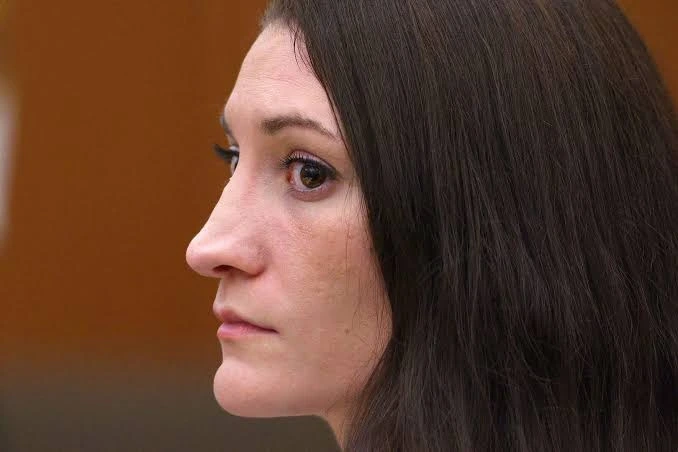
Lindsay Clancy, the Massachusetts mother accused of killing her three young children in January 2023, has returned to court as prosecutors and defence lawyers argue over whether she should face a second murder trial following a jury deadlock.
The 36-year-old appeared before Judge William Sullivan on Monday, November 2, for a hearing that could determine the next stage of the high-profile case, which attracted widespread attention in the United States because of the defence’s claim that Clancy was suffering from postpartum psychosis when the killings occurred.
Her murder trial collapsed in September after jurors failed to reach a unanimous verdict. One juror maintained that the evidence supported a murder conviction, preventing the jury from finding her not guilty by reason of insanity.
Clancy’s defence team is asking the court to dismiss the charges entirely, arguing that putting her on trial again would violate constitutional protections against double jeopardy, which generally prevent a person from being tried twice for the same offence.
Prosecutors, however, are opposing the dismissal and have argued that the mistrial was properly declared because the jury was unable to reach a unanimous decision.
In a motion filed ahead of Monday’s hearing, prosecutors maintained that the mistrial resulted from the manifest necessity of a deadlocked jury and that the state should retain the right to pursue the charges.
Defence Questions Judge’s Handling of Jury Deadlock
Much of Monday’s hearing centred on the circumstances surrounding the September mistrial and the court’s handling of the juror who refused to support an acquittal.
Martin Weinberg, one of Clancy’s lawyers, questioned whether Judge Sullivan had done enough to establish whether the holdout juror was following the court’s instructions during deliberations.
Weinberg argued that the judge should have questioned jurors individually to determine whether the dissenting juror was deliberating in good faith and properly applying the legal standard of reasonable doubt.
The defence also questioned whether declaring a mistrial was legally necessary, pointing to jury notes indicating that at least one member was struggling with the court’s instructions.
One note sent to the judge during deliberations asked: “A member of the jury is unable to follow instructions on reasonable doubt, how should we proceed?”
Judge Sullivan pushed back against the defence’s argument, reminding Weinberg that he had already brought the jurors into court and questioned them individually about their ability to follow his directions, a procedure known as voir dire.
The judge appeared frustrated when Weinberg suggested that the process should have been repeated.
Prosecutors Oppose Dismissal
Prosecutors have consistently maintained that they want justice for Clancy’s three children and are resisting the defence’s attempt to terminate the case.
District Attorney Timothy Cruz and his team have argued that the court followed the appropriate procedures before declaring a mistrial, giving the state grounds to pursue the charges again.
However, prosecutors have not publicly confirmed whether they will seek a complete retrial or pursue a different legal approach.

The court could also consider scheduling a new trial, although a final decision may depend on the outcome of the pending motions and the prosecution’s position.
Legal observers have indicated that the judge may seek to reserve several weeks on the court calendar for a possible retrial, even if the prosecution has not formally committed to proceeding.