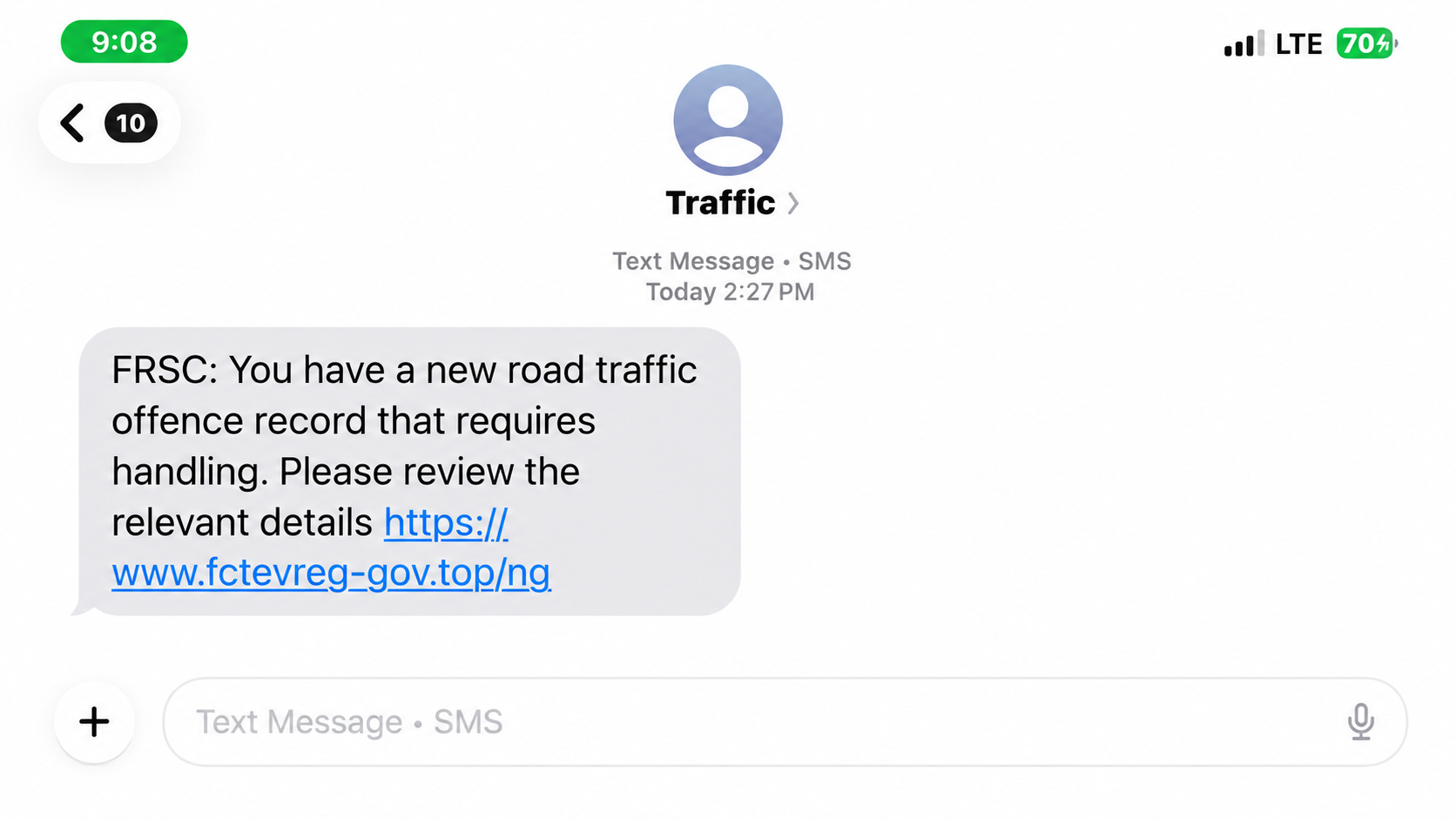
The Federal Road Safety Corps (FRSC) has warned motorists across Nigeria about a scam involving fake text messages alleging that recipients have been recorded for new road traffic offences.
The messages, which are being circulated through mobile phones and social-media platforms, direct recipients to fraudulent websites designed to imitate the digital identity of the road safety agency.
The warning comes after reports of victims being lured into making small payments through the fake platform before discovering potentially significant financial losses.
One reported victim, identified as MC Monica, said he received a message about an alleged road safety violation, clicked the accompanying link and paid a ₦5 fine.
He said he later woke up to discover that millions of naira had allegedly been taken from his account.
“I don’t know who to blame, whether it was my service provider or the Road Safety officials,” he said.
The FRSC has now made clear that such messages do not originate from the agency.
FRSC disowns fake website
In an alert dated September 16, 2026, the FRSC said the fraudulent campaign involves unsolicited messages informing recipients that a new traffic offence has been recorded against them.
The messages create a sense of urgency and instruct recipients to click a link to review details of the alleged offence.
The Corps specifically identified frscgov.top/ng as one of the fraudulent links being circulated, stressing that the website has no affiliation with the FRSC.
The agency said its official website is frsc.gov.ng, while its legitimate online services are hosted through authorised FRSC digital channels.
The Corps therefore urged motorists not to mistake the fake website or messages for official communications.
Scam may target banking and personal information
According to the FRSC, the fraudulent links may be designed to harvest sensitive information from unsuspecting victims.
This could include personal information, financial details and other credentials that criminals could potentially use for fraudulent transactions or identity-related crimes.
The agency specifically warned Nigerians not to enter their banking information, passwords, card details, driver’s licence information or vehicle registration details on websites reached through suspicious messages.
It also advised motorists not to make payments in response to unsolicited traffic offence messages.
The warning is particularly significant because the scam does not necessarily depend on convincing victims to make a large payment.
A message demanding only a small amount can be used to persuade recipients that the request is genuine before they are directed to a website requesting more sensitive information.
What motorists should do
The FRSC advised anyone who receives the fraudulent messages to preserve the evidence and avoid further communication with the sender.
Recipients should not click the links, provide personal or financial information or attempt to resolve the alleged traffic offence through the website contained in the message.
Instead, motorists should verify any suspected traffic offence directly through the FRSC’s official communication channels.
The Corps said its national toll-free line is 122, while motorists can also use the agency’s official website and authorised digital platforms to verify information.
The agency encouraged Nigerians who encounter the scam to report it through appropriate channels and share the warning with others.
FRSC promises action against impersonators
The Corps also warned the individuals behind the scheme that the FRSC’s name, identity, insignia and digital platforms cannot legitimately be used to deceive members of the public.
It said the deliberate impersonation of FRSC personnel and the creation of counterfeit digital platforms are matters of serious concern.
The agency said it would work with relevant law-enforcement and cybersecurity authorities to pursue appropriate action against those responsible.
The warning was issued on the directive of Corps Marshal Shehu Mohammed, who called for greater public awareness of the scam.
He urged motorists to exercise greater caution when interacting with messages claiming to come from government agencies.
His message to Nigerians was summed up in three words: “STOP. VERIFY. REPORT.”
The FRSC said members of the public should verify any message claiming to originate from the Corps through its official website and established communication channels before taking action.

The agency also stated that it would not be responsible for losses arising from engagement with unauthorised websites, links or individuals falsely claiming to represent the FRSC.
The alert was signed by Osondu Ohaeri, Corps Public Education Officer, FRSC, on September 16, 2026.