Francis Halzen Profile
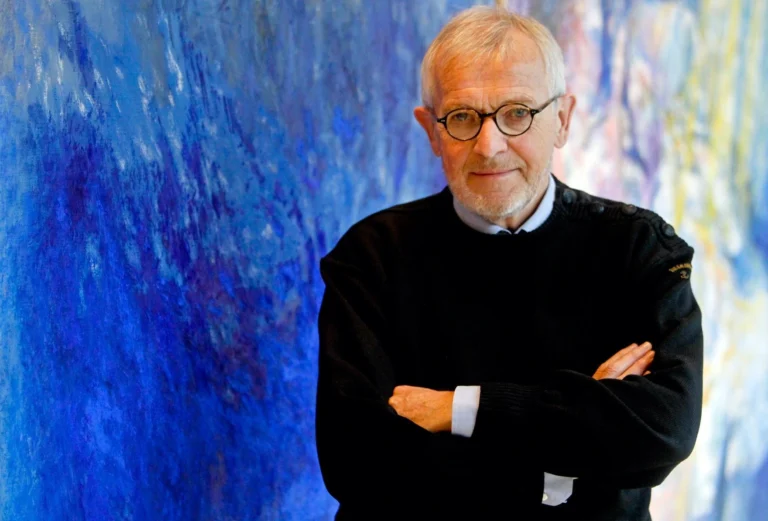
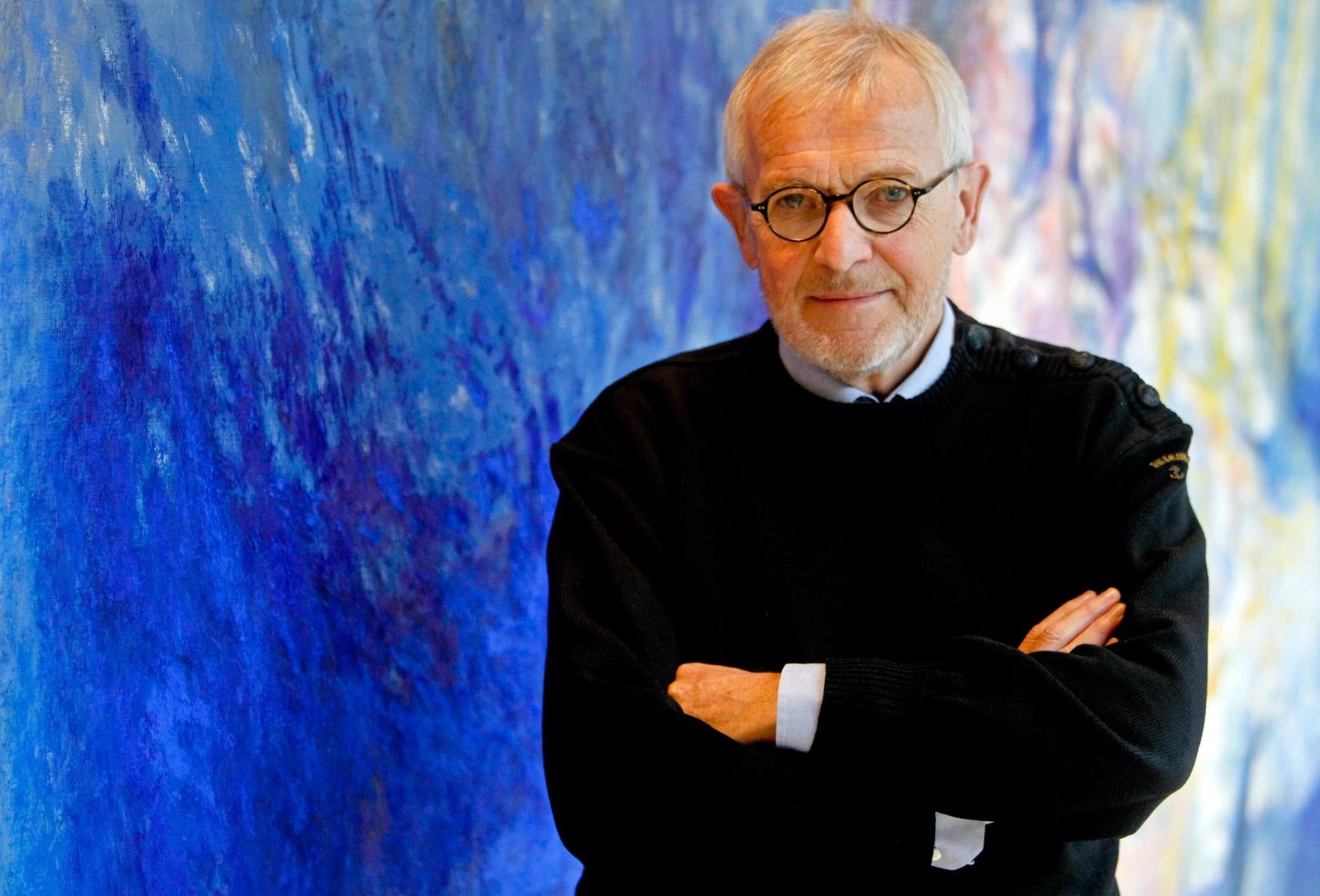
Francis Halzen is a Belgian-born American particle physicist best known for conceiving and leading the development of the IceCube Neutrino Observatory, a massive neutrino detector embedded deep in the Antarctic ice at the South Pole. He is a Vilas Research Professor and Gregory Breit Professor of Physics at the University of Wisconsin–Madison.
Halzen’s work sits at the intersection of particle physics, astrophysics and cosmology, particularly the study of high-energy neutrinos and cosmic rays. He has more than 1,000 scientific publications and is regarded as one of the leading figures in neutrino astrophysics.
Halzen was born in Tienen, Belgium, on March 23, 1944. He studied at what is now KU Leuven, where he obtained a master’s degree in 1966 and a PhD in 1969. His doctoral research focused on the broken symmetries of hadrons.
After completing his doctorate, Halzen worked at CERN in Geneva. In 1971, he was invited to spend six months at the University of Wisconsin–Madison. The visit eventually became a permanent academic career in the United States. He joined the UW–Madison physics faculty in 1972 and has remained there ever since.
The IceCube project
Halzen’s most important contribution to science has been his leadership of IceCube, the world’s first gigaton-scale neutrino detector. He began working on the idea of a neutrino telescope in the Antarctic in the 1980s and became involved in the precursor AMANDA experiment in 1987. AMANDA demonstrated that Antarctic ice could be used as a detector for neutrinos and helped establish the technological foundation for IceCube.
IceCube eventually transformed about one cubic kilometre of Antarctic ice beneath the U.S. Amundsen–Scott South Pole Station into a giant particle detector. Thousands of optical sensors buried deep in the ice detect the faint flashes of blue Cherenkov light produced when neutrinos interact with matter.
Construction of IceCube took place between 2004 and 2011 and was described by UW–Madison as the largest project ever assigned to a university. Halzen played a central role in its design, construction and scientific programme.
Discovering Cosmic Neutrinos
IceCube’s significance goes beyond detecting neutrinos. In 2013, the collaboration announced evidence for high-energy extraterrestrial neutrinos, opening a new way of observing the universe. The discovery was recognised as the 2013 Physics World Breakthrough of the Year.
Neutrinos are particularly valuable to astronomers because they can travel enormous distances through space without being significantly deflected or absorbed. Their detection can therefore provide information about violent cosmic environments that cannot easily be studied through light alone.
IceCube has subsequently identified neutrino sources associated with active galaxies and has contributed to evidence about where some of the universe’s highest-energy cosmic rays originate. The observatory has also detected neutrinos associated with the Milky Way.
Academic career
Halzen has held a succession of senior positions at UW–Madison where he has been Vilas Research Professor, since 2021; Gregory Breit Professor, since 1987; Principal Investigator of IceCube, since 2001 and Director of the university’s Institute for Elementary Particle Physics Research.

His research encompasses particle physics, astrophysics and cosmology, with particular emphasis on neutrino astronomy, cosmic rays and high-energy particle interactions.
He is also co-author, with Alan Martin, of Quarks and Leptons: An Introductory Course in Modern Particle Physics, a widely used textbook in particle physics.