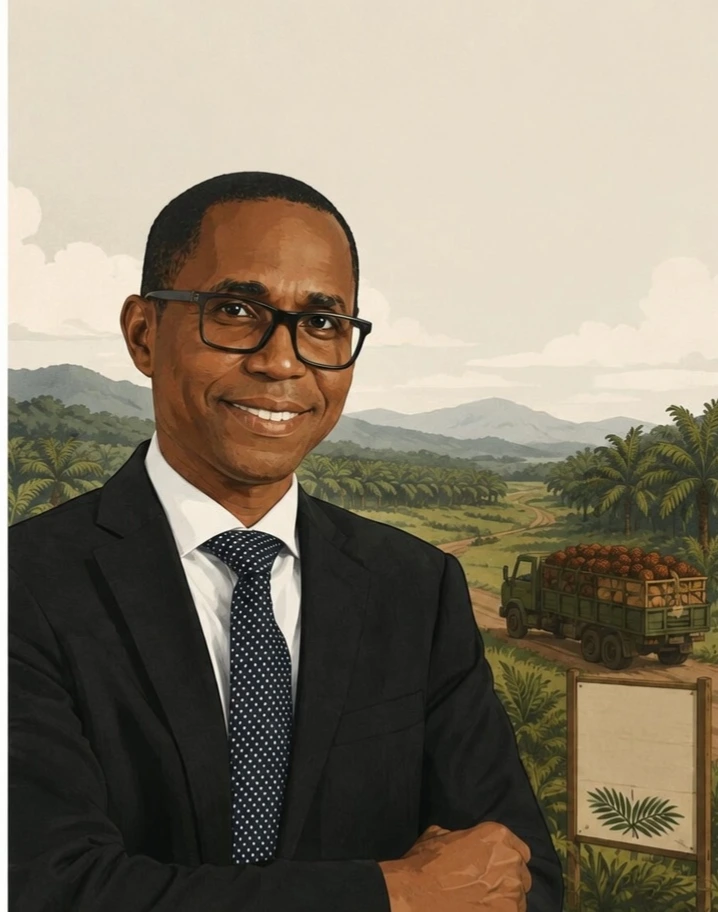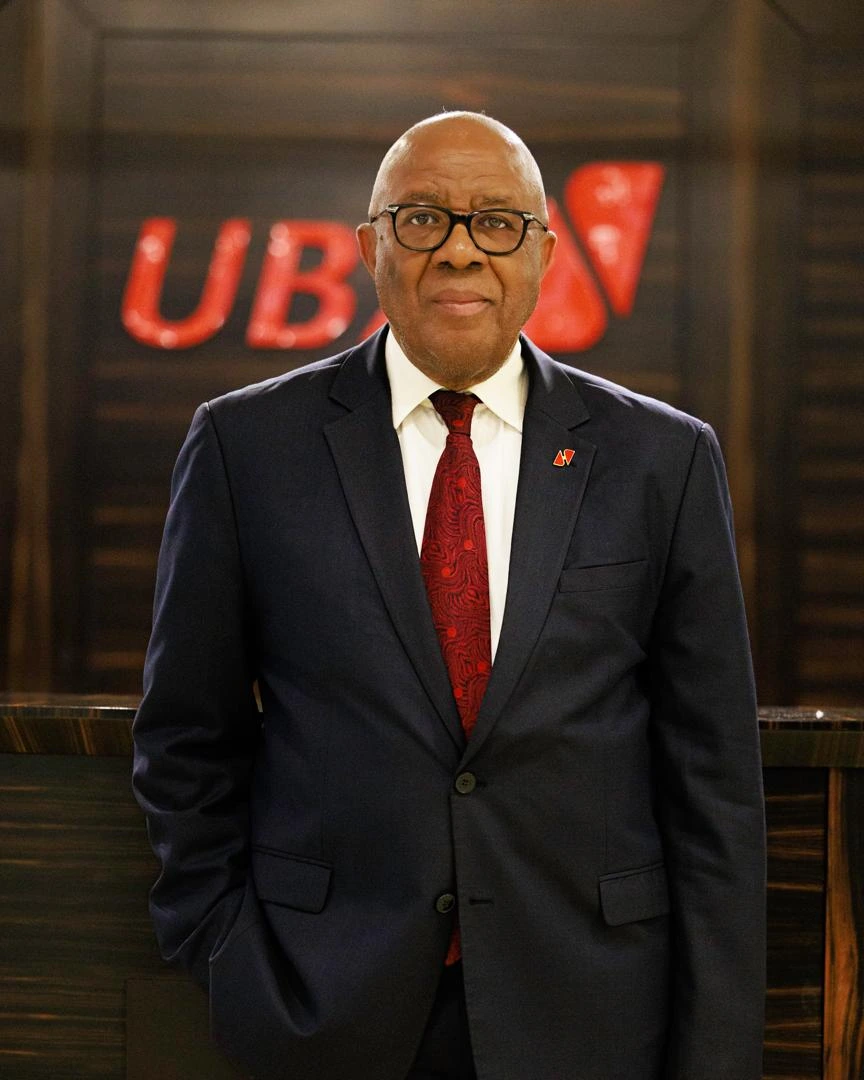
When Tony Elumelu steps down as Chairman of United Bank for Africa on August 21, his successor, Emmanuel Nwabuikwu Nnorom, will hardly need an introduction to the institution.
Nnorom has been an executive director of UBA. He has served as the bank’s Group Chief Operating Officer and Group Chief Financial Officer. He ran UBA’s operations outside Nigeria as Chief Executive of UBA Africa, overseeing the implementation of its strategy across 18 African countries.
Outside banking, he has served as President and Chief Executive Officer of Transnational Corporation of Nigeria Plc, Group Chief Executive Officer of Heirs Holdings and Chairman of Transcorp Hotels. In April 2024, he returned to the UBA board as a non-executive director.
Now, at 68, Nnorom is returning to the centre of an institution whose development has been intertwined with much of his professional life.
UBA announced on July 6 that Nnorom would succeed Elumelu as Group Chairman when the latter retires from the board after completing the 12-year tenure permitted for non-executive directors under Central Bank of Nigeria corporate governance rules.
The appointment represents a significant transition at one of Africa’s largest banking groups. But it is also a study in continuity.
Nnorom has spent much of his career working within the collection of companies and institutions associated with Elumelu. His professional history stretches across UBA, Heirs Holdings and Transcorp, giving the incoming chairman experience in banking, investment management, power, hospitality and corporate governance.
An Accountant Moves Through Banking
Nnorom was born on April 7, 1958. A chartered accountant by training, he is a Fellow of the Institute of Chartered Accountants of Nigeria and an honorary member of the Chartered Institute of Bankers of Nigeria. He also attended Templeton College at Oxford University and executive programmes at Lagos Business School and IMD in Switzerland.
Unlike many prominent Nigerian bankers, Nnorom has maintained a relatively low public profile. There is little publicly available information about his childhood and early education. His public record is overwhelmingly professional: a succession of senior financial, operational and board positions spanning more than four decades.
It is at UBA that the scale of his career first becomes apparent. Nnorom served as an executive director of the bank and occupied several of its most important management positions.
As Group Chief Operating Officer, his responsibilities included information technology, operations, corporate services, marketing, corporate communications and regulatory affairs. He subsequently served as Group Chief Financial Officer, with responsibility for finance and risk.
The combination is unusual in its breadth. Operations placed him close to the machinery required to run a large financial institution; finance and risk placed him close to its balance sheet and systems of financial control.
But perhaps the most important role in understanding his return to UBA as chairman was his period running UBA Africa.
Building UBA Outside Nigeria
The modern history of UBA is closely connected with its expansion across the African continent. After Standard Trust Bank merged with the much older UBA in 2005, Elumelu, who had led Standard Trust Bank, became Chief Executive of the combined institution.
The years that followed saw UBA expand beyond Nigeria, establishing a banking presence across numerous African markets.
Nnorom became one of the executives responsible for implementing that expansion. As Chief Executive of UBA Africa, he oversaw the bank’s operations outside Nigeria and the execution of its corporate strategy across 18 African countries.
It was a considerable operational assignment. Running a banking group across multiple African jurisdictions required dealing with different regulators, currencies, political systems and stages of financial market development.
The experience also gave Nnorom direct knowledge of the business that has become central to UBA’s identity.
Today, the bank operates in 20 African countries and four international financial centres and serves more than 50 million customers.
From Banking to Heirs Holdings
Nnorom’s career subsequently moved beyond banking and into the expanding network of investments associated with Elumelu. He became President and Chief Operating Officer of Heirs Holdings, the investment company founded by Elumelu.
Heirs Holdings has interests across financial services, power, energy, hospitality, healthcare and real estate. Nnorom’s position placed him within the management of an investment portfolio considerably broader than the banking industry in which he had spent much of his career.
In 2014, he moved from Heirs Holdings to another major company within the group’s investment network.
On September 1 that year, Nnorom became President and Chief Executive Officer of Transnational Corporation of Nigeria Plc, succeeding Obinna Ufudo. Transcorp is a publicly listed conglomerate with interests spanning power, hospitality and energy.
Nnorom led the company until June 2017. The position added another dimension to his career. At UBA, he had managed banking operations and finance. At Heirs Holdings, he had worked within an investment company. At Transcorp, he was responsible for managing a publicly listed industrial conglomerate with businesses operating in sectors very different from banking.
Back to Heirs Holdings
After leaving the chief executive position at Transcorp, Nnorom returned to Heirs Holdings, this time as Group Chief Executive Officer. His appointment took effect in June 2017.
The move placed him in the senior executive position at the investment company, overseeing the implementation of its investment strategy across its portfolio. Nnorom also continued to accumulate board experience.
He served on the board of Transcorp and chaired its Finance and Investment Committee. He also became Chairman of Transcorp Hotels, the hospitality subsidiary of the Transcorp Group, before leaving the position at the end of 2025.
By this point, his career had acquired a distinctive pattern.
Nnorom was not primarily known as a dealmaker, public intellectual or corporate celebrity. Rather, his career had been built around occupying senior positions requiring financial management, operational control and corporate oversight across companies connected by a common shareholder and investment structure.
The Return to UBA
In April 2024, Nnorom returned to the UBA board as a non-executive director.
The appointment brought him back to the institution where he had previously served in some of its most senior executive positions. Two years later, he has been selected to succeed Elumelu as chairman. There is an obvious contrast between the two men.
Elumelu is one of Africa’s most recognisable businessmen. Through his investments, speeches, philanthropy and advocacy of “Africapitalism,” he has cultivated a public profile extending well beyond banking. Nnorom’s career has been considerably less public.
But the two men have worked within the same corporate orbit for decades. Nnorom’s professional history encompasses the three institutions most closely associated with the development of Elumelu’s business interests: UBA, Heirs Holdings and Transcorp.
This makes his appointment as UBA chairman noteworthy. It is not the appointment of an outsider brought in to change direction. Nor is it the elevation of an executive unfamiliar with the bank.
Instead, UBA has selected a chairman who has previously helped manage its operations, finances, risks and African subsidiaries and who subsequently spent more than a decade in senior executive and board positions across other major companies associated with its outgoing chairman.
The Advantages — and Risks — of Continuity
There are obvious advantages to appointing a chairman with Nnorom’s experience.
UBA is a complex financial institution operating across 20 African countries and four international financial centres. Its chairman must oversee a board responsible for a business operating under numerous regulatory regimes and exposed to different currencies, economies and political systems. Nnorom already knows much of this business.
He has been an executive director of UBA, its Group Chief Operating Officer, Group Chief Financial Officer and Chief Executive of UBA Africa. Few candidates for the chairmanship could possess comparable institutional knowledge of the bank’s operations, finances, risk management and African subsidiaries.
His subsequent career has also given him experience outside banking. Running Transcorp and Heirs Holdings and serving on the boards of publicly listed companies have exposed him to investment management, power, hospitality and corporate governance.
For shareholders, such continuity can be valuable. A new chairman does not have to spend years learning the institution, understanding its strategy or developing relationships with its senior executives and major shareholders.
But the same career history that makes Nnorom an apparently logical choice for the chairmanship also raises legitimate questions.
The chairman of a publicly listed bank is not an executive manager. One of the board’s central responsibilities is to provide independent oversight of management, challenge corporate strategy where necessary and ensure that the interests of all shareholders and stakeholders are adequately represented.
Nnorom has spent a substantial part of his career within the corporate network associated with Tony Elumelu.
He has served in senior positions at UBA, Heirs Holdings and Transcorp. He was President and Chief Operating Officer and later Group Chief Executive Officer of Heirs Holdings. He ran Transcorp and served on its board. He also chaired Transcorp Hotels.
These appointments demonstrate the confidence that Elumelu and the boards of companies associated with him have placed in Nnorom over many years. They also mean that UBA’s incoming chairman is deeply embedded in the business network associated with its outgoing chairman and major shareholder.
That is not, by itself, evidence of a governance problem. Long professional relationships are common in business, and institutional knowledge can improve the effectiveness of a board. But it creates an unavoidable governance question: can an ultimate insider provide the degree of independent challenge expected of the chairman of one of Africa’s largest publicly listed banks?
The question is particularly relevant because the separation of ownership, management and board oversight is a central principle of modern corporate governance.
A chairman who understands an institution intimately can ask better questions of management. But familiarity can also make established assumptions more difficult to challenge. Continuity can preserve a successful strategy; it can also discourage the examination of alternative strategies. Trust between a chairman and major shareholders can contribute to stability; excessive alignment can weaken the board’s capacity to act as an independent source of scrutiny.
There is no simple formula for determining where institutional knowledge ends and excessive familiarity begins.
Nor should Nnorom’s career be reduced simply to his long association with Elumelu. He has more than four decades of professional experience and has held significant executive responsibilities in his own right. He has managed UBA’s African subsidiaries, overseen finance and risk at the banking group, run a publicly listed conglomerate and led a major investment company.
The more relevant issue is what kind of chairman he chooses to become.
The skills required to run businesses and implement the strategies of shareholders are not identical to those required to chair the board of a major bank. The latter role requires sufficient distance from management and shareholders to question both when necessary.
Nnorom’s appointment therefore contains both the principal advantage and the principal risk of corporate continuity. Few people know the institution and the corporate network surrounding it better.
The test of his chairmanship will be whether that knowledge becomes a source of stronger oversight — or makes independent challenge more difficult.
A Chairman Formed Inside the System
When Nnorom takes over on August 21, he will become chairman of a substantially larger and more geographically dispersed institution than the UBA in which he began his senior management career.
The bank now operates across 20 African countries and has international operations in London, New York, Paris and Dubai.
Nnorom will also be succeeding a chairman whose relationship with UBA extends back to the 2005 merger with Standard Trust Bank.
Elumelu served as Chief Executive of UBA from 2005 until 2010 and returned as Chairman in 2014. His retirement from the board therefore ends more than two decades during which he played a central role in the bank, first as chief executive and later as chairman.
Nnorom’s appointment suggests that UBA has chosen continuity for the transition.
The incoming chairman knows the bank. He knows its African operations. He knows the companies associated with its largest individual shareholder. And after more than four decades in finance and corporate management, he has spent much of his professional life inside the institutions that helped create the modern UBA.

In Nigerian business, chairmanship transitions at major companies can introduce new alliances, competing interests and changes of direction. At UBA, the choice has fallen on a man who has been part of the story for years.
On August 21, Emmanuel Nnorom will not so much arrive at UBA as return, once again, to one of the institutions that has defined his career.