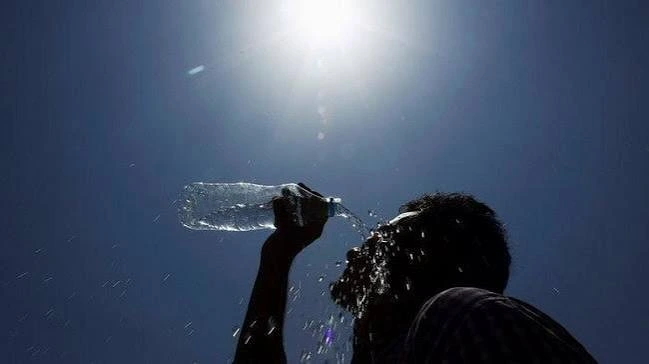
The United Nations has warned that 2027 could become the hottest year on record as an intensifying El Niño phenomenon threatens to push global temperatures to new highs and worsen extreme weather conditions.
The warning was issued by the World Meteorological Organisation (WMO) in its State of the Climate Update 2026, released on Monday, November 9, as world leaders gathered for the 31st United Nations Climate Change Conference (COP31) in Antalya, Türkiye.
According to the WMO, the developing El Niño is expected to become the strongest on record by December, with its warming effects likely to be felt most strongly in 2027.
The phenomenon could compound the effects of human-induced climate change, increasing the likelihood of record-breaking temperatures and more severe weather events across different regions.
Risk of New Global Temperature Records
The WMO said 2026 is on course to rank among the four warmest years since temperature records began, with the global average surface temperature between January and September standing at approximately 1.47°C above the pre-industrial average.
The organisation noted that the past 12 years have each been the warmest on record, with 2023 to 2026 accounting for the four warmest years in the historical record.
The current temperature record was set in 2024, when the global average temperature reached 1.55°C above pre-industrial levels. This was followed by 2023 at 1.46°C and 2025 at 1.43°C.
The WMO explained that El Niño typically increases annual global average temperatures by between 0.1°C and 0.2°C, with its strongest influence often occurring in the year after it develops.
WMO Secretary-General Celeste Saulo said the timing of the developing phenomenon raises concerns about another temperature record in 2027.
“This is why 2024 was the warmest year on record, and why we should therefore prepare for another record-breaking year in 2027,” she said.
Saulo explained that El Niño releases heat stored in the oceans, adding to the warming already driven by greenhouse gas emissions.
“El Niño and indeed the state of the global climate in 2026 gives new meaning to the phrase off the charts. El Niño doesn’t add new heat to the planet. It releases heat from the ocean, which is the warmest ever measured. There is simply more heat available to release,” she added.
UN Calls for Stronger Climate Preparedness
The WMO urged governments to strengthen climate monitoring, improve weather forecasting and expand early warning systems to reduce the impact of increasingly severe weather conditions.
It reported that the number of countries with multi-hazard early warning systems increased from 56 in 2015 to 136 in 2025, reflecting progress in global climate preparedness.
However, the organisation stressed that more investment and international cooperation would be required to protect vulnerable populations from extreme weather events.
United Nations Secretary-General António Guterres also called on world leaders to accelerate climate action, particularly through emissions reductions and increased financial support for countries most exposed to climate risks.
“We have entered a new age of climate extremes. A supersized El Niño is colliding with a planet already superheated by manmade climate change,” Guterres said.
Nigeria Faces Climate Risks
The developing El Niño could have significant implications for Nigeria, particularly its electricity supply, agricultural production, infrastructure and vulnerable communities.
In June 2026, a report by BMI warned that El Niño-induced drought could reduce hydropower generation across West Africa, exposing Nigeria to additional electricity supply risks.
Previous El Niño events reportedly reduced Nigeria’s hydropower utilisation by nearly 25%, highlighting the vulnerability of electricity generation to changing rainfall patterns and water availability.
Reduced rainfall could affect water levels at major hydropower facilities, including the Kainji, Jebba and Shiroro dams, potentially increasing pressure on an electricity system already facing generation and supply constraints.
Beyond electricity generation, Nigeria also faces the threat of flooding, particularly in urban centres with inadequate drainage infrastructure and rapidly expanding settlements.

In Lagos, recurring flooding has been linked to the loss of wetlands, rapid urbanisation and inadequate flood-control infrastructure.
The combination of rising global temperatures and increasingly unpredictable weather patterns underscores the importance of climate adaptation measures, infrastructure investment and improved disaster preparedness in Nigeria.