Dangote Industries Limited has acquired 4,000 additional pieces of construction equipment as it expands its Lekki refinery in Lagos, taking its construction fleet to 6,500 machines.
The acquisition forms part of the group’s plan to increase the refinery’s processing capacity from its original design of 650,000 barrels per day to 1.4 million barrels per day.
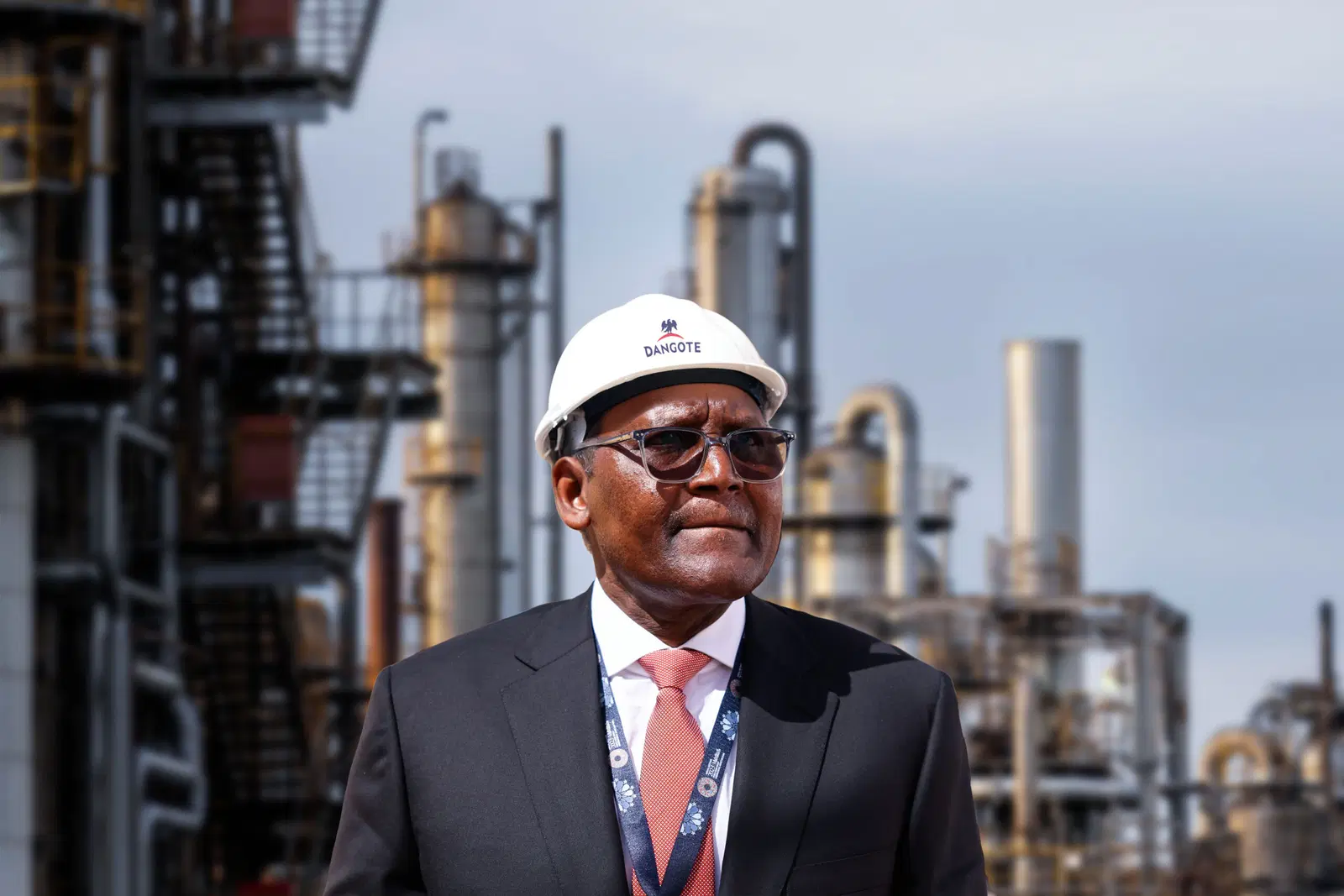
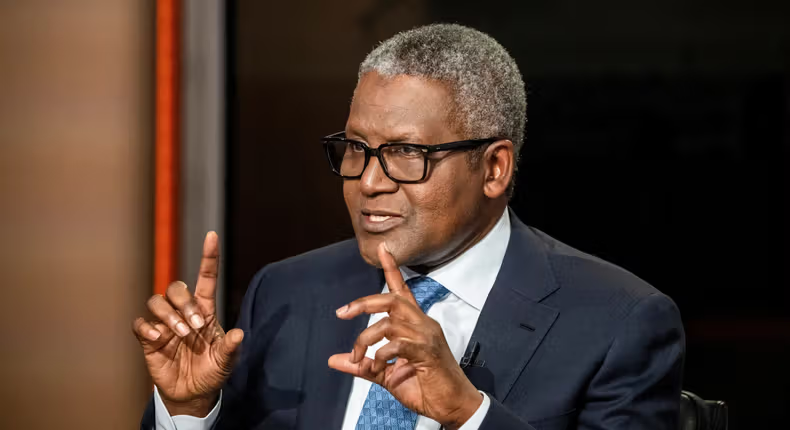
Devakumar Edwin, Group Vice President for Oil and Gas and Fertiliser at Dangote Industries, disclosed the figures on Friday during a briefing for editors at the refinery in Ibeju-Lekki, Lagos.
According to Edwin, the group initially purchased 2,563 pieces of equipment after Julius Berger and other contractors indicated that they lacked the capacity to construct the refinery’s main process buildings.
The company has since expanded the fleet, including the acquisition of 330 cranes.
Why Dangote chose to buy equipment rather than hire foreign contractors
The decision to acquire construction machinery was driven partly by the cost of bringing foreign contractors and their equipment into Nigeria.
Edwin said Aliko Dangote, president of the group, decided that purchasing the machinery directly would be more economical than paying contractors to transport equipment into the country and subsequently remove it after completing the work.
According to Edwin, contractors would also incorporate equipment depreciation into project costs, potentially increasing the overall bill.
The approach reflects a broader challenge facing large industrial projects in Nigeria: the limited availability of specialised construction equipment and the infrastructure needed to support major developments.
Edwin recalled that when Dangote built its Apapa sugar refinery in 1998, Nigeria had only two large cranes, each with a lifting capacity of 150 tonnes.
For the Lekki refinery project, the company hired one of only two 5,000-tonne cranes available globally, while also purchasing hundreds of cranes and other construction machines.
The investment in equipment gives Dangote greater control over construction resources, although the company has not disclosed the full cost of acquiring and maintaining its fleet.
Dangote rejects $2.5bn contractor proposal
Edwin said the group also decided to execute the refinery project through its own project company after receiving proposals from international engineering, procurement and construction contractors.
According to him, contractors quoted fees of approximately 12.5 per cent of an estimated $19.5bn project cost.
That would have translated into approximately $2.44bn in fees, based on the figures he provided.
Edwin said Dangote rejected the proposed arrangement, considering the cost too high for designing and supervising the project.
Instead, Dangote Projects Limited undertook the detailed engineering, procurement and coordination of construction activities, while engaging contractors for specific work packages.
Edwin said the company purchased project materials directly, including smaller components such as nuts and bolts.
The strategy allowed the group to retain greater responsibility for procurement and project execution rather than relying on a single international engineering contractor to deliver the development.
Julius Berger handled auxiliary buildings
Edwin said Julius Berger declined to undertake construction of the refinery’s main process buildings after reviewing the project drawings.
The German construction company subsequently handled 43 of approximately 127 auxiliary buildings, including canteens, transformer rooms, control rooms and firefighting facilities.
The division of responsibilities illustrates the scale and specialised nature of the refinery development, which required Dangote to assemble equipment, engineering resources and contractors for different components of the project.
The company also developed supporting infrastructure intended to serve both the existing refinery and its expansion.
Infrastructure investment expected to support expansion
According to Edwin, much of the infrastructure already developed for the refinery’s first phase will be used for the expansion, reducing the additional time and expenditure required.
The facilities include a granite quarry with a stated capacity of 10 million tonnes, 82 concrete batching plants and 203 transit mixers.
The group has also developed a private port, an oxygen and welding-gas plant and accommodation facilities capable of housing 50,000 workers, Edwin said.
These investments are significant because large industrial developments require more than processing equipment. They also depend on the availability of construction materials, transport infrastructure, utilities and accommodation for workers.
By developing these facilities alongside the refinery, Dangote has sought to address some of the logistical constraints associated with building a project of this scale in Nigeria.
Refinery already operating above original capacity
Edwin said the refinery, originally designed to process 650,000 barrels of crude oil daily, was operating at approximately 700,000 barrels per day at the time of the briefing.
That represents 50,000 barrels per day above its original nameplate capacity, according to the company executive.
The expansion would take the facility’s planned processing capacity to 1.4 million barrels per day.
Edwin described the refinery as the world’s largest single-train petroleum refinery, saying the largest facility before it had a capacity of approximately 430,000 barrels per day.
The refinery was designed to serve both the domestic market and export customers. Edwin said its original production plan allocated 44 per cent of output to meeting Nigeria’s requirements and 56 per cent to exports.
He added that approximately 95 per cent of production consisted of higher-value products, including petrol, diesel and aviation fuel. The remaining five per cent included industrial products such as carbon black feedstock.
The refinery was also designed to produce Euro 5 and Euro 6-grade fuels and process different African crude grades as well as US West Texas Intermediate crude, Edwin said.
Expansion and Kenya refinery could lift Dangote’s capacity to 2.1 million barrels per day
Edwin said Dangote’s total refining capacity would reach approximately 2.1 million barrels per day after the Lekki expansion and the construction of a planned 700,000-barrel-per-day refinery in Kenya.
The proposed increase would extend the group’s refining footprint beyond Nigeria and create a larger production base serving domestic and international markets.
However, the planned capacity should be distinguished from actual production.
Refinery nameplate capacity represents the amount a facility is designed to process under specified operating conditions; actual throughput and output depend on operational performance, crude supply, maintenance and other factors.
For Nigeria, the expansion carries implications for domestic fuel supply, industrial development and the country’s position in regional petroleum-product markets.

The scale of the project also highlights the capital, equipment and infrastructure requirements involved in developing large refining facilities in markets where specialised industrial resources may be limited.
Dangote Industries has not disclosed a detailed breakdown of the cost of the additional 4,000 machines in the figures provided by Edwin.