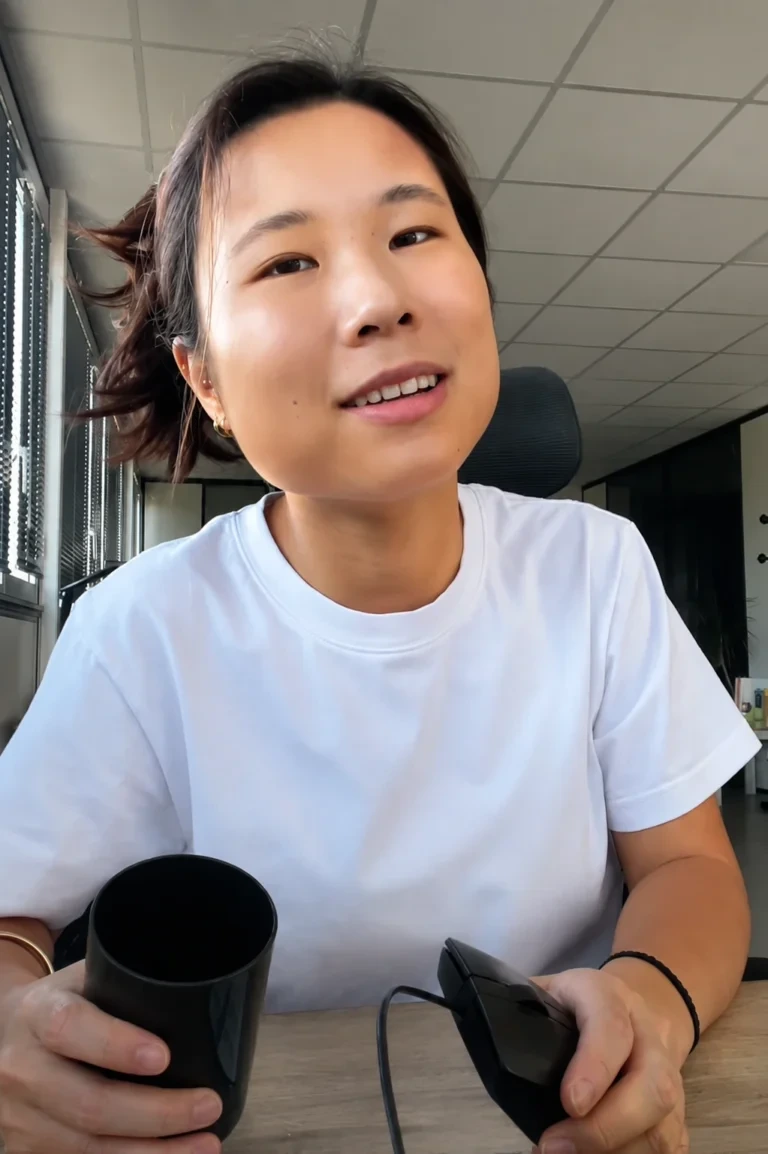
For three months, she had been doing what thousands of students do every year: scrolling through LinkedIn, sending applications and waiting for replies that often never came.
Then she turned the frustration into a song.
The result, a short parody called “Balance Ton Stage”, has become an unexpected social-media hit, drawing more than 5 million views across Instagram and TikTok within days, according to the student.
What began as a humorous attempt to document the search for an engineering internship has now created a second career question for its creator: whether the song should actually be released.
From internship applications to viral music
The student says she has been looking for an internship in the energy and electricity sector, while also considering an apprenticeship. She describes repeatedly applying for positions and becoming so absorbed in LinkedIn that the platform began to feel like another social network.
Her frustration became the central joke of “Balance Ton Stage”.
The lyrics turn familiar recruitment obstacles into comedy: employers asking for experience while students struggle to obtain the experience required to qualify for internships in the first place.
She also jokes about being rejected by EDF, one of France’s largest energy companies, and pleads with recruiters to consider her application.
The formula was simple: take a highly stressful part of student life and turn it into something deliberately exaggerated and catchy.
It resonated.
The creator later said the video had passed 3 million views on Instagram and 2 million on TikTok. A comment she posted joking that she might release the song if the numbers continued climbing also attracted about 15,000 likes.
That response changed the calculation.
A joke becomes a possible music release
The audience reaction has pushed the student to consider turning the parody into a genuine recording.
She has already produced another version, “Balance Ton Taf”, aimed at people looking for permanent employment rather than internships or apprenticeships. She says the two pieces could potentially be combined into a longer song.
But transforming a viral social-media performance into an official release is more complicated than simply uploading the video to Spotify or other streaming services.
Because the parody uses an existing song or musical framework, obtaining the necessary rights could become a central issue. The creator herself acknowledged that she does not yet understand the music-industry process and would need to investigate the copyright requirements.
There is also the practical question of production.
She says she does not know how to mix music and has struggled to use GarageBand despite trying tutorials. If the project goes ahead, she expects to work with a recording studio and sound engineer.
That could mean spending much of the money she earned from her internship.
The irony is difficult to miss: a project born from the struggle to find professional experience could end up consuming the earnings from that very experience.
The wider problem behind the joke
The video’s appeal goes beyond music.
For students and recent graduates, the transition from education into the labour market can be particularly difficult because entry-level positions frequently require applicants to demonstrate previous professional experience.
That creates a familiar loop: employers want experience, but students need an employer to acquire it.
Internships and apprenticeships have therefore become an important bridge between education and employment, particularly in technical fields where employers may expect students to arrive with practical knowledge alongside academic qualifications.
For engineering students interested in energy and electricity, the stakes can be even higher. The sector combines highly technical work with strict professional and industrial requirements, making the first opportunity especially valuable for someone trying to establish a career.
The student’s repeated applications and references to being rejected illustrate the emotional side of that process — one that is rarely visible in polished recruitment statistics.
The unexpected second audience
The viral attention has also exposed another side of internet fame.
While many viewers encouraged her to release the song, others focused on her appearance, including comments about her jaw.
The student responded by discussing insecurities she has carried since childhood and questioning why strangers feel compelled to target physical characteristics that people may already feel self-conscious about.
Her response transformed the second video from a celebration of viral numbers into something closer to a conversation about online cruelty.
That part of the story may prove more enduring than the original joke.
The same audience that can turn an obscure student video into a five-million-view phenomenon can also expose its creator to thousands of unsolicited opinions about her appearance.
From engineering to music — without abandoning the original goal
For now, the creator insists that the attention is secondary.
Her original objective was straightforward: find an internship or apprenticeship.
The sudden interest in “Balance Ton Stage”, potential music rights negotiations, studio recording and the prospect of releasing original songs were not part of that plan.
Yet the viral response has opened a door that did not exist when she was simply sending applications.
She says she has also written more serious and personal songs, and that the positive reaction to those compositions has encouraged her to continue creating music.
That leaves her with an unusual choice.
She could return to the job hunt and treat the viral episode as an entertaining interruption. Or she could follow the audience that has emerged around her music and see whether a joke about failing to get an internship can become the beginning of something else.

For someone who initially wanted to become an engineer in the energy sector — rather than a sound engineer — the detour is unexpectedly fitting.
The search for a first professional opportunity has already produced one thing recruiters could not offer her: an audience.