Wildberries, Ozon and Yandex Market were already formidable businesses before February 2022 but the withdrawal of Western brands, rerouted imports and Russia’s increasingly isolated digital economy gave all three fresh room to grow. The same war has since rewritten their ownership, access to foreign capital and, in 2026, the physical security of their logistics networks.
The central paradox is that Russia’s war economy first created an unusually favourable competitive environment for domestic marketplaces. Four years later, it is imposing costs that ordinary commercial strategy cannot hedge away.
| Marketplace | 2025 online sales | Who owns it | How the war changed the business |
| Wildberries | RUB 4.04tn (+25%) |
Founder Tatyana Kim dominates Wildberries; Wildberries holds 65% of merged RVB vehicle with Russ. | Western exits helped expand the marketplace; in July–August 2026 Ukrainian drones began destroying large parts of its warehouse network. |
| Ozon | RUB 3.57tn (+42%) |
AFK Sistema 31.8%; Alexander Chachava 27.7%; remainder broadly free float. | Nasdaq trading was halted after the invasion and the listing was later ended; ownership became more Russian; warehouses now face drone risk. |
| Yandex Market | RUB 597bn (+11%) |
Part of Yandex. No controlling shareholder; management and Russian investors dominate after the 2024 split from the Dutch parent. | The war triggered a $5.4bn separation of Yandex’s Russian assets from its former foreign parent and changed the identity of the owners. |
Source: Data Insight’s 2025 ranking for sales; company, Reuters and regulatory disclosures for ownership and wartime developments.
A market Remade by War
Russia’s three largest general online marketplaces are now Wildberries, Ozon and Yandex Market. Data Insight’s 2025 ranking put Wildberries first with RUB 4.04 trillion in online sales, up 25% year on year; Ozon second with RUB 3.57 trillion, up 42%; and Yandex Market third with RUB 597 billion, up 11%. [1] The gap between the first two and the rest of the market is enormous. In practical terms, Russian e-commerce has become a two-horse race with Yandex Market a distant but still strategically important third player.
The war did not create these companies. Wildberries dates to 2004, Ozon to 1998 and Yandex’s retail ambitions to the early Russian internet era. What changed after the full-scale invasion of Ukraine in February 2022 was the environment around them. Western fashion, technology and consumer brands withdrew or sharply reduced their Russian presence; payment and logistics links to Europe became harder; and imports were redirected through China, Turkey, the United Arab Emirates and other channels. Marketplaces were unusually well positioned to aggregate these replacement supply chains and make them legible to consumers. Analysts quoted by the Associated Press in 2026 described Wildberries and Ozon as major beneficiaries of that shift.
But the apparent winners of economic isolation have also become more exposed to the state, to sanctions and now to military risk. Ozon lost its Nasdaq route to global investors. Yandex underwent one of the biggest forced corporate separations of the war. Wildberries, the least internationally dependent of the three, escaped much of the early capital-market damage — only to become the first large Russian consumer company to suffer repeated physical attacks on its logistics network in 2026.
Wildberries: Tatyana Kim’s wartime retail empire
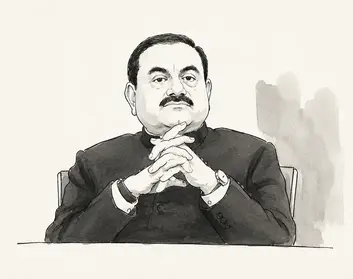
Wildberries is the clearest example of how far Russian e-commerce has travelled. Tatyana Kim, formerly Tatyana Bakalchuk, started the business with her then husband Vladislav Bakalchuk while on maternity leave, initially reselling clothing from their apartment outside Moscow. By July 2026 Reuters described the company as processing about 20 million orders a day and operating millions of square metres of warehouse space. Kim’s fortune was put at about $7 billion, making her Russia’s richest woman.
Kim’s biography matters because Wildberries is not a state corporation or an old privatisation asset dressed up as a technology company. It is one of the rare Russian businesses of its size that can plausibly be described as founder-built. Yet its evolution since the invasion also shows how difficult it is for a company of this scale to remain merely private in wartime Russia.
In 2024 Wildberries merged its operations with Russ, Russia’s dominant outdoor advertising group, through a new vehicle, RVB. The ownership structure gave Wildberries 65% and the Russ side 35%. The transaction triggered a bitter dispute between Kim and Bakalchuk. A confrontation at the company’s Moscow offices in September 2024 ended in a shooting that killed two people and wounded seven, an extraordinary reminder that large corporate restructurings in Russia can quickly acquire political and security dimensions. Kim later divorced Bakalchuk and returned to her maiden name. Russian corporate-registry reporting in July 2026 indicated that the post-merger structure had also left her with effective control of Russ Outdoor.
For most of the war, the commercial effect was favourable. Wildberries could sell the replacement products, parallel imports and Asian brands that took the place of Western retail. Its nationwide pickup-point model also suited a country in which modern shopping malls and premium international chains had become less important relative to domestic digital platforms.
Then, in July 2026, the war reached the warehouses. Reuters reported on 7 August that Ukrainian drones had targeted at least 20 Wildberries sites since 18 July, destroying more than 1.18 million square metres of warehouse capacity — more than a fifth of the company’s logistics network. Deliveries were disrupted, sales fell and more than 3,100 Wildberries pickup points were reportedly listed for sale as franchise operators struggled with the shock.
Kyiv has said the strikes are intended to impose economic costs on Russia and has alleged that Wildberries logistics are connected to military supply chains or carry dual-use items. The Kremlin and Wildberries reject the claim that the company handles military supplies. Kim has called the attacks terrorism and says the company is working with the government to support affected sellers. Whatever the military argument, the business consequence is unambiguous: Wildberries has gone from indirect beneficiary of war-driven market restructuring to a direct target of the conflict.
Ozon: from global capital-market darling to Russian-owned platform
Ozon has a different history. It began in 1998 as an online bookstore created by entrepreneurs linked to software company Reksoft, an obvious Russian analogue of the early Amazon model. Its founders did not remain dominant owners. Over time, the company became an investor-backed technology platform and, in 2020, raised almost $1 billion in a Nasdaq initial public offering.
That international capital-market identity was one of the first casualties of the invasion. Nasdaq suspended trading in Ozon’s securities on 28 February 2022. In 2023 the company’s depositary shares were delisted, formally ending what had been one of the highest-profile Russian technology listings in the United States. The war also hit management personally: chief executive Alexander Shulgin stepped down in April 2022 after the European Union and Australia imposed sanctions on him; the EU later removed him from its list in 2023.
The ownership structure has since become markedly more Russian. In July 2025 venture investor Alexander Chachava bought a 27.7% stake from Vostok Investments. Ozon said AFK Sistema remained its largest shareholder with 31.8%, with the rest of the stock in free float. Chachava is not simply another financial investor: he founded LETA Capital and also emerged from the Yandex restructuring with a large Yandex stake. His position makes him one of the most consequential private investors in Russia’s post-2022 technology economy.
The other anchor shareholder, Sistema, is the diversified conglomerate founded by Vladimir Yevtushenkov. Yevtushenkov reduced his Sistema stake from 59.2% to 49.2% in April 2022 after Britain sanctioned him, transferring 10 percentage points to his son Felix. Sistema’s current shareholder page still shows 49.2% and 15.3% individual stakes corresponding to the father and son. In July 2026 the EU added Sistema and Felix Yevtushenkov to its sanctions regime.
Operationally, Ozon has continued to grow rapidly. Its 42% sales increase in 2025 was substantially faster than Wildberries’. But its wartime risk profile now resembles its rival’s. On 31 July 2026 Ozon evacuated a major warehouse in Zelenodolsk, Tatarstan after a Ukrainian drone alert; the facility was not damaged and reopened. Reuters also reported that the EU’s July sanctions package targeted the financial arms of both Ozon and Wildberries. The episode matters because Ozon’s competitive advantage rests on a dense physical logistics system. Once warehouses become potential military or economic-warfare targets, a marketplace’s digital scale no longer insulates it from geography.
Yandex Market: the marketplace whose owner was broken in two
Yandex Market is much smaller than Wildberries and Ozon, but the story of its ownership is the most dramatic. It belongs to Yandex, the technology group built by Arkady Volozh and his co-founders into Russia’s dominant search company and a sprawling platform spanning advertising, maps, ride-hailing, food delivery, cloud services and e-commerce.
Before the invasion, Yandex was a rare Russian technology company with a large Western shareholder base and a Nasdaq listing. That hybrid identity became untenable after February 2022. The European Union sanctioned Volozh in June 2022 and he stepped down as chief executive and from the board. He later condemned the war as “barbaric”; the EU removed him from its sanctions list in 2024.
The decisive change came in July 2024, when Yandex’s Dutch parent completed the sale of the Russian businesses to a consortium of domestic investors in a cash-and-shares transaction worth about $5.4 billion. The Russian businesses — including search, advertising, ride-hailing and e-commerce — stayed in Russia. The former Dutch parent, later renamed Nebius Group, retained a set of international technology assets under Volozh. Reuters described the deal as the end of foreign ownership in Yandex and the largest corporate exit from Russia since the invasion at that time.
That means Yandex Market’s “owner” is no longer a founder in the Jeff Bezos sense. Yandex now has a dispersed but distinctly domestic ownership structure. As of 15 May 2026, the company said major shareholders held 70.15%, the employee incentive programme 3.62% and free float 26.23%, with no controlling shareholder; the management team alone held 16.51%. [12] In its July 2025 disclosure, Yandex identified Alexander Chachava’s structure at 16.03% and Catalytic People at 9.89%, alongside a 16.3% management stake. Catalytic People is backed by Vladimir Potanin’s Interros and T-Technologies.
This creates one of the most striking ownership facts in Russian retail: Chachava has large positions in both Ozon and Yandex. The war did not merely push foreign investors out; it helped create a new class of domestic technology owners able to acquire strategic assets at moments when foreign capital could not or would not remain.
For Yandex Market itself, the wartime outcome is mixed. It has benefited from the same localisation of consumer demand as its rivals, but its 11% growth in 2025 was far behind Ozon and Wildberries. Its strategic value lies less in standalone scale than in Yandex’s ecosystem: search can generate shopping intent, advertising monetises merchants, maps and delivery services lower fulfilment friction, and the group can cross-subsidise experimentation in retail. The company survived the geopolitical break-up, but the price was the severing of the international corporate structure that had once distinguished Yandex from most Russian technology groups.
The bigger story: winners of isolation, prisoners of geography
Taken together, the three companies show that sanctions do not produce a simple line from geopolitical pressure to corporate decline. In consumer markets, they can create domestic winners. Western exits reduced competition; parallel-import routes and Asian suppliers created demand for platforms able to organise fragmented trade; and Russian consumers became more dependent on home-grown digital intermediaries.
That is why Wildberries and Ozon can simultaneously be wartime success stories and wartime casualties. Their scale increased because the external environment became more closed. The same closure made their owners more Russian, their financing more domestic and their relationship with the state more important. In 2026, the conflict added a further constraint: physical infrastructure inside Russia can no longer be assumed to be outside the battlefield.

There is also a governance consequence. Wildberries is concentrated around one founder whose business has become deeply entangled with a politically sensitive merger and a national logistics network. Ozon has two dominant shareholder blocs, one linked to a sanctioned Russian conglomerate and the other to an investor who also holds a large stake in Yandex. Yandex, after losing its foreign parent, is controlled not by one owner but by a coalition of managers and domestic capital. These are very different ownership models, but all three have moved closer to the Russian political and financial system since 2022.
The war’s first gift to Russian e-commerce was market share. Its second effect was to redraw ownership. Its latest one is to make logistics, banking relationships and even warehouse roofs part of geopolitical risk. For investors, suppliers and competitors, that is now the defining fact about Russia’s online retail boom.