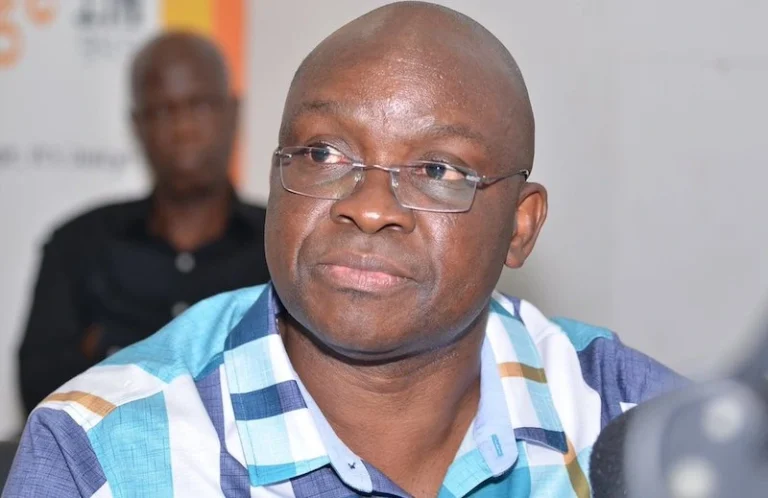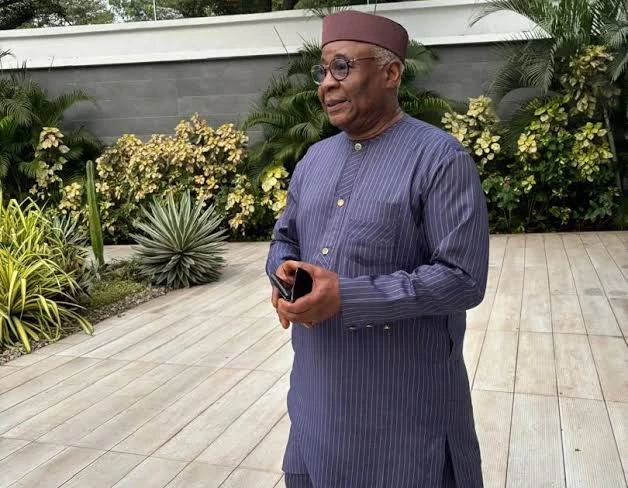
Rauf Aregbesola has turned a campaign appearance in Osun State into an unusually personal account of his marriage, telling supporters that he has remained sexually faithful to his wife, Sherifat, since they married.
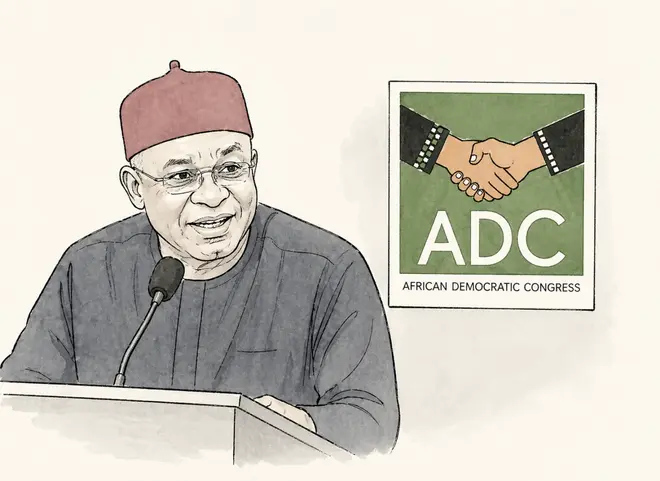
The former Osun governor made the claim in Yoruba while addressing supporters of the African Democratic Congress (ADC) in Ejigbo, as the party campaigns for the August 15 governorship election.
Aregbesola presented his marital fidelity not simply as a private matter but as part of his relationship with God. He said his decision was motivated by religious conviction and described it as a personal test connected to his political aspirations.
He told the gathering that he had asked God to recognise his devotion and, in the same prayer, linked his personal commitment to his hope of returning to the centre of political power in Osun.
The disclosure adds a personal dimension to Aregbesola’s increasingly visible role in the ADC’s campaign. The former governor is now the party’s national secretary and has been campaigning for Najeem Salaam, its candidate in the election.
Aregbesola’s return to Osun politics
Aregbesola remains one of the most recognisable political figures in Osun, having governed the state from 2010 to 2018. Before becoming governor, he served as Lagos State commissioner for works and infrastructure between 1999 and 2007 and was a prominent figure in the political movement that backed Bola Tinubu in Lagos.
His political career has also been closely intertwined with his family life. Sherifat Aregbesola served as Osun’s first lady during his eight years in office, while the state government’s official biography describes her as having worked in hospitality, printing, aviation and education.
Aregbesola’s latest comments therefore come from a politician whose public image has long incorporated religious faith. The official biography published by Osun State during his governorship described him as a man of deep religious faith, while his wife publicly defended him in 2013 against claims that he was a religious fanatic.
The political setting
The timing of the remarks matters because the ADC is trying to turn its growing national profile into an electoral breakthrough in Aregbesola’s home state.
Salaam, a former Speaker of the Osun State House of Assembly who served during Aregbesola’s tenure, emerged as the ADC’s governorship candidate in December after winning all 520 valid votes cast at the party’s primary.
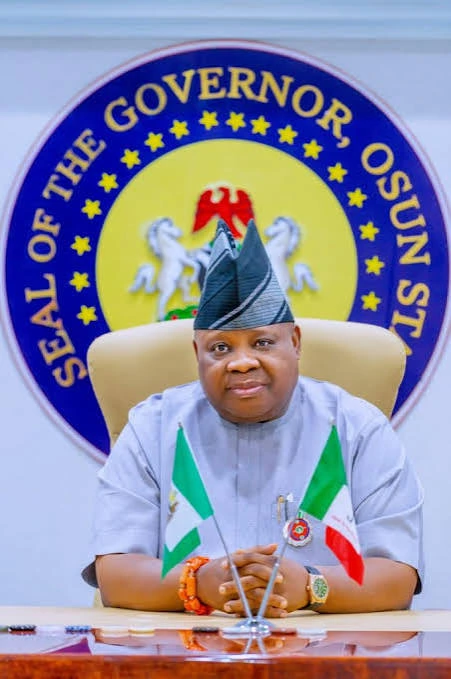
The ADC is competing against Governor Ademola Adeleke, who is seeking another term, and APC candidate Bola Oyebamiji. The Independent National Electoral Commission’s final list confirmed six parties in the governorship race.
The election is being watched beyond Osun because it is one of the last major governorship contests before Nigeria’s 2027 general elections. Adeleke has himself described the August 15 poll as a critical moment for the country’s democratic trajectory.
For the ADC, however, the immediate challenge is more local: converting the political networks of figures such as Aregbesola into votes for Salaam.
Aregbesola’s campaign appearances have consequently become part of a broader effort to establish the ADC as a credible alternative to the established political parties in Osun. The party announced a series of rallies across Ile-Ife, Iwo and Osogbo in July and August, with Aregbesola and Salaam expected to lead the mobilisation.
His comments about his marriage are unlikely to determine the election. But they illustrate the way Nigerian political campaigns can draw on personal morality, religious belief and political ambition simultaneously—particularly when candidates are addressing voters in a language and setting designed for direct, personal connection.
Aregbesola’s claim about his marriage remains a statement made by the politician himself; there is no independent way to verify a private assertion about his sexual history.