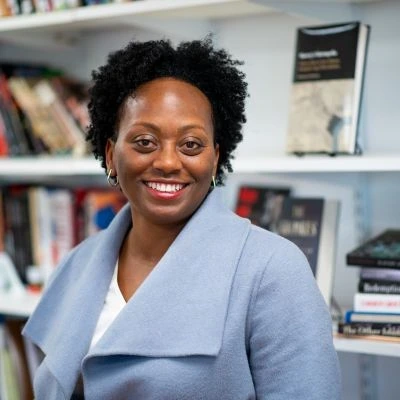
Kerri Greenidge built a reputation around recovering Black voices from the margins of American history. Her 2022 book The Grimkes: The Legacy of Slavery in an American Family was celebrated for shifting attention away from two famous white abolitionists and toward the enslaved people whose lives were tied to their family.
Four years later, the book has become the centre of a dispute over how historical scholarship is checked, who gets to define legitimate criticism and whether accusations of racial bias can coexist with demands for documentary evidence.
Greenidge is no longer employed by Tufts University, where she had been an associate professor. The university says an external review of her work found “multiple errors of fact and citation.” The American Historical Association has withdrawn a prize previously awarded to The Grimkes, while publisher W.W. Norton has removed the book from Greenidge’s author page. The full Tufts review, however, has not been made public, leaving important details of the case unresolved.
From celebrated history to an academic dispute
When The Grimkes appeared in 2022, Greenidge was already an established historian. She had joined Tufts in 2018 and was promoted to a tenure-track position in 2020. Harvard’s Radcliffe Institute later selected her as a fellow for 2024-25, describing her as an associate professor at Tufts and noting the awards and nominations received by her books.
The book focused on the Grimke family of South Carolina. Angelina and Sarah Grimke became prominent abolitionists after leaving the slaveholding world into which they were born. Greenidge’s approach was to look beyond the familiar abolitionist narrative and examine the Black people enslaved by the family and their descendants.
The book won the American Historical Association’s Joan Kelly Memorial Prize for women’s history in 2023. Its reception helped establish Greenidge as an important scholar of race, slavery and American history.
The criticism emerged later.
Historian Myra C. Glenn, a retired professor of American history at Elmira College, examined the book and published a detailed review in Reviews in American History. Her objections were not primarily about Greenidge’s interpretation of slavery but about the evidentiary foundation beneath some of her claims.
Glenn argued that important assertions were insufficiently supported, that the book contained factual errors and that some claims lacked the endnotes needed to allow readers to verify them.
One example involved correspondence between the Grimke sisters that Greenidge attributed to an archive at the University of Michigan. Glenn said the university did not possess the letters in question.
That distinction matters in historical scholarship. An argument can be controversial or revisionist without being methodologically defective. But when a claim rests on a document that cannot be located, the question becomes less about interpretation and more about whether the underlying evidence has been accurately represented.
Tufts moved the dispute beyond book reviews
The controversy did not remain confined to academic reviews.
According to Tufts, the university became aware of concerns about the book as early as December 2022 and eventually commissioned an external panel of historians to examine the allegations. The university says the panel found multiple errors involving facts and citations and describes its process as “fair, fact-based, thorough, and objective.”
There is an important limitation to that account: Tufts has not released the panel’s complete report.
That means the public can establish that the university says the review found problems, but cannot independently examine the panel’s methodology, the complete list of disputed passages or how it distinguished ordinary citation mistakes from more consequential scholarly failures.
Greenidge has disputed the process and rejected the suggestion that her work should be dismissed as fraudulent. She has said she has never plagiarised or fabricated material while acknowledging that some citations could have been misattributed. She has also argued that the scrutiny reflects a broader hostility toward Black women in academia.
Tufts has rejected allegations that its review was racially biased.
The disagreement therefore involves two separate questions that should not be collapsed into one: whether Greenidge’s scholarship contains significant errors, and whether the scrutiny and institutional response were themselves shaped by racial bias.
Evidence presented publicly so far does not resolve the second question.
The consequences extended beyond Tufts
The dispute has also affected Greenidge’s standing outside the university.
The American Historical Association withdrew the Joan Kelly Memorial Prize awarded to The Grimkes after the concerns surrounding the book came to light. W.W. Norton subsequently removed the title from Greenidge’s author page.
Her departure from Tufts has been confirmed by the university, but the precise circumstances have not been publicly explained. It remains unclear whether she resigned, reached an agreement with the university or was removed through a formal employment process.
That distinction is particularly relevant because tenure is designed to give academics substantial protection against dismissal over unpopular scholarship. A departure following a scholarly review is therefore not equivalent to a routine academic disagreement, and the lack of a public report leaves outsiders unable to fully assess how the university reached its decision.
The controversy reaches into Boston’s reparations debate
The dispute has also acquired a political dimension because Greenidge had been involved in Boston’s effort to document the city’s history of slavery and racial discrimination.
In 2024, Boston selected researchers from Tufts and Northeastern University to investigate the city’s history and the legacy of slavery as part of a broader reparations process. The Tufts team, led by Greenidge, was responsible for research covering the period from 1620 to 1940, while a Northeastern team led by historian Margaret Burnham was assigned the period from 1940 onward. The research contracts were backed by a $500,000 budget.
Boston’s task force was created after the City Council established a reparations framework in 2022. The project was intended to establish a historical foundation for a politically sensitive question: whether and how the city should address the continuing consequences of slavery and racial discrimination.
The controversy has now complicated that effort. Boston officials said they were unaware of the allegations surrounding Greenidge until the recent reporting about her academic work. The city’s long-delayed historical report has consequently come under renewed scrutiny.
That creates an unusual problem for the reparations debate. Historical research is being used to establish the factual basis for a public policy argument, while one of the researchers involved has simultaneously become the subject of a dispute over historical sourcing.
It does not follow that every conclusion of the Boston project is unreliable. Nor does Greenidge’s departure automatically invalidate research conducted by other scholars. But the controversy gives Boston a reason to scrutinise the underlying sources and methodology of the report before using it to support decisions involving public money or reparative policy.
A second book is now being examined
The questions have also spread beyond The Grimkes.
Greenidge’s 2019 biography, Black Radical: The Life and Times of William Monroe Trotter, was widely praised and won the Mark Lynton History Prize. The book examined William Monroe Trotter, the Boston newspaper editor and civil-rights activist who challenged both white racism and accommodationist politics within Black America.
The book’s reputation is now receiving renewed scrutiny. Historian Stephen Fox, who wrote an earlier biography of Trotter, has told the New York Times that some sources cited by Greenidge did not correspond to the material when he checked them. Fox said the later controversy over The Grimkes caused him to reconsider whether those discrepancies were simply mistakes.
That does not establish that Black Radical contains the same problems alleged in The Grimkes. It does, however, explain why the controversy has become larger than a dispute over a single book.
The larger issue is trust
The Greenidge case exposes a structural vulnerability in historical publishing: much of the system depends on trust.
Historians routinely work with thousands of documents, archives and citations. Publishers are not necessarily equipped to independently verify every historical claim in a book, particularly when the work is published for a general audience rather than as a conventional university-press monograph.
That places enormous responsibility on the scholar. A reader may disagree with an interpretation of slavery, abolitionism or race, but the evidence cited for the interpretation must remain traceable.
The same principle applies in reverse. Accusations against a scholar must themselves be supported by evidence, particularly when they can affect a career, professional reputation and public policy.
That is why the unpublished Tufts review is central to the dispute. The university has publicly described its conclusion, while Greenidge has publicly challenged the process and alleged racial bias. Without the underlying report, outsiders cannot independently evaluate the full evidentiary basis for either side.
The case therefore sits at the intersection of two longstanding problems in American academia: the documented history of racial inequality in institutions, and the equally fundamental requirement that historical claims remain answerable to evidence.
Neither question eliminates the other.
For Greenidge, the consequences have already been substantial: a book once celebrated and prize-winning is no longer being promoted by its publisher, a professional award has been withdrawn and her academic career at Tufts has ended.

For historians examining the case, the harder question is what comes next: whether the controversy will ultimately be understood as an example of racial bias against a Black scholar, a failure of scholarly standards, an institutional failure of due process — or some combination of all three.
The available public record does not yet justify choosing among those explanations with certainty.