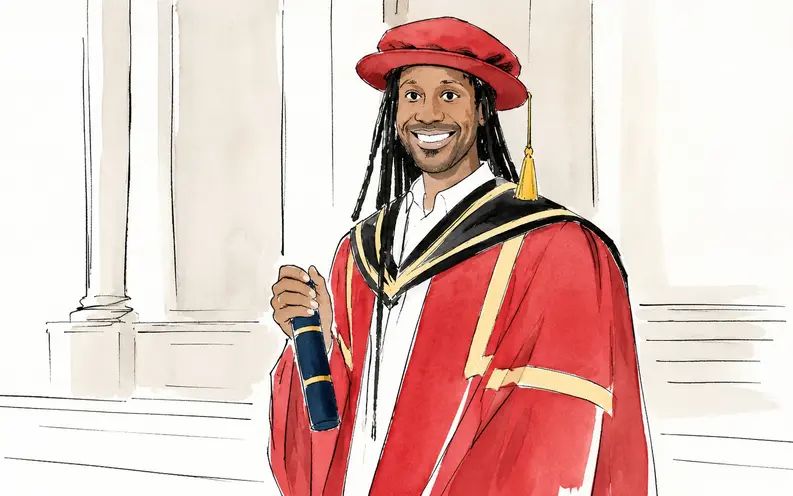
British-African Professor of Sociology Jason Arday has been enmeshed in renewed plagiarism controversies in 2026 following claims most of his academic output has been achieved through lifting other people’s works sometimes verbatim.
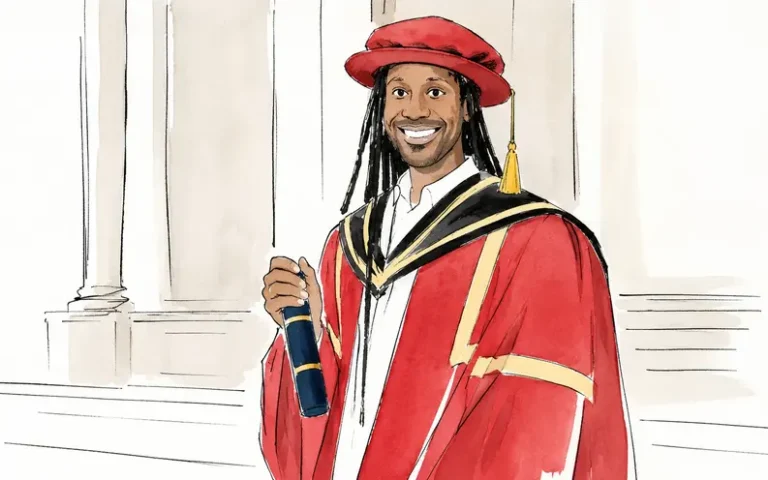
Professor Arday who currently works at the University of Cambridge is one of the university’s youngest professors having become a professor at 37. The immigrant of Ghanaian origin grew up with autism, was unable to speak until the age of 11, and unable to read or write until the age of 18.
Academic Career
Prof. Arday was awarded a PhD from Liverpool John Moores University in 2015. He became senior lecturer at Roehampton in 2018, associate professor at Durham the following year, professor at Glasgow University in 2021 and, just two years later, professor of sociology in the Faculty of Education at Cambridge, making him the university’s youngest-ever black professor.
Also Read:
- Professor Ijeoma Uchegbu Resumes as the Seventh President of Wolfson College, University of…
- Rita Akushie Appointed University of Cambridge’s Chief Financial Officer
- Cambridge University Returns Legal Ownership of 116 Benin Artefacts to Nigeria
- Cambridge University College Announces Nigerian Professor, Ijeoma Uchegbu, as its Next President
He is also a visiting professor at Nelson Mandela University in South Africa and sits on the Centre for Labour and Social Studies (CLASS) National Advisory Panel, the NHS Race and Health Observatory Academic Reference Group and the ITV Cultural Advisory Council.
Research Interests
Professor Jason Arday’s research focuses on the relationship between education, race, inequality, and social justice. His work examines how structural barriers affect access to education, academic achievement, and career progression, particularly for Black, ethnic minority, and other underrepresented groups.
Arday’s research also investigates the intersections of race, disability, mental health, neurodiversity, and social class, highlighting how overlapping identities shape educational and life outcomes. He has contributed extensively to debates on decolonising university curricula, creating inclusive learning environments, and developing education policies that promote social mobility.
His 2021 paper, “No One Can See Me Cry: Understanding Mental Health Issues for Black and Minority Ethnic Staff in Higher Education,” broke new ground by documenting the psychological toll of racism, discrimination, and workplace exclusion on Black academics. The study highlighted how structural inequalities affect mental wellbeing and called for universities to move beyond symbolic diversity initiatives toward systemic institutional reform.
His 2020 study, “Fighting the Tide: Understanding the Difficulties Facing Black, Asian and Minority Ethnic (BAME) Doctoral Students Pursuing a Career in Academia,” also provided one of the most comprehensive analyses of the barriers confronting minority doctoral researchers, including unequal access to mentoring, funding, and academic career progression.
Plagiarism Allegations
Professor Arday is accused of plagiarising his PhD thesis submitted to Liverpool John Moores University, which seems to contain significant overlaps with a dissertation submitted to Brunel University by Paula Zwozdiak-Myers.
In 2023, a 2017 paper by Arday published in Social Sciences was corrected, nominally to add additional citations to make “clear where ideas were adapted from past research”, but also made undisclosed changes to number of apparent quotations from subject interviews.
Liverpool John Moores University and University of Cambridge have however both leapt to his defense stating the allegations were the work of detractors. The coast is however not clear has there continue to be calls to withdraw his PhD and terminate his appointment with the University of Cambridge.