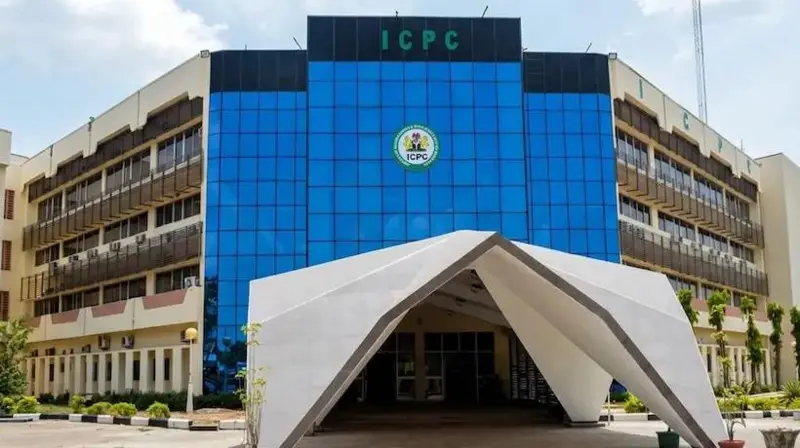
The Independent Corrupt Practices and Other Related Offences Commission (ICPC) says it has uncovered 908 alleged ghost workers across more than 50 federal ministries, departments and agencies (MDAs), recovering about ₦942 million believed to be proceeds of fraudulent salary payments.
ICPC Chairman Musa Aliyu (SAN) said the discovery followed an investigation launched in 2024 after irregularities were detected in pension payments. The inquiry later expanded into the federal payroll system, where investigators allegedly found hundreds of names receiving government salaries despite not being legitimate employees.
According to the commission, the recovered funds are linked to suspected payroll fraud involving fictitious or ineligible workers.
Police, water agency and ministries among those affected
The ICPC said its investigation identified alleged ghost workers across several federal institutions, with the Nigeria Police Force recording the highest number.
The figures released by the commission show:
- Nigeria Police Force – 570 alleged ghost workers
- National Water Resources Authority – 80
- Federal Ministry of Works – 56
- Federal Ministry of Foreign Affairs – 24
- Federal Ministry of Defence – 19
The commission also reported alleged ghost workers in the Ministry of Electricity, Ministry of Industry, Trade and Investment, Federal Ministry of Health, the Office of the Head of the Civil Service of the Federation, the Office of the Accountant-General of the Federation, and the Federal Ministry of Interior.
ICPC said investigations remain ongoing and has not publicly identified individuals allegedly responsible for inserting the names into government payroll records. Ghost workers are individuals who appear on official payrolls without legitimately holding the positions for which salaries are paid.
In many cases, anti-corruption agencies have alleged that fictitious names are added to payroll systems, while salaries are diverted into private accounts. In other instances, salaries continue to be paid to deceased, retired or otherwise ineligible individuals whose records remain active.
According to the ICPC chairman, investigators uncovered one case in which a suspect allegedly inserted the names of close relatives—including his wife, son and mother-in-law—into the payroll while collecting salaries linked to multiple workers.
The bigger question: Why does Nigeria keep finding ghost workers?
While the latest investigation has produced another major recovery, it also revives a question that has confronted successive governments for more than two decades: why does payroll fraud continue despite repeated reforms?
Ghost worker scandals are not new to Nigeria’s public service.
Successive administrations have announced the removal of thousands of fictitious workers while introducing reforms designed to eliminate payroll abuse. These measures have included biometric verification exercises, the Integrated Personnel and Payroll Information System (IPPIS), the Treasury Single Account (TSA), Bank Verification Number (BVN) integration and periodic payroll audits.
Each reform has reportedly saved the government billions of naira. Yet new investigations continue to uncover fresh cases of suspected payroll fraud.
The recurrence suggests that while technology has strengthened payroll oversight, it has not entirely eliminated opportunities for manipulation where internal controls fail or officials abuse access to personnel records.
Is another payroll audit enough?
The latest ICPC operation may recover public funds, but whether it prevents future fraud remains uncertain.
Anti-corruption specialists have long argued that identifying ghost workers addresses only one part of the problem. The more difficult challenge is ensuring that those who create, approve or protect fraudulent payroll entries are identified and prosecuted.
The latest findings therefore raise several important policy questions:
- Why were the alleged ghost workers not detected by existing payroll verification systems?
- Were recommendations from previous payroll audits fully implemented?
- How did hundreds of suspicious salary payments continue despite digital payroll controls?
- Will those responsible face prosecution, or will the investigation end with fund recovery?
- What additional safeguards will prevent similar schemes from emerging in the future?
Without answers to those questions, each successful payroll audit risks becoming another periodic clean-up rather than evidence that the structural weaknesses enabling payroll fraud have been eliminated.
Beyond recovery, accountability remains the test
For the ICPC, uncovering the alleged fraud represents another significant anti-corruption operation. For policymakers, however, the larger challenge is preventing the cycle from repeating itself.

Nigeria has repeatedly demonstrated that ghost workers can be identified after they enter the payroll. The greater test is whether public institutions can build systems that stop fictitious names from being added in the first place—and ensure that officials who enable such schemes are consistently held accountable.
As investigations continue, the latest case is likely to be judged not only by the amount recovered, but by whether it leads to lasting reforms capable of preventing another ghost worker scandal in the years ahead.