The Federal Government has reaffirmed its commitment to expanding Nigeria’s non-oil exports by focusing on value addition, market expansion and improved export competitiveness as part of efforts to diversify the economy away from oil dependence.
Minister of Industry, Trade and Investment, Dr. Jumoke Oduwole, disclosed the strategy during an interview with the News Agency of Nigeria (NAN), saying the government is also working to attract more long-term productive foreign direct investment (FDI) while implementing reforms aimed at strengthening investor confidence.
According to the minister, Nigeria attracted $2 billion in Foreign Direct Investment (FDI) between 2023 and 2025, based on the National Bureau of Statistics (NBS) capital importation data.
She said FDI inflows rose from $377 million in 2023 to $675 million in 2024 before increasing to $923 million in 2025, representing a more than twofold increase over the three-year period and a 37% year-on-year growth between 2024 and 2025.
Oduwole, however, cautioned against conflating FDI with total capital importation, explaining that Nigeria received $23.22 billion in total foreign capital inflows in 2025, with portfolio investments accounting for $19.74 billion, while FDI contributed $923 million.
She noted that portfolio investment and FDI have different economic implications, with the latter contributing more directly to industrial expansion, job creation and productive capacity.
The minister explained that publicly available NBS sectoral rankings reflect total capital importation rather than FDI-specific allocations, noting that producing sector-specific FDI data would require reconciliation between records from the Nigerian Investment Promotion Commission (NIPC), the National Bureau of Statistics (NBS) and the Central Bank of Nigeria (CBN).
She said available data nonetheless indicate that investor confidence is improving, citing the sharp rise in total capital inflows from $12.32 billion in 2024 to $23.22 billion in 2025.
Oduwole added that capital importation reached $10.37 billion in the first quarter of 2026, representing an 83.83% increase compared with the same period last year.
She attributed the improvement to ongoing economic reforms, greater transparency in the foreign exchange market and trade facilitation initiatives, including the launch of the first phase of the National Single Window in March 2026 to simplify import and export procedures.
Export Diversification Drive
On export diversification, the minister said Nigeria recorded a historic $6.1 billion in non-oil exports in 2025, up 11.5% from $5.46 billion in 2024.
Export volumes also increased by 10%, rising from 7.29 million metric tonnes to 8.02 million metric tonnes, while the country exported 281 different non-oil products during the year.
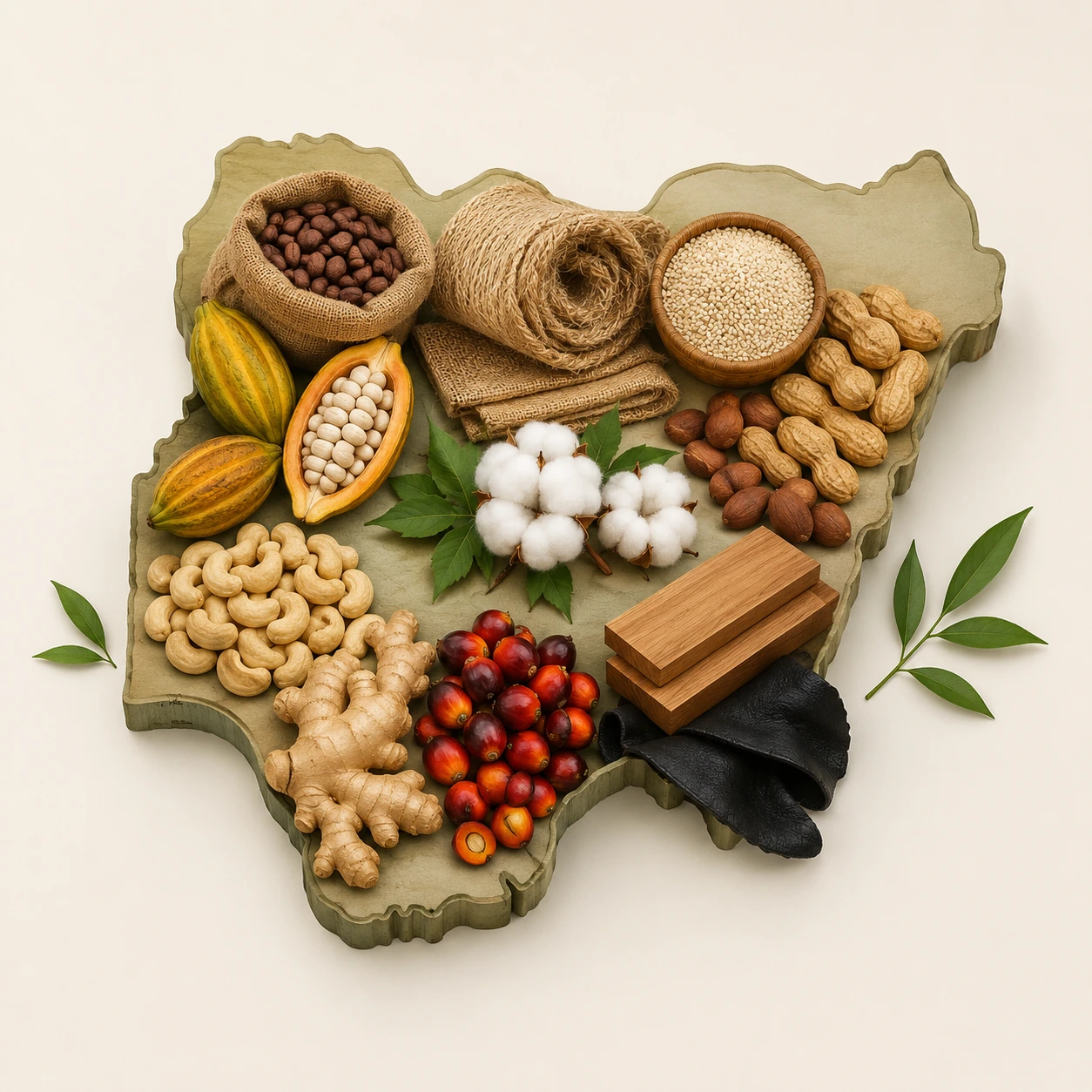
She identified cocoa and cocoa derivatives, urea, cashew nuts, sesame seeds and gold dore among Nigeria’s leading non-oil export products.
Looking ahead, Oduwole said the government intends to sustain growth in both the value and volume of non-oil exports over the next three years by promoting processed agricultural products, manufactured goods, services and digital exports.

She said the strategy also includes expanding production capacity, improving product standards, developing export clusters, reducing logistics costs and strengthening Nigeria’s access to international markets.
The renewed focus on value-added exports forms part of the Federal Government’s broader economic diversification agenda aimed at reducing dependence on crude oil revenues, increasing foreign exchange earnings and creating sustainable employment opportunities.