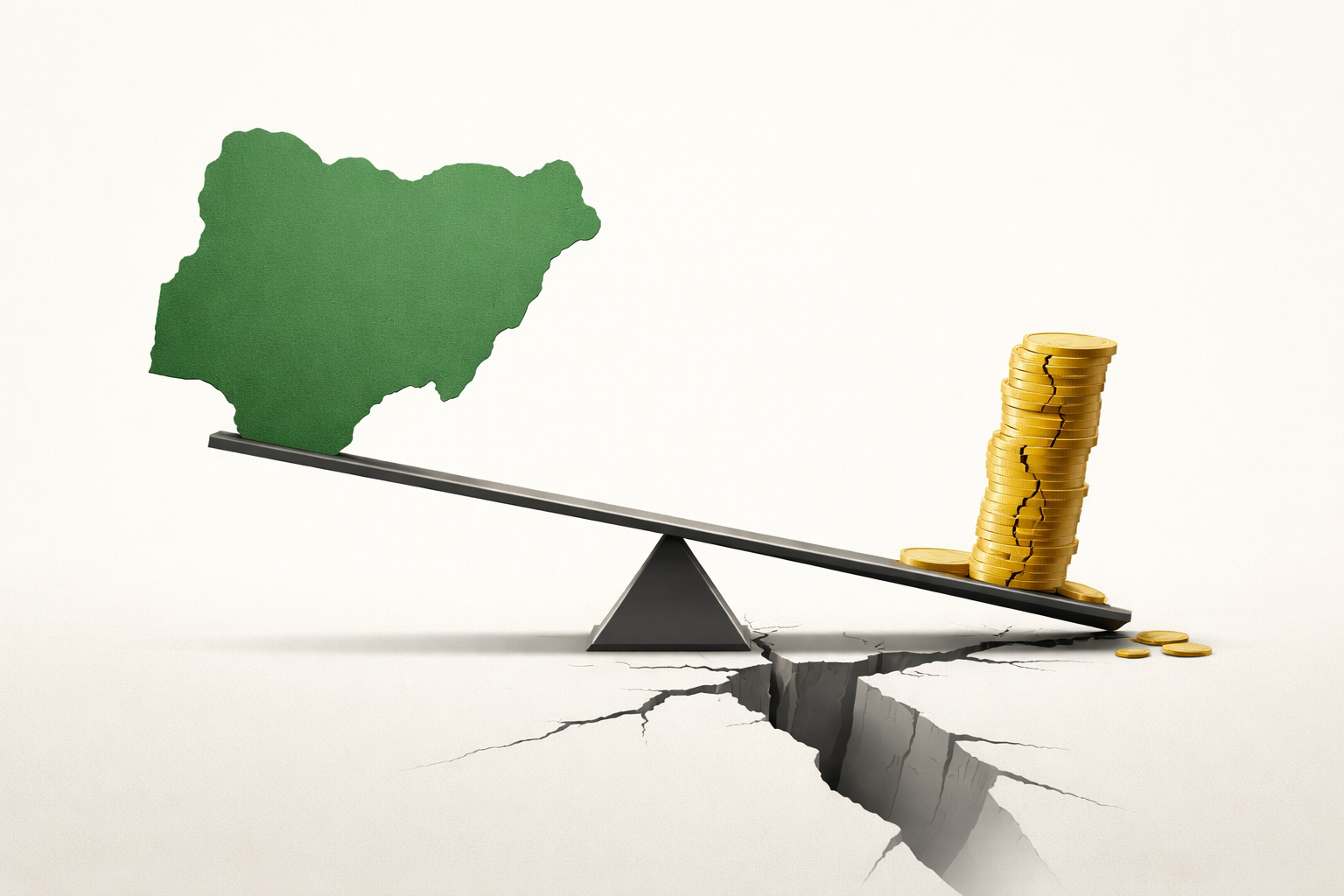
BudgIT has raised significant concerns over the Federal Government’s 2026 Budget, describing it as ambitious but unrealistic and, within the current fiscal realities, not feasible. The approved budget of N68.32 trillion is the largest in Nigeria’s history, yet nearly half of it depends on borrowing.
“With projected revenue of N36.87 trillion against planned expenditure of N68.32 trillion, the government faces a fiscal deficit of N31.45 trillion. This means only 53.9% of the budget can be financed through actual revenues, while 46.1% relies on debt, further entrenching structural fiscal imbalances.
“While capital expenditure accounts for N32.28 trillion, debt servicing alone is projected at N15.8 trillion, consuming nearly 45% of projected revenue. At the same time, critical sectors such as health and education remain significantly underfunded despite their importance to national development.” it noted.
BudgIT noted that Nigeria’s challenge is not only revenue generation but also revenue realism, expenditure discipline, sound debt management, and institutional credibility.
The organisation called for zero tolerance for extra-budgetary spending and off-book expenditures, alongside a strict prioritisation framework that channels limited public resources toward high-impact and economically catalytic projects.

Nigeria’s 2026 Budget Proposal
Nigeria’s 2026 budget proposed a Total Expenditure of N58.18 trillion with a Projected Total Revenue of N34.33 trillion and a Capital Expenditure of N26.08 trillion.
Recurrent (Non-Debt) Expenditure in the budget wa sN15.25 trillion with Debt Servicing pegged at N15.52 trillion and a Budget Deficit of N23.85 trillion, estimated at 4.28% of GDP under the government’s fiscal framework.