U.S. President Donald Trump has expressed optimism that a diplomatic agreement aimed at ending the ongoing conflict involving Iran could be finalized within the next few days, raising hopes of greater stability in the Middle East and the reopening of key maritime trade routes.
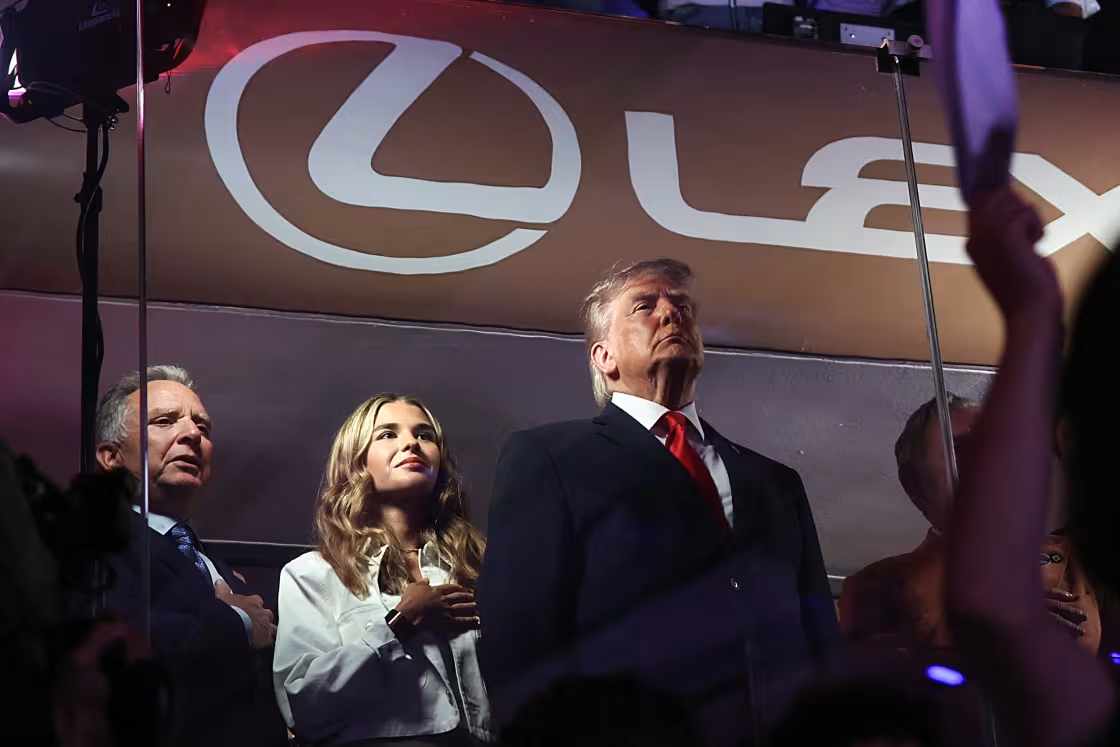
Speaking to reporters in New York after attending an NBA Finals game on Monday night, Trump said negotiations between the United States and Iran were approaching their final stages.
According to the president, discussions are focused on securing an agreement that would prevent Iran from acquiring nuclear weapons while bringing an end to months of regional hostilities.
“We are very close to a deal,” Trump said, adding that an agreement could potentially be reached within “two or three days.”
One of the most significant outcomes of a successful deal, Trump suggested, would be the immediate reopening of the Strait of Hormuz, one of the world’s most strategically important shipping lanes.
The waterway is a critical route for global energy exports and has remained a focal point of geopolitical tensions throughout the conflict.
Ceasefire Under Pressure
Despite ongoing diplomatic efforts, the fragile ceasefire between Iran and Israel has faced renewed strain in recent days.
Over the weekend, both sides exchanged military actions after months of relative calm.
Iranian authorities accused Israel of violating the truce through operations in Lebanon, including strikes targeting areas near Beirut. In response, Iran launched missiles toward northern Israel.
Israeli officials later announced a large-scale operation against what they described as strategic defense installations linked to Iran and its regional allies.
While Iran’s military subsequently stated that it had halted attacks against Israel, officials in Tehran warned that hostilities could resume if Israeli military operations in Lebanon continue.
Netanyahu Says Conflict Is Not Over
Israeli Prime Minister Benjamin Netanyahu maintained a firm stance on the conflict, stating that military operations against Iran and the Lebanon-based group Hezbollah are not yet complete.
Netanyahu argued that both Iran and Hezbollah have suffered significant setbacks but emphasized that Israel’s objectives have not been fully achieved.
The conflict has now surpassed the 100-day mark, despite earlier expectations that fighting would be resolved much sooner.
Trump had previously predicted that hostilities could end within several weeks, though intermittent clashes have continued.
U.S. Helicopter Incident Near Strait of Hormuz
Trump also addressed reports of a U.S. military helicopter incident near the Strait of Hormuz on Monday.
According to the president, the crew members aboard the aircraft were unharmed and no injuries were reported.
He said a formal report on the incident would be released by U.S. authorities, while the cause of the occurrence remains under investigation.
Oil Prices Decline on Diplomatic Optimism
Financial markets reacted positively to Trump’s comments regarding the possibility of a breakthrough.
Global oil prices moved lower on Tuesday as traders weighed the prospect of reduced tensions in the Middle East.
Analysts noted that expectations of improved regional stability and the reopening of critical shipping routes helped ease concerns over potential disruptions to energy supplies.

Market participants continue to monitor developments closely, as any agreement between Washington and Tehran could have significant implications for global energy markets, regional security, and international diplomacy.
As negotiations enter what Trump described as their final phase, attention remains focused on whether diplomatic efforts can deliver a lasting resolution to one of the region’s most complex and volatile conflicts.