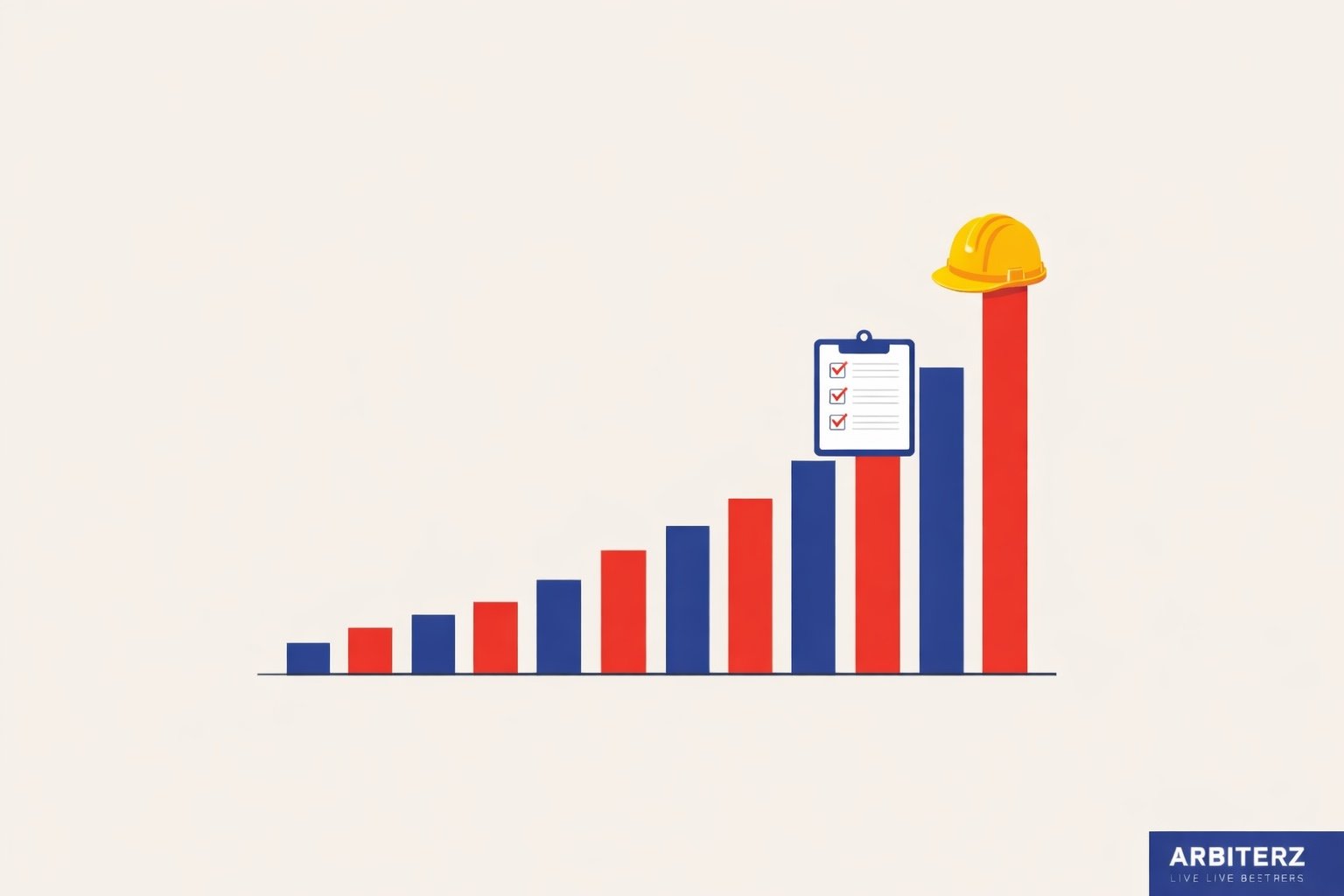
The United States economy added a stronger-than-expected 172,000 jobs in May, offering fresh evidence that the labour market remains resilient despite persistent inflationary pressures and uncertainty stemming from rising energy costs.
According to the latest employment report released by the U.S. Bureau of Labor Statistics, job growth significantly exceeded economists’ forecasts of 105,000 new positions for the month.
The unemployment rate remained unchanged at 4.3 per cent, while payroll growth surpassed the 100,000 mark for a third consecutive month, signalling a more stable employment environment after a prolonged period of sluggish hiring.
The report also included substantial upward revisions to previous months’ figures. March payroll growth was revised upward by 29,000 jobs to 214,000, while April’s employment gains increased by 64,000 to 179,000.
As a result, the U.S. economy has averaged approximately 188,000 jobs per month over the last three months, a notable improvement from the weak employment growth recorded in much of 2025.
Labour Market Gains Momentum
Economists say the latest figures suggest employers remain willing to hire despite economic headwinds.
Guy Berger, Chief Economist at payroll company Homebase, described the labour market as moving in a positive direction, noting that while conditions are not as strong as the post-pandemic hiring boom of 2021 and 2022, the employment landscape appears to be improving.
The strongest job gains were recorded in leisure and hospitality, which added 70,000 positions during the month. Government employment increased by 52,000 jobs, largely driven by local government hiring, while healthcare and social assistance added 47,200 jobs.
Other sectors posting gains included manufacturing, construction, transportation, and temporary staffing services.
Wage Growth Slows Amid Inflation Concerns
Despite the encouraging hiring numbers, wage growth continued to weaken.
Average annual wage growth slowed to 3.4 per cent in May, down from 3.6 per cent in April.
Economists warn that workers may still be losing purchasing power if inflation continues to outpace earnings growth. Current projections suggest consumer price increases may be running nearly one percentage point above wage gains.
Inflation and Energy Costs Remain Key Risks
The employment report arrives as Americans continue to grapple with elevated inflation and higher energy prices linked to ongoing geopolitical tensions.

Analysts caution that prolonged increases in fuel prices could reduce consumer spending, increase business operating costs, and contribute to broader inflationary pressures across the economy.
Consumer confidence has also weakened in recent months as households face higher costs for essentials including fuel, groceries, housing, and utilities.