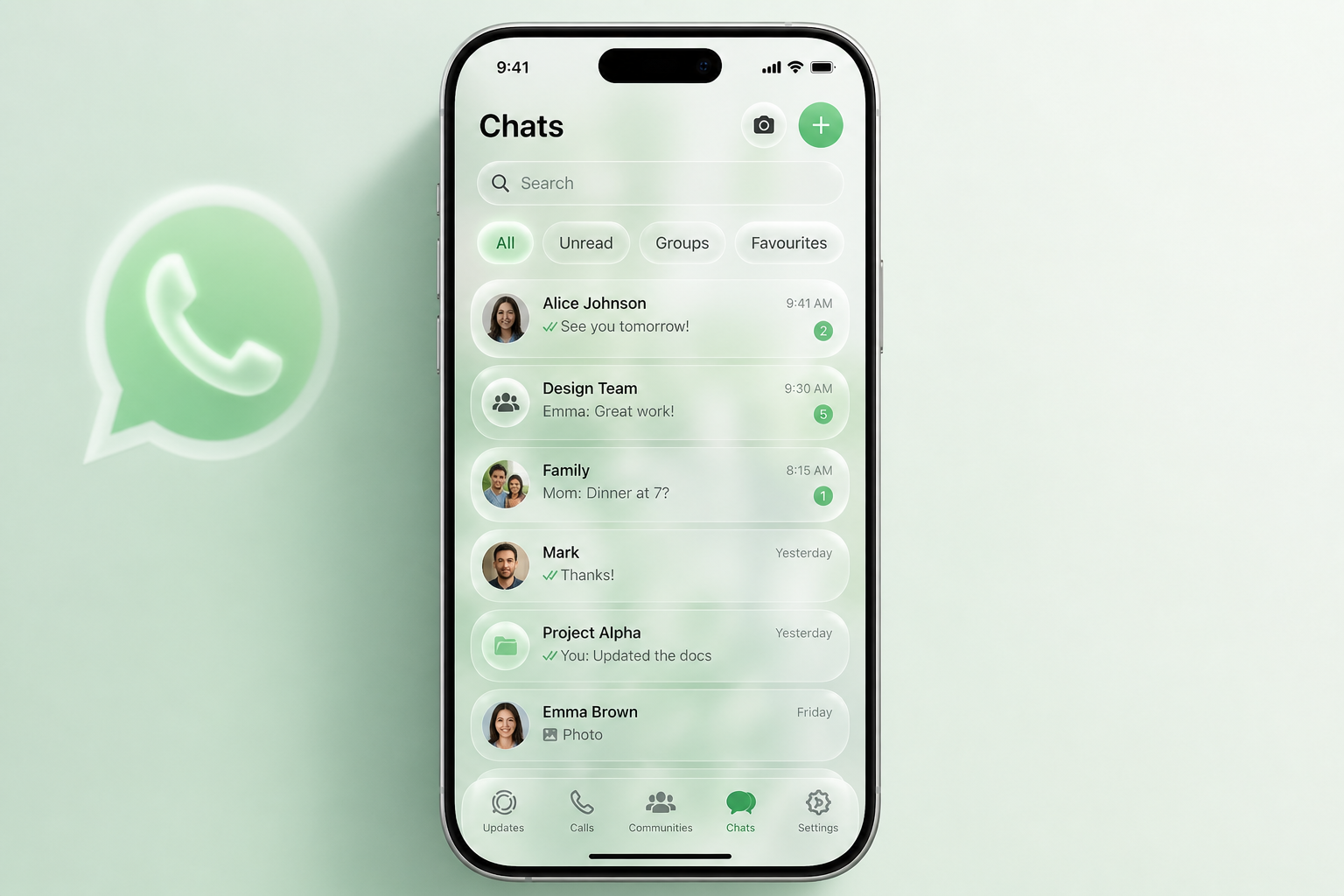
WhatsApp is preparing a significant design refresh for iOS, introducing a “Liquid Glass” interface that brings translucent visuals, smoother animations, and a more modern layout in line with Apple’s evolving design language.
The update is currently being tested among select users through beta versions, signalling that a broader rollout may follow after refinements.
A Shift Toward Glass-Like Design
The Liquid Glass concept centres on semi-transparent layers that create depth across the interface. Elements such as buttons, menus, and navigation bars now feature a frosted, glass-like appearance, paired with fluid animations that enhance the overall user experience.
One of the standout changes is a floating chat bar positioned at the bottom of the screen. Unlike the traditional fixed layout, this redesigned bar appears elevated with a translucent background, giving the interface a more dynamic feel.
The redesign extends beyond the main chat screen. The keyboard, context menus, and interactive elements are also being updated to reflect the same glass-inspired aesthetic, ensuring consistency throughout the app.
This effort began in late 2025, when early beta builds hinted at subtle visual tweaks. Since then, the changes have evolved into a more comprehensive overhaul.
Gradual Rollout and Testing
According to insights from WABetaInfo, the feature is being rolled out gradually via the TestFlight platform. Developers are closely monitoring performance and user feedback before committing to a full public release.
Recent beta updates suggest WhatsApp is now focusing on refining the chat interface itself—adjusting how conversations look and behave alongside the new design elements.

What to Expect Next
The Liquid Glass redesign is still under development and is not expected to launch immediately. WhatsApp plans to fine-tune the experience, expand testing in phases, and eventually release it to a wider audience once stability and usability benchmarks are met.
If fully implemented, the update could mark one of the most noticeable visual transformations in WhatsApp’s history—bringing it closer to Apple’s latest UI standards while maintaining its familiar usability.